
Episodes
229
Aug. 10, 2026
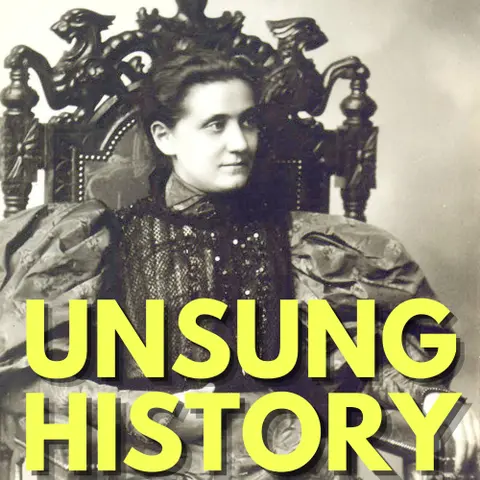
Jane Addams, Hull House, and Chicago's Nineteenth Ward
In the fall of 1889, Jane Addams and Ellen Gates Starr opened Hull House on Chicago’s Near West Side, full of good intentions to help the poor people of the neighborhood. They were a force for good, providing education, cultural enrichment, and workforce development, while fighting for protections for women and children. But because of their backgrounds, they also missed important cultural dimensions of their immigrant neighbors and feuded with the ward’s Irish Catholic alderman. Joining me in t...
228
July 27, 2026
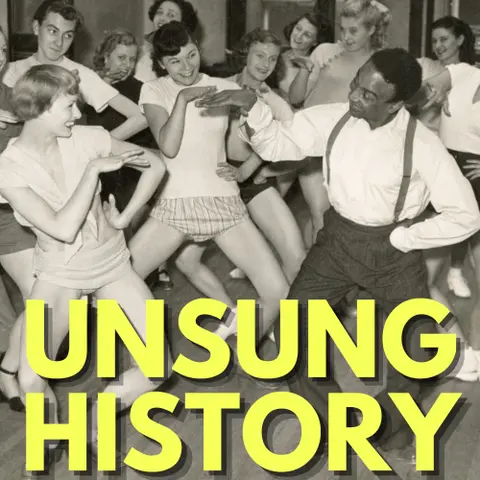
Buddy Bradley
Buddy Bradley, born in the Jim Crow South in 1905, made his way to Harlem at age 16 where he learned to tap dance and became a chorus boy. He was sought out on Broadway as both teacher and choreographer, but never got the credit he deserved, and he moved to London in the 1930s where he had a hugely successful career as a dance director on stage and in film. Although his name isn’t well known today, his influence lives on in dance. Joining me in this episode is Maureen Footer, author of Feel the ...
Guest: Maureen Footer

227
July 13, 2026
The All-American Girls Professional Baseball League
During World War II, afraid that major league baseball would need to pause while men were overseas fighting, Philip K. Wrigley, chewing gum mogul and owner of the Chicago Cubs, spearheaded a new professional ball league, this one made up of women players. In the twelve years of All-American Girls' Professional Baseball League play, over 600 women had the chance to play professionally, earning substantial salaries and delighting fans across the Midwest. Joining me in this episode is baseball hist...
Guest: Leslie Heaphy

226
June 29, 2026
The Declaration of Independence
The Continental Congress voted to break from Great Britain on July 2, 1776, and approved the text of the Declaration of Independence on July 4, but it took weeks for the news to spread throughout the new country and even longer to reach the country they were breaking from and the countries with whom they hoped to find alliances. Along the way, people learned the news from printed broadsides, newspapers, public readings, and letters from friends. I’m joined in this episode by Dr. Emily Sneff, aut...
Guest: Emily Sneff

225
June 15, 2026
The Statue of Liberty and the Empire State Building
The Statue of Liberty and the Empire State Building loom large in the American imagination, symbolizing the conflicting ideas of liberty and empire; their meanings and characters have shifted over time as the American ethos has shifted. Joining me in this episode is writer, historian, and freelance editor, Dr. Vaneesa Cook, author of Empire and Liberty: The Tied Histories of Two American Landmarks. Our theme song is “Frogs Legs Rag,” composed by James Scott and performed by Kevin MacLeod, ...
Guest: Vaneesa Cook

224
June 1, 2026
An American History of Purses
Today the US handbag market is estimated to be nearly $12 billion, with most of the purchasing done by women, but into the early 20th Century purses hadn’t yet become the nearly-exclusive domain of women. The integration of pockets into men’s clothing, and the marketing push of toiletry items to women in the 1920s and 1930s drove this differentiated market development. Joining me in this episode is Dr. Kathleen B. Casey, Professor of History and Director of the Women's, Gender, and Sexuality Stu...
Guest: Kathleen B. Casey

223
May 18, 2026
The Lady Bird Special
On the morning of Tuesday, October 6, 1964, the Lady Bird Special, a 19-car train carrying First Lady Claudia “Lady Bird” Johnson, her supporters, members of the press, and a security detail, departed Union Station in Washington, DC, for an ambitious 1,682-mile whistle-stop campaign tour of Southern States. In four days, Lady Bird gave 47 speeches to over 200,000 people, demonstrating that despite the growing resentment of white Southern Democrats to President Johnson’s signing of the Civil Righ...
Guest: Shannon McKenna Schmidt

222
May 4, 2026
Policing Slavery & Black Rebellion in the American South
Enslaved Africans were forcibly shipped to Virginia starting in 1619 in response to a severe labor shortage. From the beginning, enslaved laborers resisted by fleeing and through violence, and white enslavers reacted by creating a racialized system of brutal policing, granting themselves authority based on skin color and a sense of superiority. Joining me in this episode is Dr. Gautham Rao, Associate Professor of History at American University in Washington, D.C., and author of White Power: Poli...
Guest: Gautham Rao

221
April 20, 2026
The Frontier Myth and the People of the Western United States
In 1893, historian Frederick Jackson Turner advanced his now-famous Frontier Theory, arguing that the American identity was forged through the process of exploring and adapting to new environments in the frontier west. Key to both Turner’s theory and the myth of the frontier that pre-dated it was the idea that brave white American men conquered a previously empty land through their grit in a relentless march west, but the land was populated long before white Americans arrived, and the people who...
Guest: Megan Kate Nelson

220
April 6, 2026
Magnus Hirschfeld, Dora Richter, and the Institute for Sexual Science in Weimar Germany
In the Weimar Republic, Dr. Magnus Hirschfeld opened the Institute for Sexual Science and advocated for the repeal of legislation that criminalized sexual relations between men. At the Institute, pioneering gender-affirming surgeries were performed, and it was there that Dora Richter became the first known trans woman to undergo comprehensive male-to-female gender-affirming surgeries. But when the Nazis came to power, they labeled Hirschfeld an enemy of the state and destroyed the Institute’s im...
Guest: Brandy Schillace

219
March 23, 2026
The Feliciana Parishes of Louisiana
For 74 days in 1810 the current-day parishes of East and West Feliciana in New Orleans were part of the independent Republic of West Florida, which flew a lone star flag. By that point the residents of the Felicianas, including a large enslaved population, living on land that had been stolen from indigenous people, had been part of three different empires. The republic ended with the parishes annexed into yet another country, the United States, though fifty years later they would be part of stil...
Guest: Rashauna Johnson

218
March 9, 2026
The Academy Awards
When the Academy of Motion Picture Arts and Sciences was formed in 1927 one of the goals of the founders was to recognize achievements in the industry. That recognition quickly took the form of annual awards banquets, with the first one hosted in 1929. Over time the format shifted from banquet to the Oscars telecast we all know today, as the categories and even membership of the Academy adapted to the shifts in filmmaking. Joining me in this episode is Dr. Monica Sandler, a film and media histor...
Guest: Monica Sandler

217
Feb. 22, 2026
Slavery and the Complicated Legacy of George Washington
George Washington privately condemned slavery while actively holding hundreds of people in enslavement. He championed gradual emancipation plans while scheming to keep the people he enslaved from accessing them. He ruthlessly pursued a woman who escaped his enslavement and then emancipated the slaves he owned outright in his will. Washington’s complicated and contradictory legacy around slavery has been debated by Americans since his death. Joining us to discuss is Dr. John Garrison Marks, the V...
Guest: John Garrison Marks
216
Feb. 9, 2026
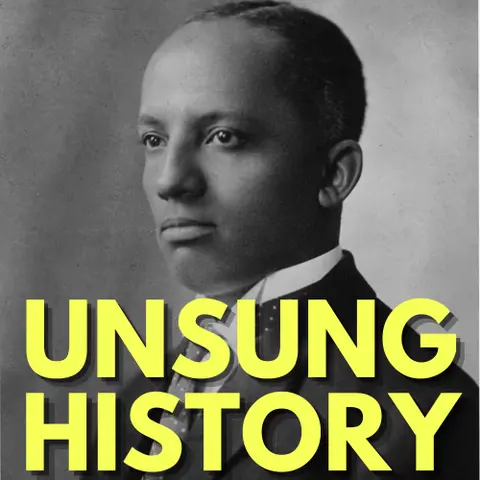
Black History Month
One hundred years ago, Dr. Carter G. Woodson created and launched the inaugural Negro History Week after his professors told him that Black people didn’t have a history worth studying. Negro History Week built on the success of Douglass Day and quickly spread through Black communities in the United States. Fifty years later, at the urging of the Association for the Study of Afro-American Life and History, President Gerald Ford called for Americans to celebrate Black History Month, which was fina...
Guest: Jarvis Givens
215
Jan. 26, 2026
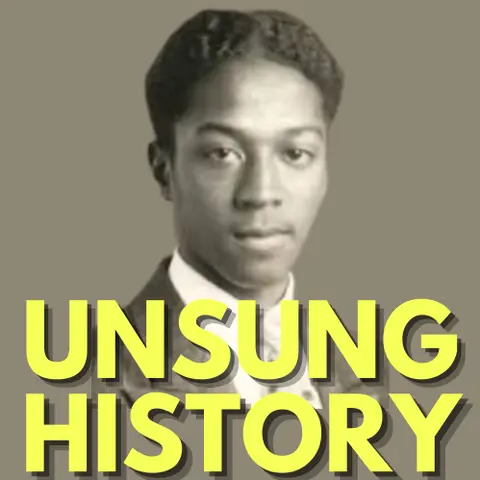
Reed Peggram
Reed Peggram, born in Boston in 1914, a gay Black man in a world that put up barriers to his success, excelled at Harvard before heading to a Europe on the brink of war. In Europe he fell in love with a Danist artist, and despite pleas from everyone in his life and from the US government to leave the war-torn continent, Reed refused to depart without Arne, leading to his imprisonment in an Italian concentration camp. Even then, Reed overcame the barriers in his way, escaping with Arne and surviv...
Guest: Ethelene Whitmire
214
Jan. 12, 2026
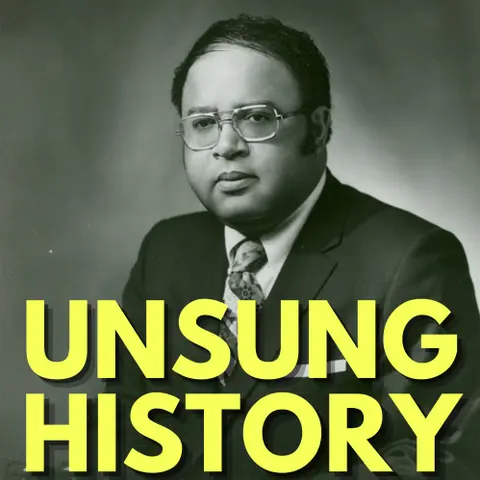
Charles C. Diggs, Jr.
Charles C. Diggs, Jr., founder of the Congressional Black Caucus, spent 25 years in Congress, pushing for change, on issues from segregation in commercial aviation to home-rule for the residents of Washington, DC, to the anti-apartheid movement. His legislative accomplishments were overshadowed by his downfall, and today his story doesn’t receive the attention of other Civil Rights heroes. Joining me in this episode is Dr. Marion Orr, Frederick Lippitt Professor of Public Policy and Professor of...
Guest: Marion Orr

213
Dec. 30, 2025
All in the Family
When All in the Family premiered in January 1971, CBS was nervous enough about the content that they added an advisory message at the beginning. Despite their fears, the show was a success, quickly garnering both awards and top Nielsen ratings. All in the Family not only changed television in the United States but also the practice of politics. Joining me in this episode is Dr. Oscar Winberg, Postdoctoral Fellow at the Turku Institute for Advanced Studies and the John Morton Center for North Ame...
Guest: Oscar Winberg
212
Dec. 15, 2025
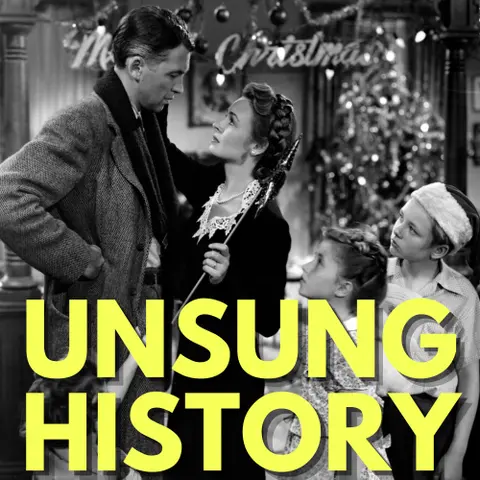
Christmas Films, the Early Cold War & the FBI
When It’s a Wonderful Life was first released, it wasn’t a box office hit, but it did draw the attention of the FBI and its investigation into the Communist Infiltration of the Motion Picture Industry (COMPIC). The House Un-American Activities Committee (HUAC) didn’t end up doing anything with the FBI’s allegations of subversion in the film, but the pressure of investigations like this led to a shift in Christmas films over the next 15 years away from stories of social problems to more lighthear...
Guest: Vaughn Joy
211
Dec. 1, 2025
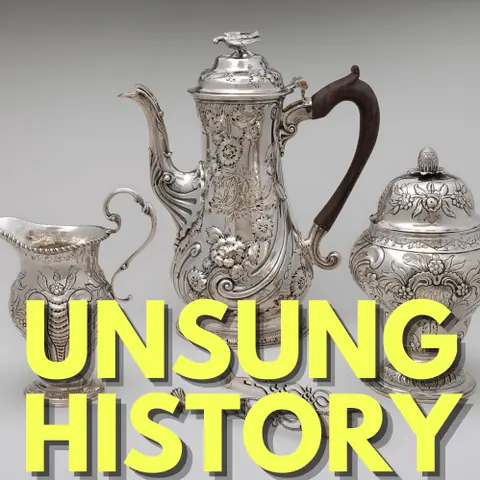
An American History of Coffee
Americans love their coffee; according to the Fall 2025 National Coffee Data Trends Report, 66% of adult Americans drink coffee every day, averaging three cups per day. This devotion to the caffeinated beverage is nothing new. Even before Bostonians dumped over 90,000 pounds of tea in the harbor, Americans were sipping cups of joe. George and Martha Washington served tea at the President’s House in New York, and after he stepped down as president, George Washington even tried growing coffee tree...
Guest: Michelle Craig McDonald
210
Nov. 17, 2025
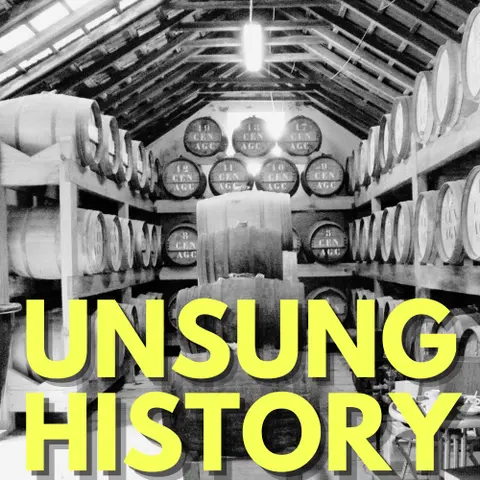
The History of Rum
Global rum sales are expected to reach nearly $28 billion USD by the year 2033, making it one of the ten most popular alcoholic beverages in the world. In this episode we look at the early history of rum, how its invention and production were intertwined with the transatlantic slave trade, and how abolitionists tried to find free-labor sources of the popular liquor. Joining me in this episode is Dr. Jordan B. Smith, Associate Professor of History at Widener University, and author of The Inventio...
Guest: Jordan B. Smith
209
Nov. 3, 2025
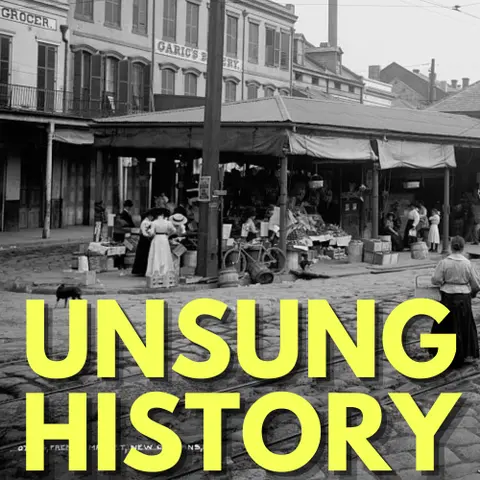
Street Food and Public Markets in New Orleans
New Orleans is known for its unique cuisine that blends and highlights the many cultural roots of the city and its residents. The history of food distribution in New Orleans is just as unique within the American landscape, relying heavily on public food systems, both street vendors and municipally-run public markets. Joining me in this episode is Dr. Ashley Rose Young, a curator and public historian who serves as the American History Curator in the Rare Book and Special Collections Division at t...
Guest: Ashley Rose Young

208
Oct. 20, 2025
The Girl Scouts of the USA
In 1912, wealthy Savannahian Juliette Gordon Low supposedly called her cousin and exclaimed: “Come right over! I’ve got something for the girls of Savannah, for all of America, and for the world.” That something would become the Girl Scouts of the USA, an organization that throughout its history struggled to fulfill its initial promise of inclusion for all girls while trying to maintain an apolitical stance with deference to local councils. Joining me in this episode is Dr. Amy Farrell, the Jame...
Guest: Amy Farrell
207
Oct. 6, 2025
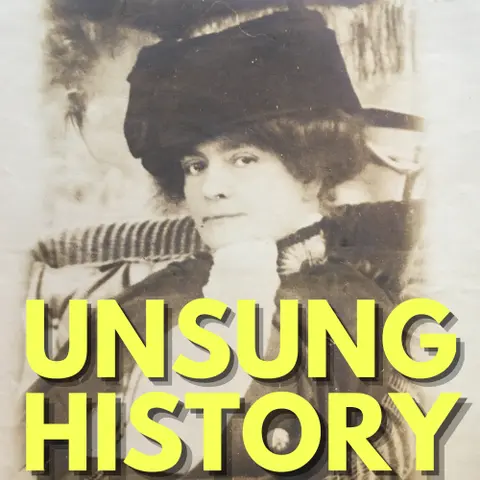
Zoe Anderson Norris
Zoe Anderson Norris, known to her friends in the Ragged Edge Klub as the Queen of Bohemia, was born in Kentucky in 1860, moved to Wichita, Kansas, with her first husband, and then to New York City, where she forged a career for herself as a journalist and novelist, eventually launching her own magazine, The East Side. In The East Side and in her journalism, she often focused on the lives of immigrants and the poor. Joining me in this episode is Eve M. Kahn, author of Queen of Bohemia Predicts Ow...
Guest: Eve Kahn
206
Sept. 22, 2025
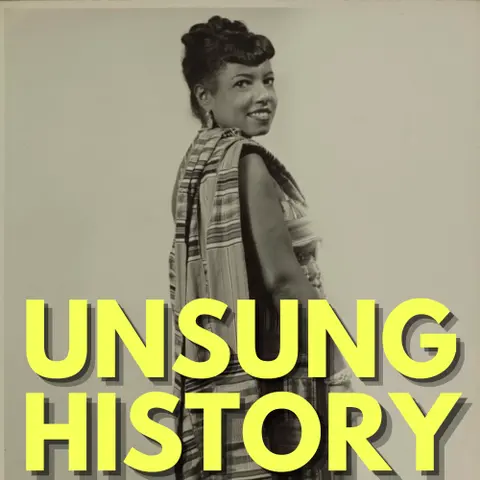
Marguerite Cartwright
Dr. Marguerite Phillips Dorsey Cartwright, born May 17, 1910, in Cambridge, Massachusetts, was a journalist, sociologist, educator, and actress, who served as a correspondent for the United Nations, attended and wrote about both the Bandung Conference and the All-African People's Conference, and was appointed to the Provisional Council of the University of Nigeria, where she became one of five trustees. Joining me in this episode to discuss both Marguerite Cartwright and Black women’s leadership...
Guest: Keisha N. Blain