
18TH Century Episodes
226
June 29, 2026
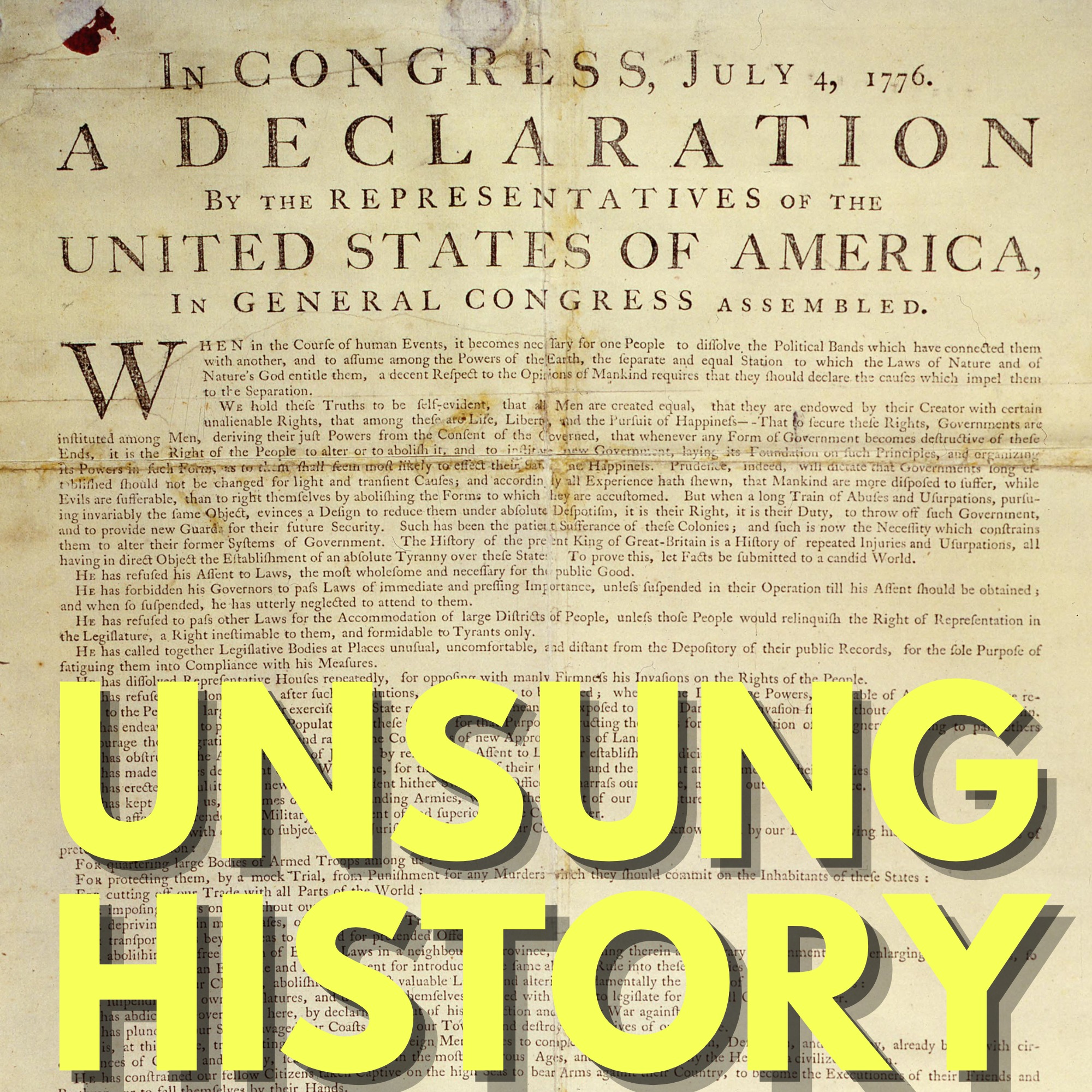
The Declaration of Independence
The Continental Congress voted to break from Great Britain on July 2, 1776, and approved the text of the Declaration of Independence on July 4, but it took weeks for the news to spread throughout the new country and even longer to reach the country they were breaking from and the countries with whom they hoped to find alliances. Along the way, people learned the news from printed broadsides, newspapers, public readings, and letters from friends. I’m joined in this episode by Dr. Emily Sneff, aut...
Guest: Emily Sneff
222
May 4, 2026
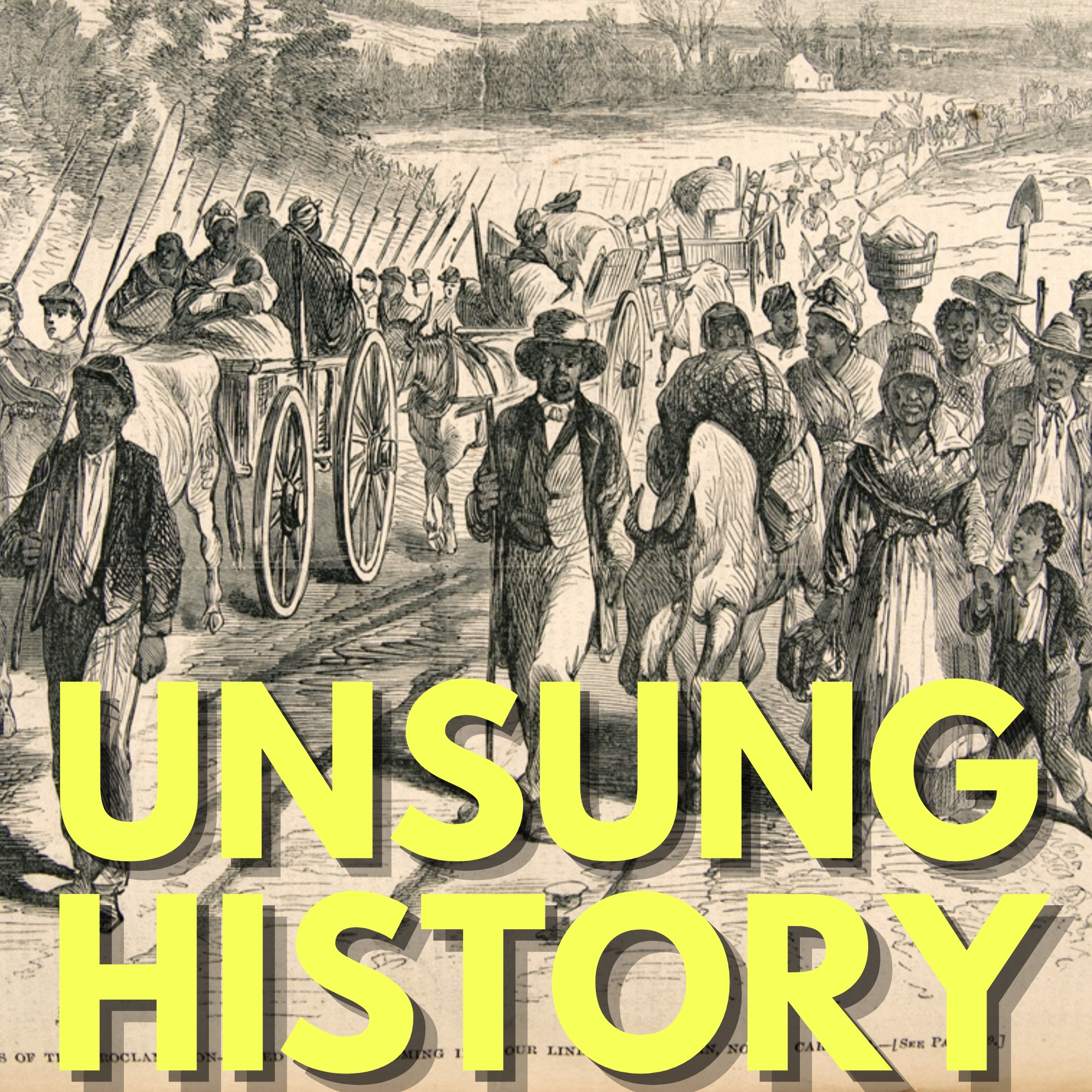
Policing Slavery & Black Rebellion in the American South
Enslaved Africans were forcibly shipped to Virginia starting in 1619 in response to a severe labor shortage. From the beginning, enslaved laborers resisted by fleeing and through violence, and white enslavers reacted by creating a racialized system of brutal policing, granting themselves authority based on skin color and a sense of superiority. Joining me in this episode is Dr. Gautham Rao, Associate Professor of History at American University in Washington, D.C., and author of White Power: Poli...
Guest: Gautham Rao
219
March 23, 2026
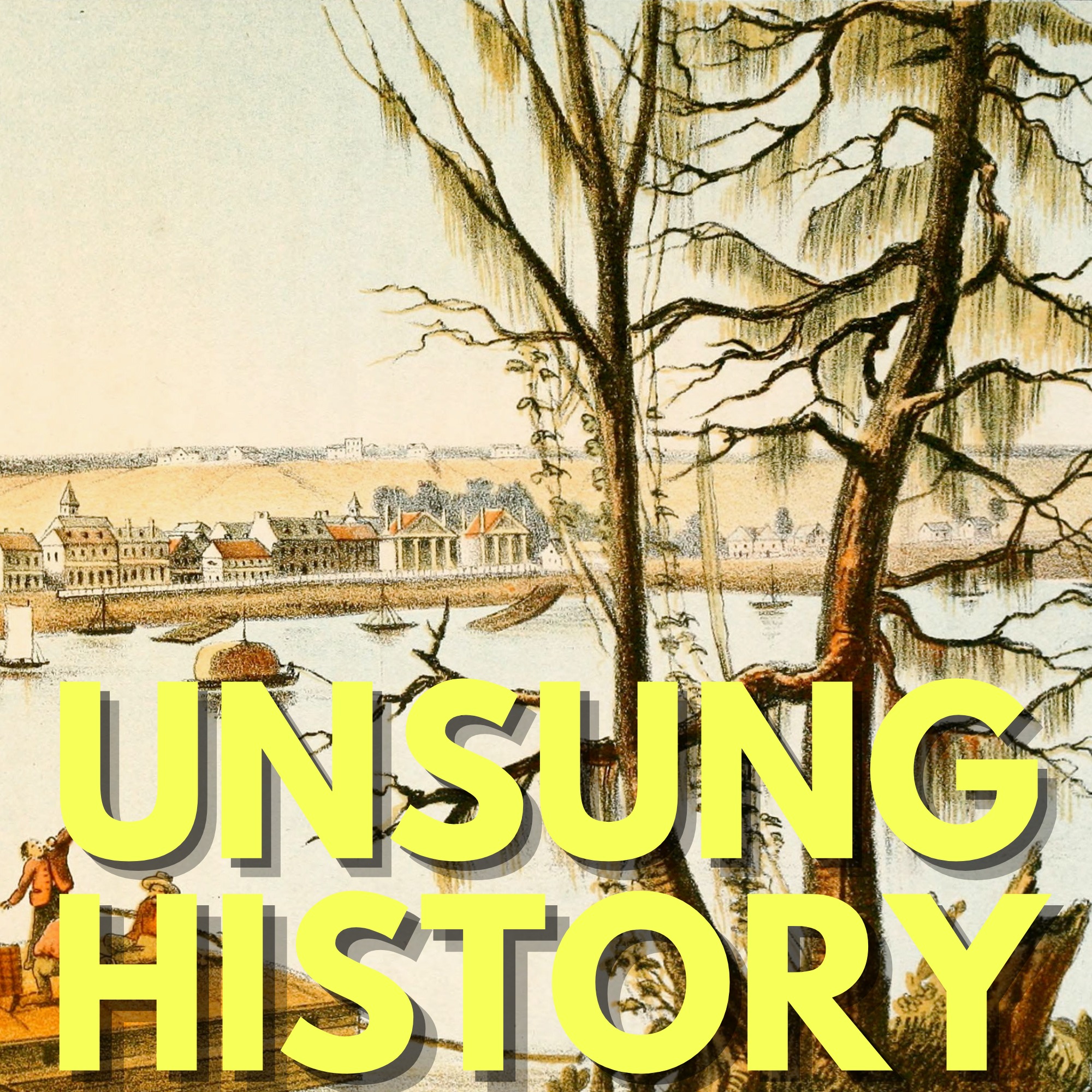
The Feliciana Parishes of Louisiana
For 74 days in 1810 the current-day parishes of East and West Feliciana in New Orleans were part of the independent Republic of West Florida, which flew a lone star flag. By that point the residents of the Felicianas, including a large enslaved population, living on land that had been stolen from indigenous people, had been part of three different empires. The republic ended with the parishes annexed into yet another country, the United States, though fifty years later they would be part of stil...
Guest: Rashauna Johnson
217
Feb. 22, 2026
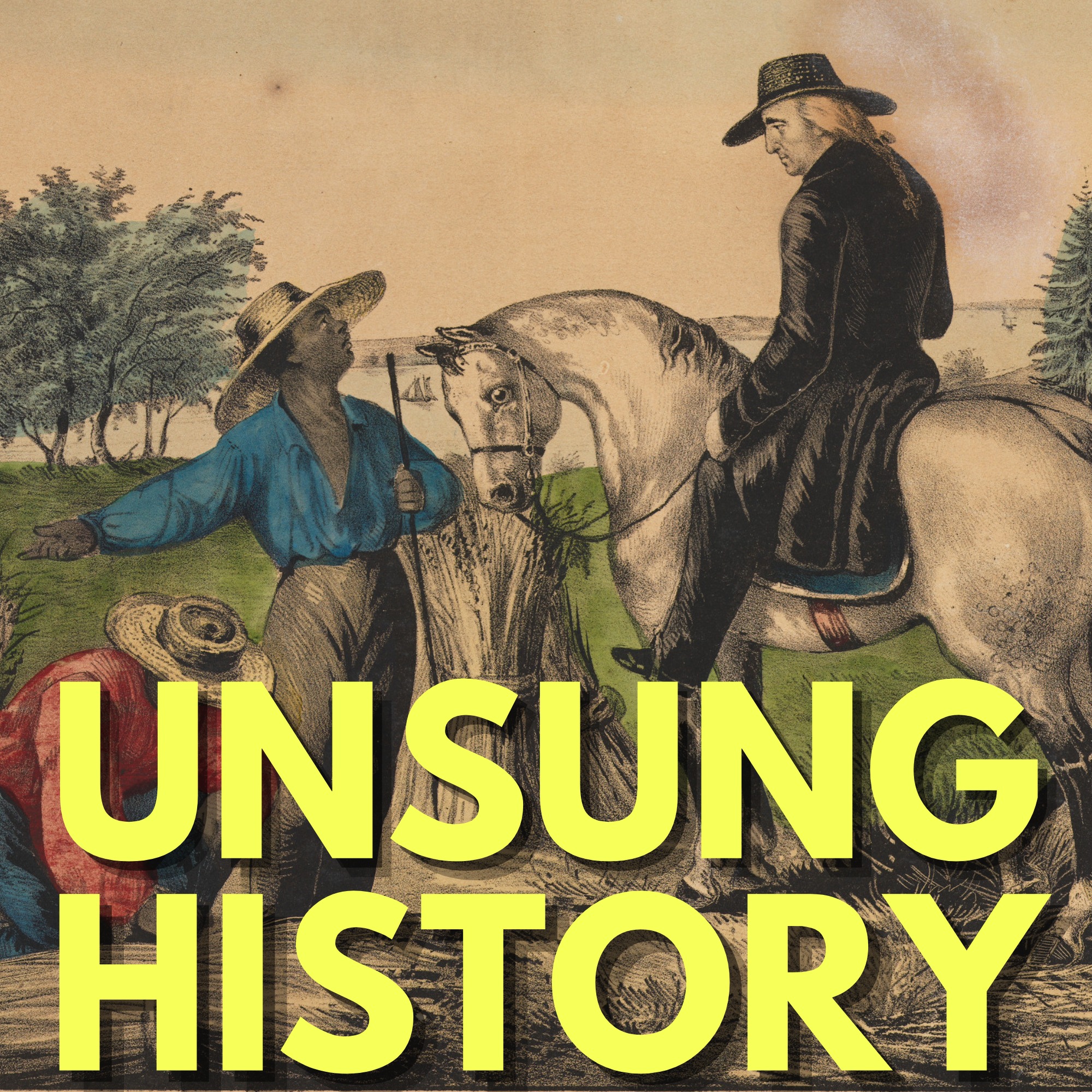
Slavery and the Complicated Legacy of George Washington
George Washington privately condemned slavery while actively holding hundreds of people in enslavement. He championed gradual emancipation plans while scheming to keep the people he enslaved from accessing them. He ruthlessly pursued a woman who escaped his enslavement and then emancipated the slaves he owned outright in his will. Washington’s complicated and contradictory legacy around slavery has been debated by Americans since his death. Joining us to discuss is Dr. John Garrison Marks, the V...
Guest: John Garrison Marks
211
Dec. 1, 2025
An American History of Coffee
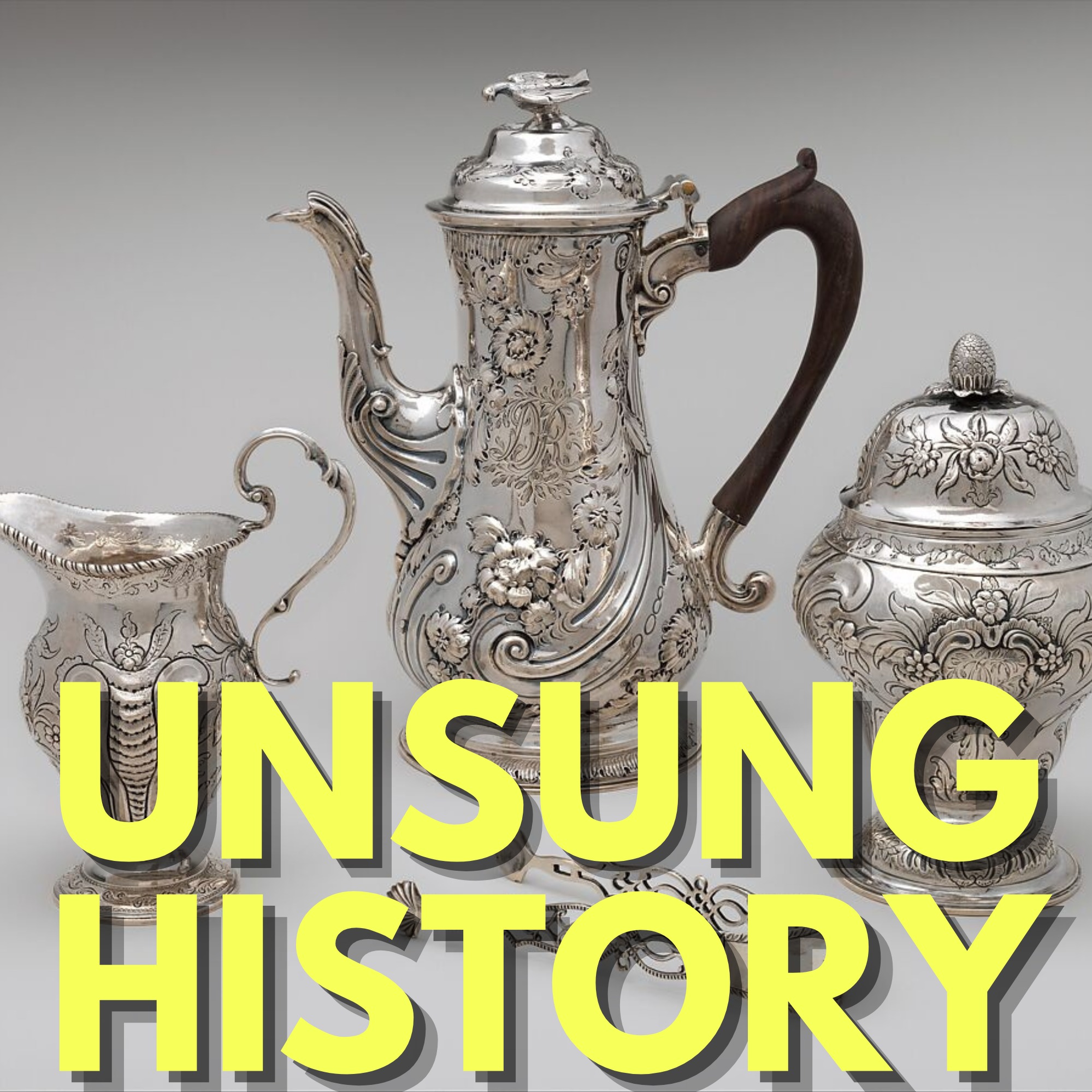
Americans love their coffee; according to the Fall 2025 National Coffee Data Trends Report, 66% of adult Americans drink coffee every day, averaging three cups per day. This devotion to the caffeinated beverage is nothing new. Even before Bostonians dumped over 90,000 pounds of tea in the harbor, Americans were sipping cups of joe. George and Martha Washington served tea at the President’s House in New York, and after he stepped down as president, George Washington even tried growing coffee tree...
Guest: Michelle Craig McDonald

210
Nov. 17, 2025
The History of Rum
Global rum sales are expected to reach nearly $28 billion USD by the year 2033, making it one of the ten most popular alcoholic beverages in the world. In this episode we look at the early history of rum, how its invention and production were intertwined with the transatlantic slave trade, and how abolitionists tried to find free-labor sources of the popular liquor. Joining me in this episode is Dr. Jordan B. Smith, Associate Professor of History at Widener University, and author of The Inventio...
Guest: Jordan B. Smith
203
Aug. 11, 2025
Genealogy in Early America
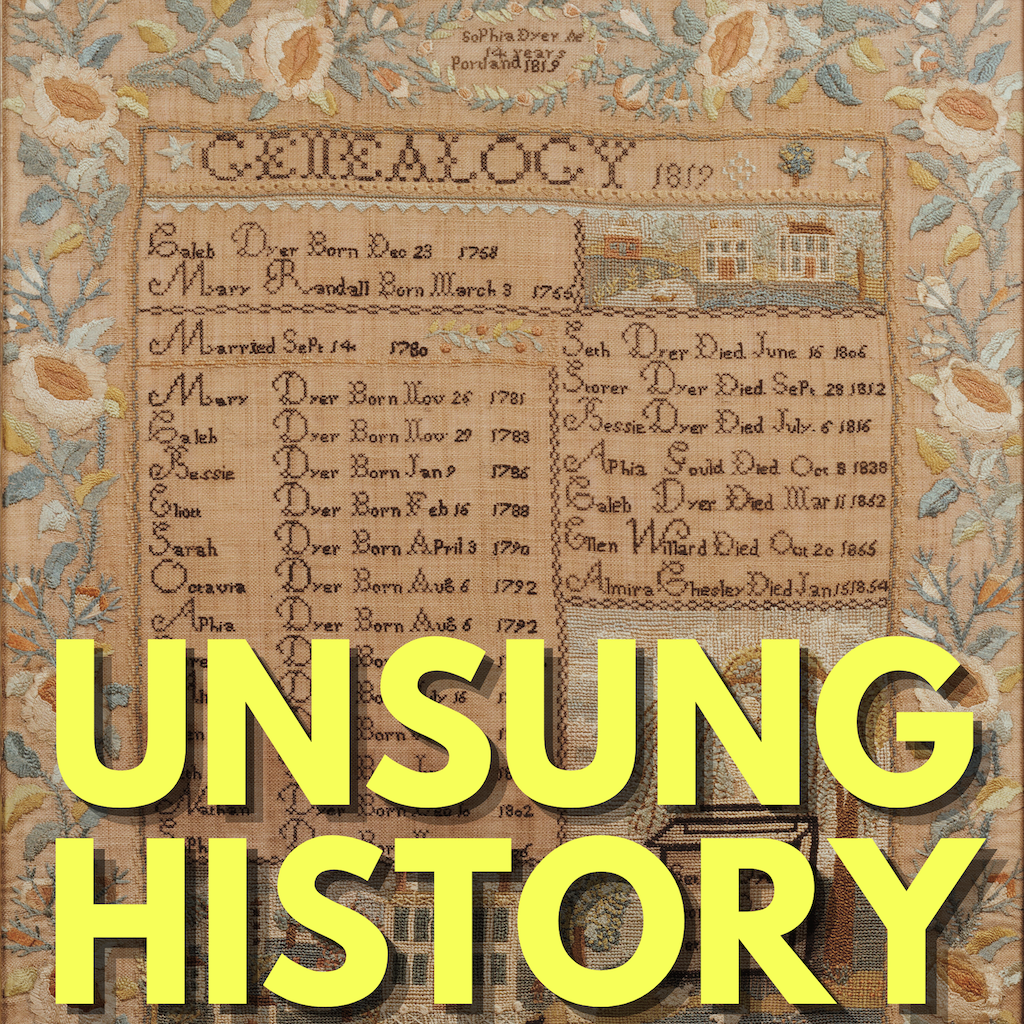
Both Abigail Adams and Benjamin Franklin took trips in England to trace their family histories, and they weren’t alone among 18th century Americans, many of whom took a keen interest in genealogy and family connections. Joining me in this episode is Dr. Karin Wulf, Director and Librarian of the John Carter Brown Library, and Professor of History at Brown University and author of Lineage: Genealogy and the Power of Connection in Early America. Our theme song is Frogs Legs Rag, composed by J...
Guest: Karin Wulf

200
March 31, 2025
The Enslaved Mariners on the Crews of Brazilian Slave Ships
On the slave ships that sailed between Salvador da Bahia, Brazil, and the West Coast of Africa from the 16th through the 19th Centuries, the crews included not just white sailors but also Black mariners, including a significant number of crewmen who were themselves enslaved. These enslaved mariners were not just a source of inexpensive labor but were also valued for their geographic, linguistic, and cultural skills, and they, in turn, could use the opportunity of labor on slave ships as a means ...
Guest: Mary Hicks

188
Jan. 6, 2025
Henry Christophe: The King of Haiti
Henry Christophe, one of the heroes of the Haitian Revolution, was, from 1811 to his death in 1820, King Henry I of the Kingdom of Haiti, the first, last, and only King that Haiti ever had. This week we look at Christophe’s meteoric rise from being born enslaved on an island hundreds of miles from Haiti to fighting in the American Revolution to serving as a general in the Haitian Revolution to being king of all he surveyed, until it all came crashing down around him. Joining me in this episode i...
Guest: Marlene Daut

179
Nov. 4, 2024
The History of the Electoral College
At the end of August 1787, after three long months of debate and deliberation, the Constitutional Convention had neared the end of its work. They were poised at that time to write into the Constitution that the President of the United States would be elected by the legislature, but at the last minute they referred the matter to the Committee on Unfinished Parts to resolve. It was that committee, guided by future president James Madison, that drafted a compromise Electors plan, answering the conc...
Guest: Carolyn Dupont

171
Sept. 9, 2024
Jewish Patriots in the American Revolution
In the Continental Army, one company of patriots in Charleston, South Carolina, was a majority Jewish, and at least fifteen Jewish soldiers in the Army achieved the rank of officer during the American Revolution, something unheard of in European armies at the time. Though their numbers were small (in proportion with their population in the colonies), Jewish patriots participated in the war, and in the Early Republic they insisted on their full citizenship in the new nation. I’m joined in this ep...
Guest: Adam Jortner

170
Sept. 2, 2024
Abigail Adams
Abigail Smith Adams, wife to the second U.S. president and mother of the sixth U.S. president, may be best known for exhorting her husband to “remember the ladies” as he worked with his colleagues to form a new government, but that was just one of her many strongly-held political views. Adams, who lacked formed education and whose legal status was subsumed under that of her husband, never stopped arguing for greater educational opportunities and legal rights for women. Because of her prolific co...
Guest: Lindsay M. Chervinsky

169
Aug. 26, 2024
Hair and the American Presidency
In March 1778, while he was camped at Valley Forge, Commander in Chief George Washington sent a lock of his hair to the daughter of the New Jersey Governor. It wasn’t a romantic gift; rather, Washington was responding to a common request made to celebrities of his time, similar to the autographed photo one might request today. Because hair is so long-lasting, people of the 18th and 19th centuries often collected, wore, and displayed the hair of their loved ones and the notable people they met or...
Guest: Theodore Pappas
129
Nov. 20, 2023
The Long History of the Chicago Portage
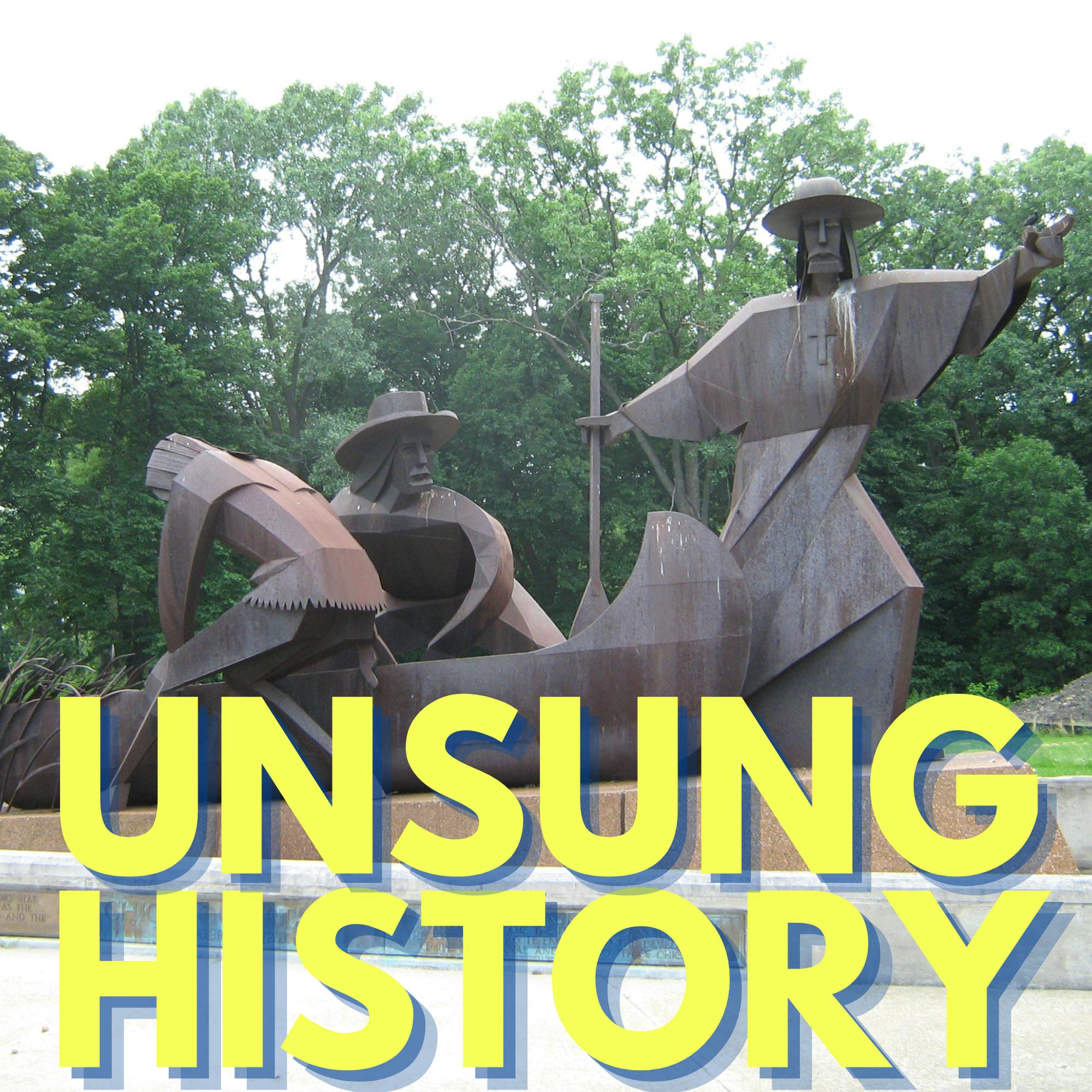
When Europeans arrived in the Great Lakes region, they learned from the Indigenous people living there of a route from Canada to the Gulf of Mexico, made possible by a portage connecting the Chicago River and the Des Plaines River. That portage, sometimes called Mud Lake, provided both opportunity and challenge to European powers who struggled to use European naval technology in a region better suited to Indigenous birchbark canoes. In the early 19th century, however, the Americans remade the re...
Guest: John William Nelson
128
Nov. 13, 2023
The Haudenosaunee Confederacy
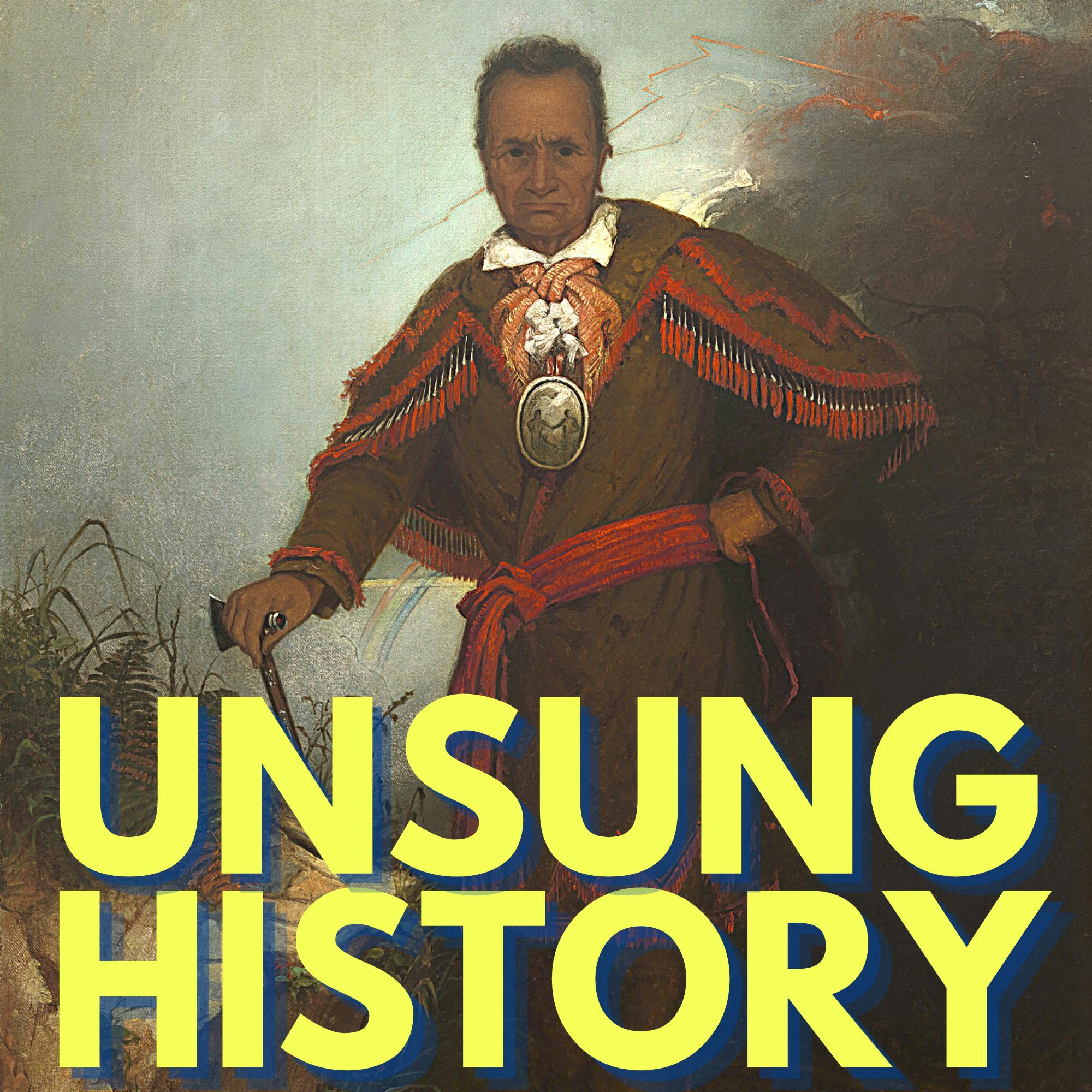
Before Europeans landed in North America, five Indigenous nations around what would become New York State came together to form the Haudenosaunee Confederacy. When the Europeans arrived, the French called them the Iroquois Confederacy, and the English called them the League of Five Nations. Those Five Nations were the Mohawks, Oneidas, Onondagas, Cayugas, and Senecas; the Tuscaroras joined the Confederacy in 1722. Some founding father of the United States, including George Washington and Benjami...
Guest: John C. Winters
120
Sept. 18, 2023
The Great New York City Fire of 1776
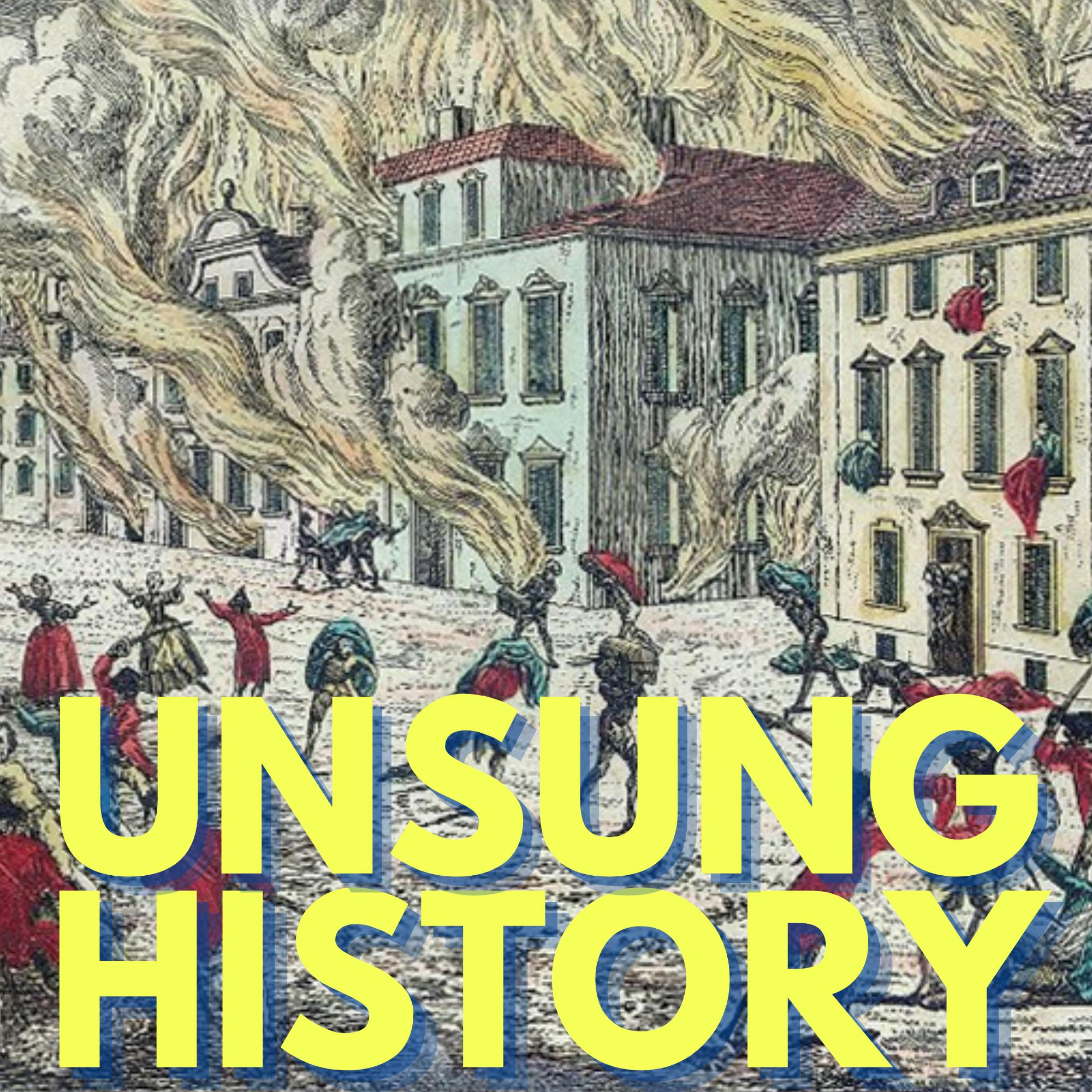
Just days after British troops captured New York City from General Washington and his army in September 1776, fire broke out, destroying a fifth of the city. The British blamed rebels who had remained hidden in Manhattan, but Washington, who had been ordered by Congress to leave the city standing on his retreat, never claimed responsibility, though he complained that the blaze hadn’t caused more destruction. So who did start the fire and why? Joining me this week to discuss the New York fire ...
Guest: Benjamin L. Carp
117
Aug. 28, 2023
Phillis Wheatley
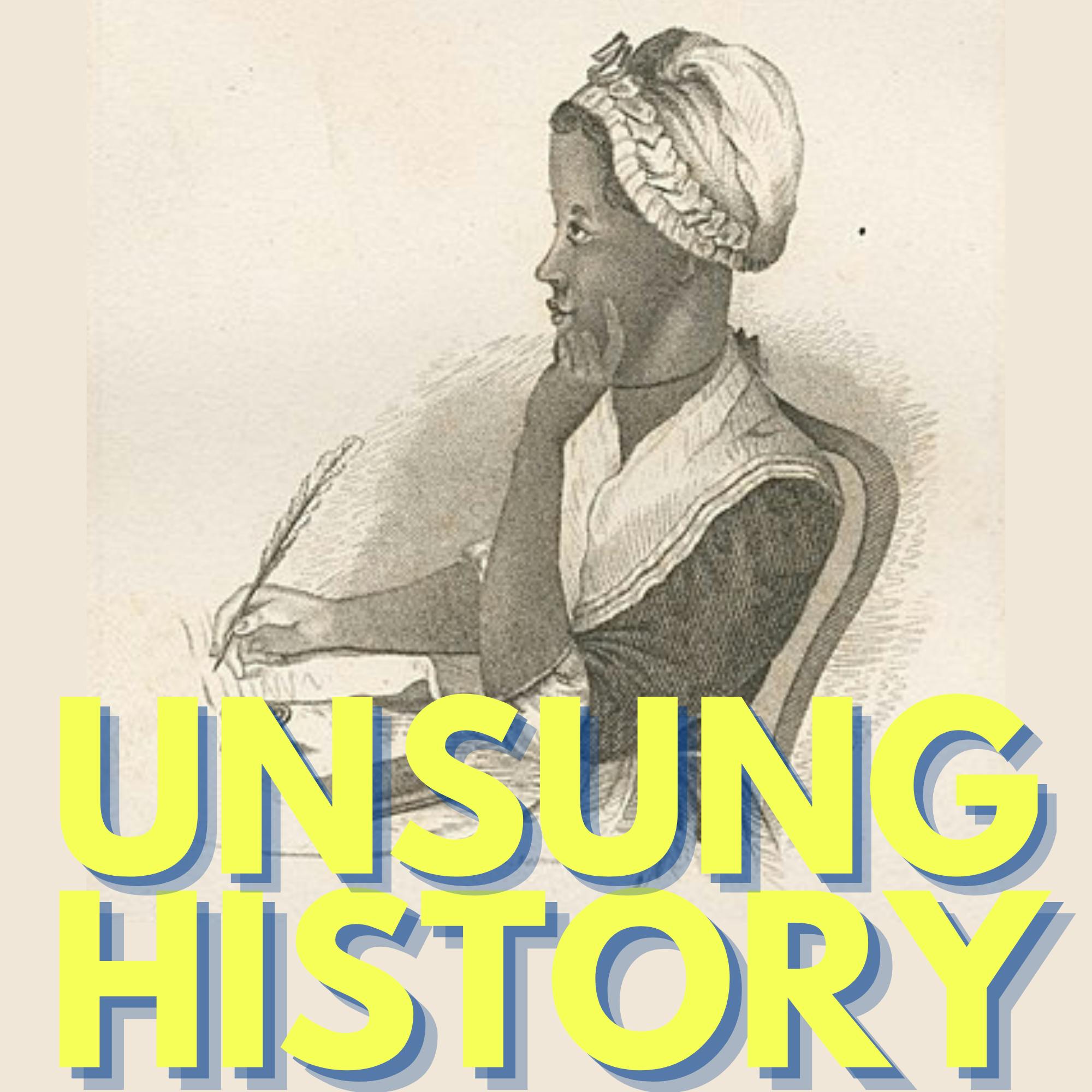
One of the best known poets of Revolutionary New England was an enslaved Black girl named Phillis Wheatley, who was only emancipated after she published a book of 39 of her poems in London. Wheatley, who met with Benjamin Franklin and corresponded with George Washington, was the first person of African descent to publish a book in English. Wheatley achieved literary success and helped drive the abolition movement, but she died young and penniless, and many of her poems were lost to history. J...
Guest: David Waldstreicher
111
July 17, 2023
Enslaved Women who Murdered their Enslavers
In the American colonies and then in the antebellum United States, the legal system reinforced the power and authority of slaveholders by allowing them to physically abuse the people they enslaved while severely punishing enslaved people for even minor offenses. Some enslaved women, who could find no justice in the courts, sought their own justice through lethal resistance, murdering their enslavers. Joining me now to help us understand the enslaved women who chose lethal resistance, what dro...
Guest: Nikki M. Taylor

110
July 10, 2023
Jean-Baptiste Pointe DuSable, the Founder of Chicago
Sometime in the mid-1780s, Jean-Baptiste Pointe DuSable, a Black man from Saint-Domingue, and his Potawatomi wife, Kitihawa, settled with their family on a swampy site near Lake Michigan called Eschecagou, “land of the wild onions.” The homestead and trading post they built on the mouth of the Chicago River, with a comfortably appointed cabin, workshop, bake house, stable, smokehouse, and more, was the first settlement on what would become the city of Chicago. Their importance was long forgotten...
Guest: Courtney P. Joseph
101
May 8, 2023
Women & the Law in Revolutionary America
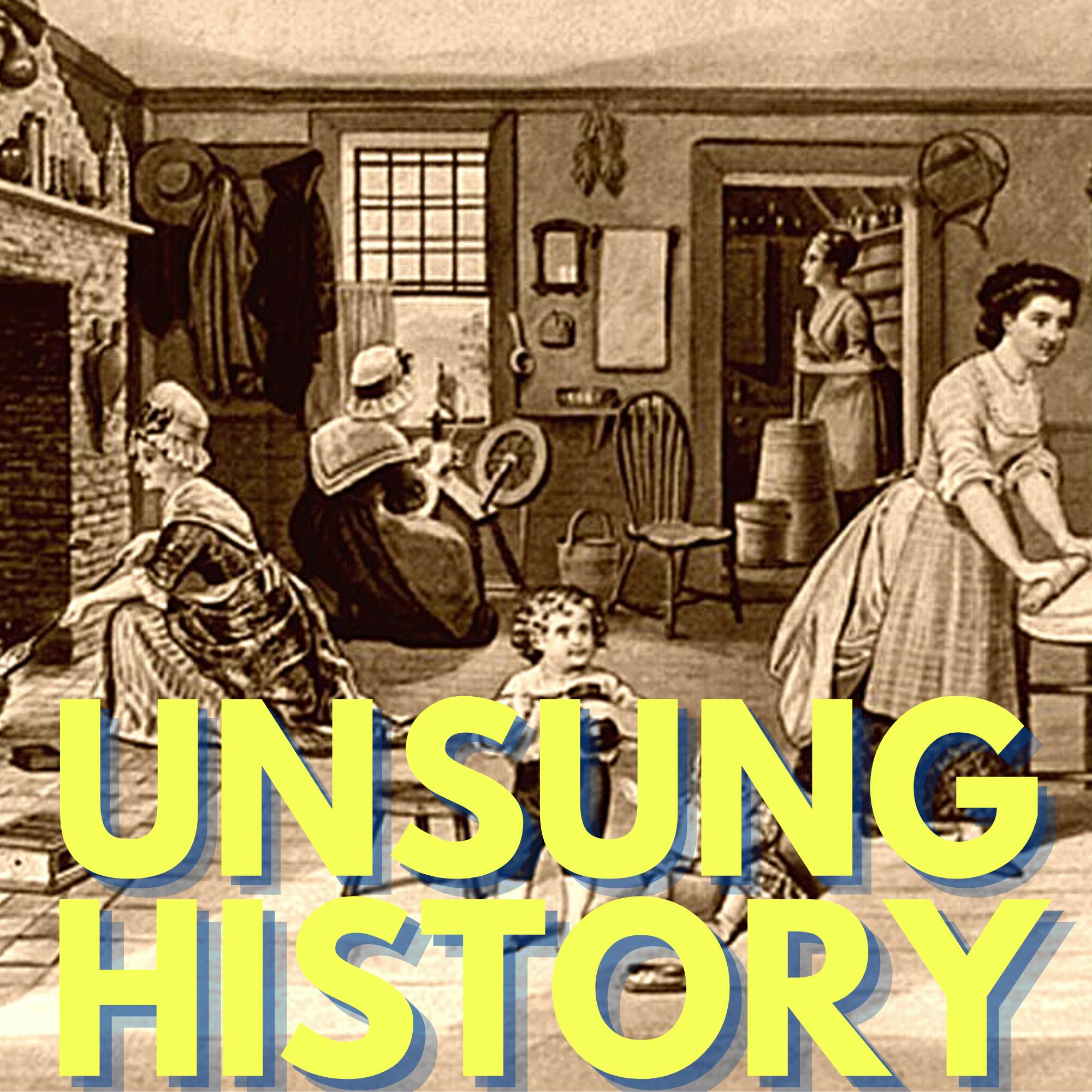
Despite a plea from Abigail Adams to her husband to “Remember the Ladies,” women, especially married women, didn’t have many legal rights in the Early Republic. Even so, women used existing legal structures to advocate for themselves and their children, leaning on their dependent status and the obligations of their husbands and the state to provide for them. I’m joined this week by Dr. Jacqueline Beatty, Assistant Professor of History at York College of Pennsylvania, and author of In Depend...
Guest: Jacqueline Beatty

82
Dec. 26, 2022
Stede Bonnet, the Gentleman Pirate
Stede Bonnet lived a life of luxury in Barbados, inheriting from his father an over 400-acre sugarcane plantation, along with 94 slaves. But in late 1716, when he was 29 years old, Bonnet decided to leave behind his plantation, his wife, and his three surviving children, all under the age of 5, to become a pirate, despite having no experience even captaining a ship. As Captain Charles Johnson put it in A General History of the Pyrates: “He had the least Temptation of any Man to follow such a Cou...
Guest: Jeremy R. Moss
81
Dec. 19, 2022
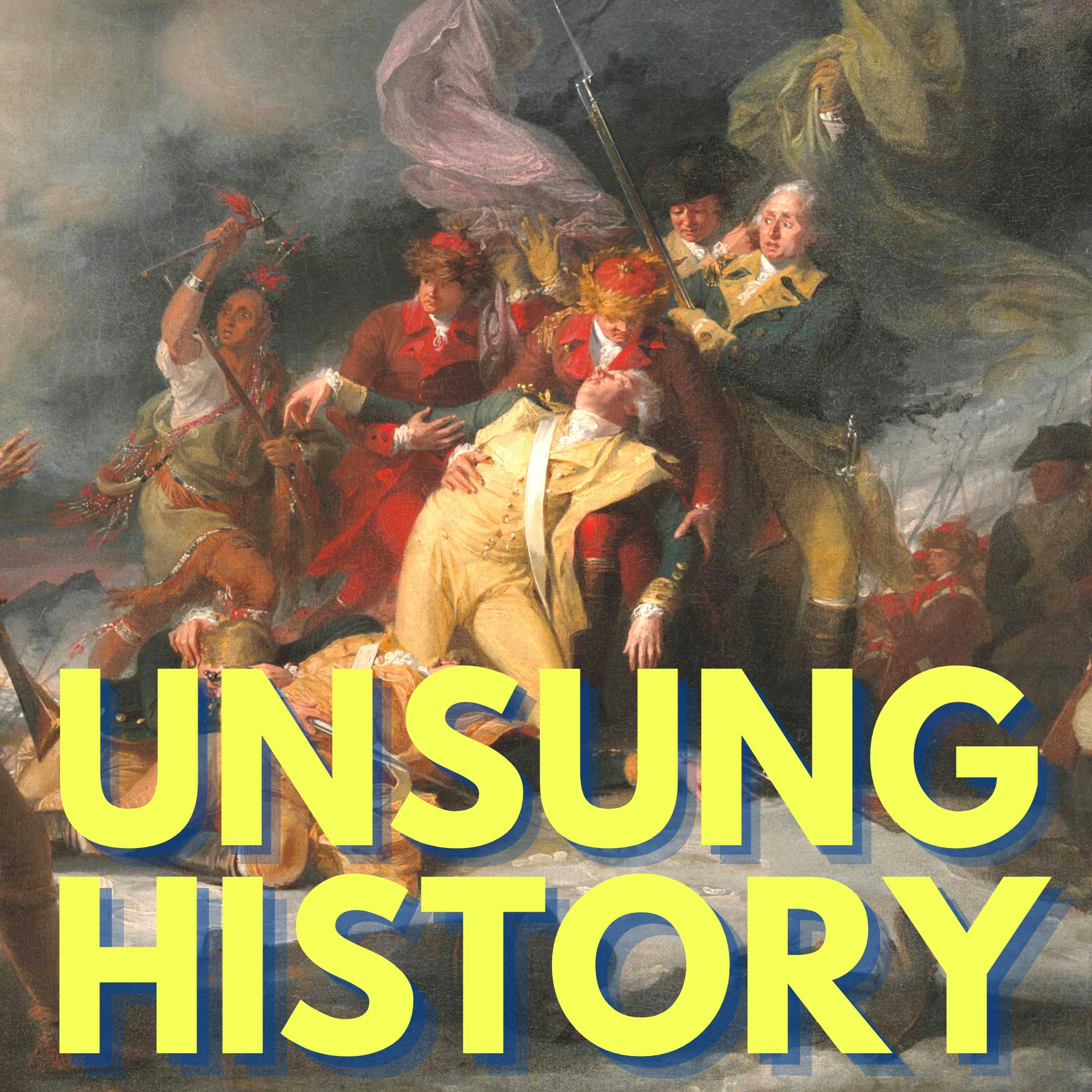
Smallpox Inoculation & the American Revolution
In 1775, a smallpox outbreak struck the Continental Northern Army. With many of the soldiers too sick to fight, their attempted capture of Quebec on December 31, 1775, was a devastating failure, the first major defeat of the Revolutionary War for the Americans, and cost General Richard Montgomery his life. Eventually, George Washington, the Commander in Chief of the Continental Army, realized that the only way to avoid repeated outbreaks was to order mass inoculation of the amy, a controversial ...
Guest: Andrew Wehrman
67
Sept. 12, 2022
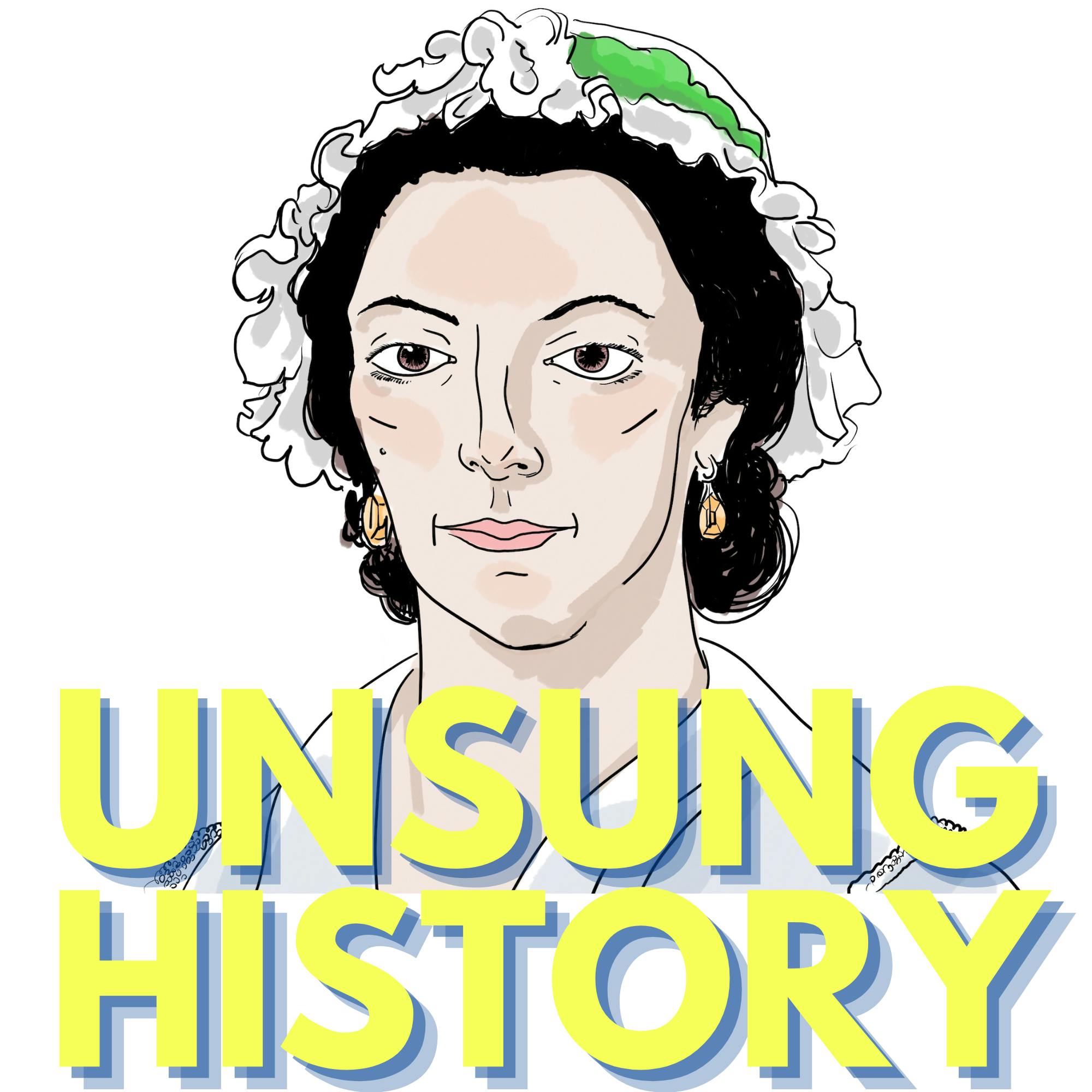
Abortion in 18th Century New England
In 1742, in Pomfret, Connecticut, 19-year-old Sarah Grosvenor discovered she was pregnant, the result of a liaison with 27-year-old Amasa Sessions. Instead of marrying Sarah, Amasa provided her with a physician-prescribed abortifacient, what the youth of Pomfret called “taking the trade." When that didn’t work to end the pregnancy, the physician attempted a manual abortion, which led to Sarah’s death. Three years later, the physician was tried for “highhanded Misdemeanour." The surviving trial d...
Guest: Cornelia H. Dayton
63
Aug. 15, 2022
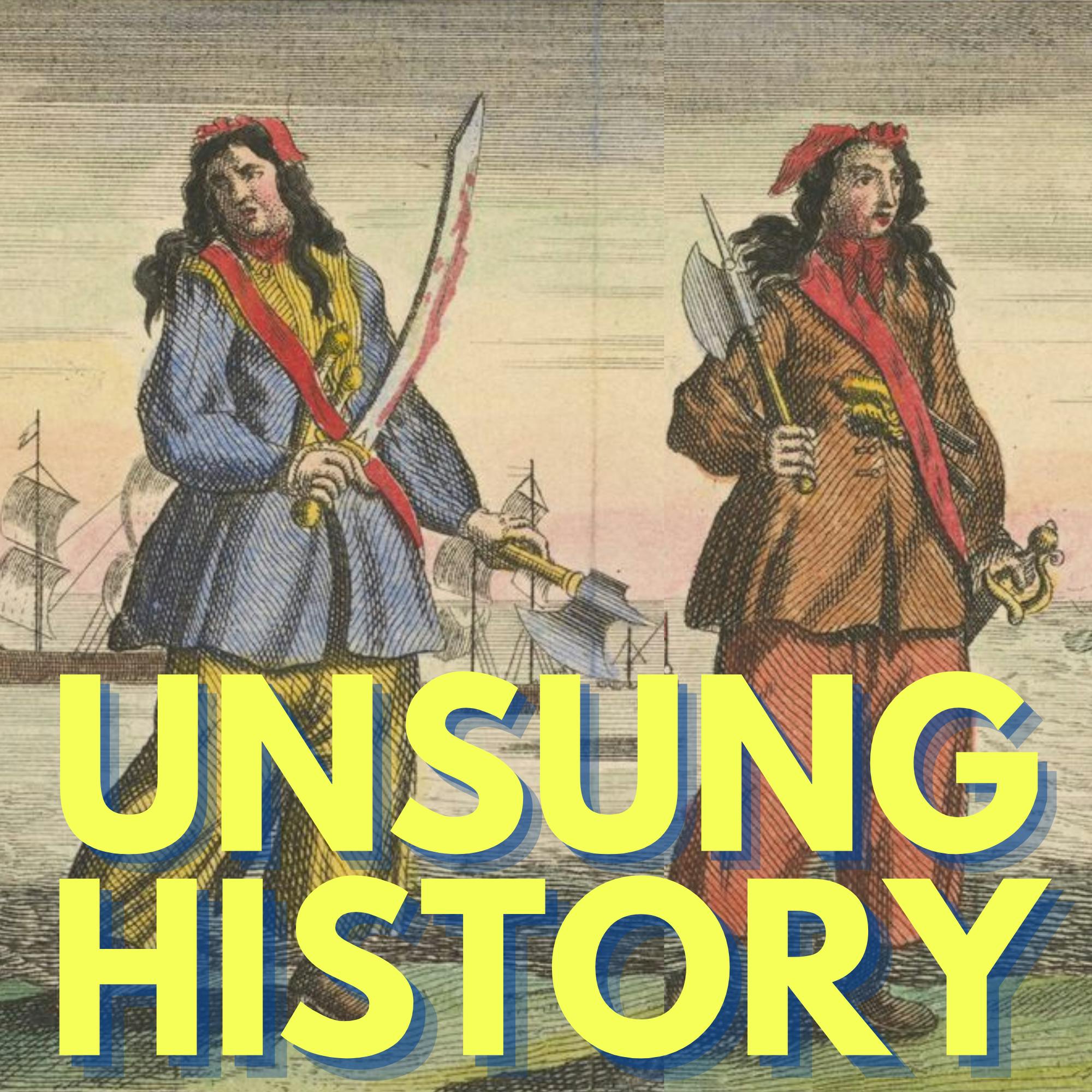
Anne Bonny & Mary Read, Pirate Queens
During the Golden Age of Pirates, two fierce and ruthless pirates stood apart from the rest, despite their brief careers. The only women in their crew, Anne Bonny and Mary Read were aggressive fighters to the end, refusing to surrender even when their captain called for quarter. Joining me to discuss Anne Bonny and Mary Read is pirate expert Dr. Rebecca Simon, author of the new book, Pirate Queens: The Lives of Anne Bonny & Mary Read. Our theme song is Frogs Legs Rag, composed by James Sco...
Guest: Rebecca Simon