


The Feliciana Parishes of Louisiana
 Amazon Music Amazon Music
  Apple Podcasts Apple Podcasts
  Castbox Castbox
  Castro Castro
  Deezer Deezer
  Goodpods Goodpods
  iHeartRadio iHeartRadio
  Overcast Overcast
  Pandora Pandora
  PocketCasts PocketCasts
  Podcast Addict Podcast Addict
  Podchaser Podchaser
  RSS Feed RSS Feed
  Spotify Spotify
  TuneIn TuneIn
  YouTube YouTube
 For 74 days in 1810 the current-day parishes of East and West Feliciana in New Orleans were part of the independent Republic of West Florida, which flew a lone star flag. By that point the residents of the Felicianas, including a large enslaved population, living on land that had been stolen from indigenous people, had been part of three different empires. The republic ended with the parishes annexed into yet another country, the United States, though fifty years later they would be part of still another attempted breakaway republic, the Confederate States of America. Joining me in this episode is Dr. Rashauna Johnson, Associate Professor of History at the University of Chicago and author of Sweet Home Feliciana: Family, Slavery, and the Hauntings of History.
Our theme song is “Frogs Legs Rag,” composed by James Scott and performed by Kevin MacLeod, licensed under Creative Commons. The mid-episode music is “Louisiana,” composed by Oliver Wallace with Lyrics by Arthur Freed and performed by the Sterling Trio on December 27, 1920, in Camden, New Jersey; the recording is in the public domain and is available via the Library of Congress National Jukebox. The episode image is a lithograph believed to be of drawings that artist Lewis Henry made on the Mississippi River around 1846-1848 with Bayou Sara in the foreground and St. Francisville on the bluff in the background; the lithograph was published in 1857 and is in the public domain in the United States and available via Wikimedia Commons.
Additional Sources:
- “Native Americans: the First Families of Louisiana on the Eve of French Settlement (Online Exhibition),” Louisiana State Museums.
- “Louisiana Purchase Treaty (1803),” The U.S. National Archives and Records Administration.
- “West Florida Revolt,” by Samuel C. Hyde, 64 Parishes.
- “The History of the Short-Lived Independent Republic of Florida,” by William C. Davis, Smithsonian Magazine, May 2013.
- “The West Florida Republic,” by Anne Butler West Feliciana Historical Society and Museum.
- “The Siege of Port Hudson: ‘Forty Days and Nights in the Wilderness of Death’ (Teaching with Historic Places),” National Park Service.
Advertising Inquiries: https://redcircle.com/brands
Kelly Therese Pollock 0:00
This is Unsung History, the podcast where we discuss people and events in American history that haven't always received a lot of attention. I'm your host, Kelly Therese Pollock, I'll start each episode with a brief introduction to the topic, and then talk to someone who knows a lot more than I do. Be sure to subscribe to Unsung History on your favorite podcasting app so you never miss an episode, and please tell your friends, family, neighbors, colleagues, maybe even strangers, to listen too. A little over 100 miles northwest of New Orleans, nestled in hills along the Mississippi River sits the town of St Francisville, Louisiana, the parish seat of West Feliciana. A few years after the town's 1807 founding, it became the capital of the short lived Republic of West Florida in 1810. Long before that, though, the land had been inhabited by societies of Native Americans, including the Houmas Natchez, Tunicas, Biloxis and Bayogoulas. When Hernando de Soto arrived in 1541, he found the Tunica living in the region, and he fought them. European diseases like measles and smallpox killed many of the Tunica that De Soto didn't. When the French arrived in the 18th century, they imported enslaved Africans to the region, then part of French Louisiana. When the British won the Seven Years' War in 1763, they acquired the land east of the Mississippi River from France and Spain, with the exception of New Orleans, which went to Spain in the secret Treaty of Fontainebleau. The land that would eventually become the Felicianas was part of British West Florida, and the British enticed settlers with land grants. West Florida wouldn't stay British for long, though. Spanish military leader Bernardo de Galvez conquered West Florida during the American Revolution, and the residents who had already experienced French and British control suddenly found themselves part of the Spanish Empire when Great Britain ceded both east and west Florida colonies to Spain in the 1783 Paris Peace Treaty. Spain, of course, enticed its own settlers to the region. In 1803 a cash-strapped Napoleon sold the Louisiana Territory, including New Orleans, which had recently come back to French control, to the United States for $15 million in the Louisiana Purchase, doubling its size for around four cents an acre. The land was largely inhabited by Native Americans who were given no say in the purchase. Napoleon did not share any of the $15 million with them, either. The Felicianas, though were not part of that Louisiana purchase. The land remained part of Spanish Florida, a confusing state of affairs, even for residents of the region. By 1810, the white population of New Feliciana had grown along with their wealth, produced through the cultivation of cotton and sugar by their enslaved laborers. Despite their wealth, the white planters were in a precarious position, outnumbered by Indigenous and enslaved Black people, surrounded by the United States, and subjects of a weakening Spanish empire that offered them few protections. That was the situation in September, 1810, when armed rebels attacked a Spanish fort at Baton Rouge, killing two Spanish soldiers. The rebels declared themselves to be the Republic of West Florida, with St. Francisville as the capital. Their constitution was modeled on the US Constitution, and their flag consisted of a single white star on a field of blue. It was made by Melissa Johnson, the wife of one of the Feliciana cavalry. An attempt to capture Mobile to add it to the New Republic failed, and the United States quickly took advantage of the revolt. President James Madison issued a Proclamation of Annexation in October, With Congress out of session. Madison's right to take action was dubious at best, and he had constitutional qualms, but he justified it based on ambiguity over the border of the Louisiana Purchase and on the nature of the crisis. The annexation would not have been a surprise to the rebels. That may have been their ultimate goal. The republic's governor, Fulwar Skipwith had previously been an American diplomat serving as Consul General to France under President Jefferson. In Skipwith's inaugural address at St Francisville, he spoke to the possibility of annexation, saying, "The blood which flows in our veins, like the tributary streams which form and sustain the father of rivers encircling our delightful country, will return, if not impeded, to the heart of our parent country. The genius of Washington, the immortal founder of the liberties of America, stimulates that return and would frown upon our cause, should we attempt to change its course." Even so, that annexation came quickly, and without the respect that Skipwith and others felt was due to them. On December 10, 1810, just two and a half months from when it began, the Republic of West Florida was no more, and the US flag was raised. In April, 1812, Louisiana, including the Felicianas, became a US state. In 1824, Feliciana Parish split in two, with St Francisville becoming the parish seat of West Feliciana, and Clinton, the parish seat of East Feliciana. In January, 1861, on the eve of the Civil War, Louisiana seceded from the United States, becoming one of the founding states of the Confederate States of America in February, 1861. During the Civil War that followed, the Union Army fought to control the Mississippi River. In 1863, just 12 miles from St. Francisville, the Union Army lay siege to the Confederate forces at Port Hudson. The Confederates were defending a fort on a bluff above the Mississippi River, and they held out for 48 days while they were attacked by cannons and rifles. The longest siege in American history finally ended in Union victory, just days after another Union victory at Vicksburg, giving the Union forces full control of the Mississippi River. The Emancipation Proclamation, which went into effect on January 1, 1863, had officially freed the enslaved population of the Felicianas. But the end to slavery rolled out slowly as the Union army took control of the region. As of the 2020 census, 15,310 people lived in West Feliciana Parish, 69% of them white and 23% Black and 19,539 people lived in East Feliciana Parish, 58% of them white and 36% Black.
Kelly Therese Pollock 9:45
Joining me in this episode is Dr. Rashauna Johnson, Associate Professor of History at the University of Chicago, and author of, "Sweet Home Feliciana: Family, Slavery, and the Hauntings of History."
Kelly Therese Pollock 10:21
Welcome, Rashauna, thanks so much for joining me today.
Dr. Rashauna Johnson 10:25
Thank you so much for having me. I'm excited to talk with you today.
Kelly Therese Pollock 10:28
Yes, I'm really looking forward to this. I want to hear a little bit about what inspired you to write this book. I know this is your second book, and the first one was more on New Orleans, and this is more of the the rural counties in Louisiana. So tell me a little bit about what what got you started on this project.
Dr. Rashauna Johnson 10:48
Yes, I grew up in New Orleans, but my maternal grandmother grew up in this part of Louisiana. It's the Feliciana parishes. It's rural, very different history, very different reality in the present. And I just wanted to know more about it. So it started with an undergraduate assignment. We had to interview our oldest family member, the oldest woman in our family. It was Black Women in America course. So I interviewed her. This was, I think about 2001. I actually cite the paper in the book. So I interviewed her. And then when I started graduate school, I had a good colleague who was interested in family history. It was becoming increasingly important. And I thought, okay, maybe I will write an article in this vein and think a little bit about family history in this area, and that could be interesting. And then when I started to do the actual research, there was a whole lot more going on in that area than I understood. And so it became a much larger, written, much longer project, because I wanted to know more about this region. I mean, so much of my field, you know, has been focused on Atlantic port cities. I'm part of that right with my first book on New Orleans. And so as part of the Atlantic world, kind of turn, over the last couple decades, we've really been thinking about circulation and sort of sailors and pirates and people who are moving in those ways. And that's been really interesting. But I wanted to think about how I could bring some of those conceptual questions to a region that seemed to defy, you know, the norms of a kind of port city. It's rural, it's, you know, the population is not nearly what it would have been in New Orleans, at least at the starting point. And so I just wondered, how can I think about some of these same questions? I'm interested in circulation, you know, the the ways many different kinds of people come together in a space and create that space, not in a port city, but in this rural area to which I, you know, I'm personally connected. So that's how I got there.
Kelly Therese Pollock 12:39
Talk to me a little bit about the sources, the archives that you used. And you know, you talk some about this in the book, but what sorts of things can and can't be found in those archives?
Dr. Rashauna Johnson 12:51
Yeah. So the thing about Louisiana is there are just a lot of archives, which is unusual, like lots of documentation for lots of really unfortunate reasons, obviously, but there are just really rich archives there. So for this project, I spent a lot of time in Baton Rouge, Louisiana, at LSU archives, at the Louisiana State Archives, and there I read just about everything I could get my hands on. So there were police jury records. So Louisiana has parishes, not counties, but sort of the parish level governance, you know, sort of day in, day out, who bought a new lock for the voting box? You know, kind of granular detail, you know, can we get new chairs for the courthouse level records? And then LSU also has a lot of family papers. Families donated just huge tranches of their own family records, and so those can be useful for correspondence, for financial records, for just sort of personal level intra family conflicts. And those sorts of things can be a lot of fun. Newspapers. I mean, there were far more newspapers in this area than I expected. I certainly expected New Orleans to have lots of newspapers, but I wasn't prepared for the existence of a small but certainly quite vocal community of journalists living in this area, kind of from the very early period into, you know, the late 19th century. And so that's kind of the archival side. But in my own field, there have been a lot of debates about archival research and the limits of using archives to tell the stories of people who were not only excluded from, you know, literacy and the ability to read, write, preserve documents, but you know, the people for whom these documents were a tool of oppression and extraction. And so one of the things that I tried to do here is to be both archival, but also to be really omnivorous, is the way I think of it, and so I draw on family history, stories my grandmother told me, songs, novels, my cousins. I do an oral history with my cousin who masks with the Mardi Gras Indians. But the idea is to draw on as many archival records and as many non traditional sources as I can to get to something that feels like a robust and satisfying history of this region.
Kelly Therese Pollock 15:06
So you mentioned that this region is very different than New Orleans, and it's it's not just because it's rural and not urban, but also it's not as French, right? So how this land changes hands a million times, what that means for the people who live there.
Dr. Rashauna Johnson 15:26
Yes. I mean, that's part of what I found so fascinating there. I think the French heritage in Louisiana just is so prominent for so many reasons, and I think both historically and also politically and economically, right. There all sorts of stakes to that deep association between Louisiana and its French heritage. But the thing about this region is, as you're saying, right, there were just so many other people there, right, starting with the Indigenous people who were there, you know, and building, you know, infrastructure and complex communities long before the French claimed it on a map somewhere. And as we know, claiming it on a map doesn't necessarily mean you're exerting any kind of dominion, right? That's a much slower process. So I mean, part of what I wanted to track was sort of thinking about the Tunica, the Houma, right, any number of groups who were there before the French and with whom the French interacted. But yes, so it's claimed by the French. It then changes hands imperially so many times. It's still very confusing, frankly. But you know, I think my story really picks up when it's under the British briefly, and then under the Spanish before, after 1810 becoming part of the US. I think one of the interesting things there is that it was not part of the Louisiana Purchase, which is always surprising to people. I think many people think that the entire state of Louisiana, with the Louisiana Purchase, became part of the US, and then when they come to this region, like, wait a minute, it was still Spanish in 1808? Yes, very confusing for all involved. And raised a lot of anxieties. Because, I mean, these folks really lived in a period in which it was not far fetched to go to sleep one night, you know, part of one empire, and to wake up the next morning and sort of wonder, okay, whose are we at this point? So, and you can capture that in archival records where people are expressing that kind of anxiety. So, yes, it becomes part of the US in 1810 thanks to the West Florida Rebellion, which I think of as a kind of early version of Texas, like, there's a way that, I mean, the Lone Star Republic, you know, this whole idea of Anglo settlers who are moving to the Spanish area, and they rebel, and they, you know, ultimately become part of the US. And there's all sorts of finger pointing on who's responsible for that and why. But the other part that's important for me here is, you know, I think the way a lot of Louisiana history is written is that we have kind of colonial history, 19th century history, 20th century history. And part of what I wanted to think about was how these successive administrations and successive colonial eras all worked to build toward this kind of 19th century reality, rather than, you know, ending the story with the Louisiana Purchase or with 1810. I wanted to think about the ways we could track the ongoing implications and hauntings. It's kind of one of the framings I use over the long 19th century through the US period into the rise of plantation slavery and later the Jim Crow south.
Kelly Therese Pollock 18:19
Yeah. And so this is not unusual for the south, of course, but the wealth in this region comes from both stealing land and stealing labor. What does that mean for the people who continue to live there? You know, what does that look like the long history of extracting labor and land?
Dr. Rashauna Johnson 18:40
I mean, I think part of what I wanted to think about was, you know, how do we give a kind of backstory to present day inequalities and present day hierarchies? And I think that one of the gifts that I think historians can offer is context to remind us that these things did have a history, that they haven't been this way, you know, from time immemorial, but that they do represent, you know, sort of parts of a much longer story that help us to explain our present and so I don't think it's a secret that Louisiana continues to struggle in many ways, right? Many people in Louisiana continue to struggle financially, health, you know, education, you know, name the markers, right? It's one of the states where we have to think a lot about the ongoing role of racism, inequality, broadly. And I think that's one of the things that I wanted, that I hope that this work will help us to think through. I mean, I am a historian of, you know, the African diaspora. Obviously, I represent people of African descent. But I also wanted to do my best to talk about Indigenous people, to talk about poor white people, to talk about, you know, the tiny number of Jewish immigrants to this area, and to think about the ways that any number of people kind of got by in this region of deep inequality, and how, you know, having a fresher understanding of what that history was might allow us to have, I think, more perhaps difficult but also ultimately productive, conversations about how we move forward. And so I think that one of the things that historians we insist upon is that if everything has a history, if everything is contingent, then it means that we can make decisions that will advance egalitarian, democratic goals, rather than entrenching these kinds of, you know, racist and classist and sexist hierarchies that can seem so natural, but that in fact, were produced.
Kelly Therese Pollock 20:32
Yeah, and what's clear from what you write is that people who were enslaved, despite obviously being in brutal conditions wherever they could exert any kind of autonomy did, and we're building culture. Could you talk through that a little bit?
Dr. Rashauna Johnson 20:48
Yes. I mean, so one of those I joke with the graduate students, you know, we presented all these binaries in year one, and then we explode them. Yes. And so the kind of domination versus resistance agency questions, you know, those are all the sorts of questions we think through the very beginning of our time as historians, and that I think continue to haunt so much of our own research. And I think that's certainly the case for me. And so I wanted to find that balance. I certainly wanted to outline the horrors of slavery. I didn't want to minimize, yeah, the horrors of what it meant to try to live under these truly brutal and awful conditions without reducing people to their status. You know, I really wanted to take seriously the ways that they nonetheless lived, you know, built families and communities, built rich cultures, and that those things also, I think, had a relationship to the ways that they were able to organize politically, right? So not saying that those things were the same right that, you know, I do want to hold space for the ways individual expression, you know, can mean a lot of different things, and that politics can mean a lot of different things. So I don't want to conflate all these things, but I did want to capture the existence and, frankly, joy of black life in this region, even as I was chronicling the difficulties and the struggles. Because I think both of those things, both sides, are actually quite critical to understanding this region and the people who lived in it.
Kelly Therese Pollock 22:15
Yeah, one the brutalities, of course, that we see over and over again is the the sexual assault of enslaved women. And you know, even in your own family, you talk about that. One thing you say several times is, you know we we can't know the interior lives of these women, and we can't know the complicated things they may have been feeling. Can you talk some about what, what that looks like when you're thinking through the archives, and you know what you can see and what you you can't really get at?
Dr. Rashauna Johnson 22:48
Yeah, so I will talk about the silences and sort of what that means for us. But first, I think it's important to note that there are a handful of testimonies in which, you know, people did, in fact, talk about their experiences of sexual violence. I talk about one woman in particular who testified before a kind of federal committee in a way that was really quite haunting, but also striking. I mean that to think about the amount of courage It must have taken for her to do that in that context, when you know we know in the present, it is still extraordinarily difficult to come forward with those sorts of you know, accounts. I mean, we're in the middle of a version of that now, in terms of thinking about how difficult it can be to grapple with the meaning of sexual violence, you know. So for this woman to have done that in, you know, the post emancipation south, I think, is just stunning, but also worth remarking. So I do want to, you know, take note of the times people did, in fact come forward with those kinds of testimonies. But the other thing is, I want to note that within families, right, people did, in fact talk about these things, and that's how I learned about this account in my own family. I was an adult. This was after, I think, that first interview with my grandmother. This was a few years later, when I was in my grad school coursework. It was very clear I was going to become a historian, very clear that at some point I would do something with her family history. So she had a kind of get it on the record. Energy in some of those conversations, which was really inspiring. And so it was very important for her to tell me about this story at that point. And so there is something about truth telling that I think can be healing. And so I think it's worth noting that at the same time, I think you're right. I think the more normal experience for us as historians is silence, and it does raise all sorts of ethical questions about, how do we handle this, right? Obviously, we want to talk about this. Obviously, you need to note that sexual violence, you know, like lynching, like, you know, mass incarceration, were all technologies of, you know, the reassertion of white supremacy in the post emancipation context. But you know, I do think it requires a certain amount of care, because one, I want to think about readers who, you know, have who bring their own complex experiences to this, and I don't want to make reading my book an overly horrific experience for people who've had to deal with this in their own lives, while also doing my best to note this. And so, as a writer, I chose brevity, and so I don't necessarily linger on a lot of details. I don't ask the reader to, you know, sit with this for too long because, you know, I thought that was the best I could do in terms of trying to figure out what felt like a an ethical but also intellectually accountable approach to such a sensitive topic.
Kelly Therese Pollock 25:39
You, you mentioned toward the beginning that you were thinking about family history. This book, of course, is not strictly a family history, I think you say at some point it's a community history, but yet, you're also talking about your own ancestors, your own family members. What was that like for you as a historian, to be not, you know, writing a family history, but thinking about your own family as you're writing this book?
Dr. Rashauna Johnson 26:03
Terrifying! You know, I'm a very private person, and I'm not one to put myself at the center of, you know, my work in a certain way. And so in my first book, I was able to hide a little bit more, I think. So I talk a little bit more about my own experiences in the preface, but the rest of the book is, in many ways, a kind of straightforward academic monograph, whereas this one is a lot more personal, which is pushing me out of my comfort zone, I should say. But I think it's actually been really rewarding one, because, you know, on the intellectual side, again, I'm trying to find every source I can, to try to think about this region and to think about the people in it. And, you know, I think that having access to my own family and my own family stories is actually quite important as a kind of method, right? My colleague, Kendra Field, talks a lot about this, right, sort of the way that having access to family history broadens the kind of evidentiary base that we're able to have. And so there is something quite meaningful there, but on a personal level, you know, it's been really cool to watch my family's response to it, and to sort of see, okay, what parts of things you know, what comes forward? What do you talk about? How does this, in some ways, memorialize our family, while also thinking about a certain approach to the region? And, you know, I mean, I don't think it's a secret that this is a tricky time to do Black history, and so I think that it's just important to show that you can do a number of things. You can do the kind of hard nosed archival approach where you're doing all the sorts of granular, heavy, you know, endnoting and footnoting and so on, while also talking about some of the fuzzy stuff of being, of growing up, you know, a Black woman in New Orleans in the 80s and 90s, which was there were certainly challenges, but also a lot of fun. And so being able to talk about how fun it is to go watch the Mardi Gras Indians, or to, you know, have them go to a second line or listen to bounce music, I think that's just really important, because, again, like thinking about both the horrors and the hauntings, but also the joy is just really important, both past and present.
Kelly Therese Pollock 28:10
I want to ask a little bit about how you think about family when genealogy is not straightforward. So we've mentioned sexual violence in family. And there's also one of your ancestors takes the last name of his enslaver. How do you think through all that sort of tangled web?
Dr. Rashauna Johnson 28:31
Yeah. I mean, I think that's part of why I've resisted the label of family history. Because I think when we say family, even if we complicate things, there is still a way that a certain kind of nuclear biological family emerges when we use that term, and I think that's why community study feels more kind of natural to me, in part because, as part of our own kind of family culture, we never drew overly rigid boundaries around biology, like we're one of these southern families where I joke that if you come to one barbecue, you're a cousin. It's just sort of, yeah, this is sort of our norm. So I've never been overly invested in the kind of, you know, family tree, biological, kind of, I think of it as the begets from Exodus. I don't know it's been a while, but, like, maybe somewhere in the sort of Exodus zone of the Bible. But, you know, and so I didn't want this to become a kind of chronicle of, you know, this one birthed this one birthed this one. But instead to think in these broader ways about the uses of family, whether that's, you know, the ways empires assigned land grants based on the number of people in the family, right? That's not necessarily a kind of family history question in the straightforward sense, but that is a way that the actual constitution of a family translates into material possessions, right? In terms of property, in terms of, you know, acres of land. So I wanted to think about that. But as you're saying, I also wanted to think about the ways that, how, this kind of violence could, you know, force people to kind of reshape a family tree, right? This kind of violence literally reshapes, you know, the family, and remakes the family. And I wanted to think about how people worked through that, as individuals, as members of a family, how that continued to haunt, you know, like my grandmother, continued to think about the prospect of sexual violence in the 1990s when, like, I had no concept of, certainly, at that time, no real concept of how endemic sexual violence was in the Jim Crow South. And so learning about this project and deepening and that literature helped me, you know, better understand some of the things she said to me when I was a teenager. And so, yeah, I mean, I think there's a lot more I could say there, but I think you're right that one of my goals here is to think beyond a kind of nuclear, biological family and reproduction, and instead to think about the many different definitions of family and uses of family, and the ways they could translate into very real experiences and inequalities.
Kelly Therese Pollock 31:00
So you've been talking about the Felicianas. And anybody who is maybe from Louisiana, or knows the area, knows that there's now east and west. Can you talk what happened there?
Dr. Rashauna Johnson 31:13
Those differences are real, I tell you. And they persist. They are serious. And so it was one region for a while, and then early in the kind of 19th century, there was a political split in which, you know, sort of, you know, factions and so on, kind of split. So that West Feliciana is closest to the river. It's wealthier, kind of a more kind of aristocratic vibe, whereas East Feliciana is a bit more hard scrabble, and those differences persist into the present. And so today, right West Feliciana is a tourist destination. You can go and see these really charming, quaint homes, and yeah, like, I mean, even when you go, you see the tourist busses coming through and so on, whereas not so much in East feliciana. And you know, because those were, you know, even in the antebellum period. I mean, some of these folks were quite wealthy, relatively speaking, but they were known for being, and we're talking free people and land landowners, obviously, but they were known for being less wealthy than the folks in West Feliciana. And those differences persist. And when I teach my when I teach my undergraduate courses, it's, you know, it's hard to truly imagine how much wealth the cotton, you know, plantations generated, and how absolutely just stark the inequalities were, I mean. And so you can still go to these huge plantations and go on these plantation tours in West Feliciana, especially, less so in East Feliciana. But you know, West Feliciana, there are several, and you can go and visit them. One is haunted, right? Allegedly haunted the Myrtles. And you know, it just, it's kind of until you're actually there. It can be hard, really, to fathom what 10s of 1000s of acres meant, and what you know hundreds and hundreds of laborers meant, and just how massive these estates could become, and therefore just how much wealth was generated for a handful of people, and obviously through the you know, extraordinary exploitation and dispossession of many, many, many more.
Kelly Therese Pollock 33:15
So after the Civil War, slavery, of course, is outlawed, but the white people of the Felicianas continue to find ways to exploit mostly Black people, and one of those, of course, is the building of the Louisiana State Penitentiary, which is still there, which is still doing that work. Can you talk some about what that shift looks like out of slavery, but into the Jim Crow South, which in some ways is still there.
Dr. Rashauna Johnson 33:47
I mean, one of the things that I found interesting is sort of thinking about that space before it became kind of the penitentiary, and being able to track some of that archivally. And so it was interesting. There's this one document. It's in New Orleans at the Williams Research Center at the historic New Orleans collection. But it's a manual for, you know, running a plantation that, you know, probably had real resonance on some of the plantations that would become what we know of as Angola now, and you know, so to see that kind of before, if you will, and to see how people were thinking about, you know, keeping the space going as a plantation before the Civil War. It's really kind of haunting. I keep using that word, but, like, it is sort of the best one that I have for this phenomenon. And then to think about the ways there could be this very dramatic victory at Port Hudson and this very dramatic Civil War that, you know, cost hundreds of 1000s of lives and all this courageous fighting and hopes of getting to a different world. And, you know, I do want to take seriously the ways people were able to enjoy their freedom, and then to really, you know, try to make meaning of this hard fought status. And so I don't want to move too quickly into thinking about the replication of these hierarchies, because, you know, I think it's important to notice. You know, what these people hoped for and what their aspirations were, but you're right. There is this way that so quickly we see one obviously, in the absence of major land redistribution after the Civil War, right, people continued to own these, you know, 1000s and 1000s of acres that people had to think about what to do with them. And we see this kind of gradual emergence of this institution that we now know of as Angola, and as the scholars of mass incarceration, you know, they know. There are all sorts of debates there, you know. But there is something quite jarring about going to this site today that still operates driving the Tunica Trace, you know, to this really like centuries old infrastructure driving this trace to this facility that is so perfectly situated to be both plantation and prison, which it kind of currently still is, right in terms of Mississippi River and this rural setting. And jarringly, right, a beautiful setting, right, that is just, you know, the land itself is just quite beautiful. And then when you have to reckon with the horrors of what goes on behind that gate and how long they've been going, it's really just, it's really just distressing. And I think that for me, as a historian of slavery, there's a there's a museum, right? You can go to the museum, and you can go and look at any number of really interesting exhibits there, in cases that were built by people incarcerated there and and keeping in mind that obviously we associate this with men, but obviously women have been held there and in other sites across Louisiana, it just it just reminds us of the ways that what had once been a kind of private relationship could become something of a public relationship, the ways that the various stages, right, convict leasing, and then kind of moving away from those sorts of systems. I think this reminds me of one of the things that I want to get across in the larger work, which is that it's easy to think about persistence, right? Obviously, you move from slavery to prisons to these other forms of oppression, and I'm not overturning that, but there is something that I think that's even more distressing, frankly, about the ways that it isn't simply a straight line, but that there are these opportunities when things could have gone differently and people instead chose to reconstitute various oppressive systems and then chose to reformulate them again. And we see that in this context of mass incarceration, it's not simply a recreation of slavery, you know, that there are innovations, and that that also means that we get to innovate as well, right? That these these structures are certainly nimble. But, you know, so are we. That's where I tried to end the book with thinking about the ways that thinking about these kinds of reconstitutions of power, you know, are each opportunities for us to think in different ways about how to do things differently.
Kelly Therese Pollock 37:48
You opened the book talking about your cousin, Veronica, who's one of the Mardi Gras Indians, which was something I was not aware of and was fascinated by. Could you talk a little bit about that and the interesting conversations that you've had with her about the way that she thinks about presenting herself in the costumes that she's designing.
Dr. Rashauna Johnson 38:10
Yes, I mean, and I should say, there was a wonderful article in The New York Times over the weekend about the Mardi Gras Indians and Super Sunday. And so they're just in great images. And so if anyone's interested, there are more images there. But, you know, this is a very old tradition. Dates to the late 19th century. People claim, you know, like sort of different families claim different genealogies. So people of African descent and or Afro native descent, you know, created these, this, this really rich, this really rich set of rituals and practices and languages and and movements. And they are, there are sort of different gangs across the city. That's their term. And each year, they spend all year making, you know, hand beading these elaborate, beautiful suits to wear about three times a year, right? Mardi Gras day, Super Sunday, St Joseph's Day, their number of key days that they wear them in addition to other things, and they compete over whose suit is the prettiest, and they meet, and they do their rituals, and they have their language. And it's really interesting, because initially, right, this is not something that was celebrated by the dominant culture, right? This is something that's happening outside of the dominant culture. Many of them got into a lot of trouble for doing this. A really important leader. They died in the after giving a kind of forceful defense of the Mardi Gras Indians at a city council meeting because of police harassment and so on. It's expensive. It's costly. It's time consuming. They expend a lot of time and money and energy, you know, building these beautiful suits that are ephemeral, right? You can't wear the same one every year, as the famous song tells us, right? Every year you have to make a new suit. And, you know. But what I find interesting among so many other things, is that in this particular year, my cousin and her larger group decided to do memorial suits, where the, you know, they celebrated ancestors, right here. People in their families who passed. And my cousin hand beaded this really elaborate and beautiful suit that features images of our grandparents, of our aunts, her mother, my mother on the wings. And I wanted to think about what it meant for this woman, you know, this woman of size, dark skin, beautiful, the color of beautiful, rich chocolate, you know, taking up space in the city streets. Not the most elite people, not the people who get invited to, you know, the talks and so on, but who are very much making claims about history, and are very much using their artistry to weave a kind of family history, weave a kind of narrative, and to think about how that then empowers them to take up space in the present and into the future. And so for me, I think that this is a number of things right? There's just admiring the beauty and admiring the esthetics of it all, admiring the communal nature of these organizations and the ways that for over a century, these kinds of groups have been performing mutual aid and support and avenues for personal expression, and also the ways that they tell us something about how to navigate very difficult times. I mean, so many of these are folks who have not had the easiest, you know, of lives, and they've had to deal with many, you know, kinds of challenges. You know, New Orleans is not the easiest place for many Black people, working class people, and nonetheless, they're creating these truly beautiful, one of a kind suits each year. And I think there's something for all of us to learn about, the power, not only of survival, but of defiance, even on landscapes in which we're not meant to thrive.
Kelly Therese Pollock 41:42
And if listeners go Google Mardi Gras Indians right now, they'll see a picture of your cousin. That is true. I did it. I tried it, and there it was.
Dr. Rashauna Johnson 41:53
It's true. It's true, I mean, but I also talk about this, and she talks about this in the preface, like it. It gets weird, because they are such beautiful suits, and there are those pictures land in strange places, right, like people commoditize these images. And, you know, don't necessarily give credit to or ask the consent of or profits to these creators. And so it does raise a host of tricky issues in which we see these kind of competing values, in which this, you know, very old practice comes into conflict with people who want to monetize these images, and so it does lead to some tricky situations. It's true.
Kelly Therese Pollock 42:31
I would love to encourage listeners to buy your book. Can you tell them how they can do that?
Dr. Rashauna Johnson 42:36
Yes, it is available on Cambridge's website, and it's also available through your local bookstores, as well as the large you know, online retailers.
Kelly Therese Pollock 42:49
Rashauna, thank you so much for speaking with me. I loved reading your book, and it's been really fun to talk to you.
Dr. Rashauna Johnson 42:54
Thank you so much. I've enjoyed this conversation, and thank you for just engaging this work that's very special to me.
Teddy 43:59
Thanks for listening to Unsung History. Please subscribe to Unsung History on your favorite podcasting app. You can find the sources used for this episode and a full episode transcript @UnsungHistoryPodcast.com. To the best of our knowledge, all audio and images used by Unsung History are in the public domain or are used with permission. You can find us on Instagram @Unsung__History or on Facebook @UnsungHistoryPodcast. To contact us with questions, corrections, praise, or episode suggestions, please email kelly@UnsungHistoryPodcast.com. If you enjoyed this podcast, please rate, review, and tell everyone you know. Bye!
Transcribed by https://otter.ai
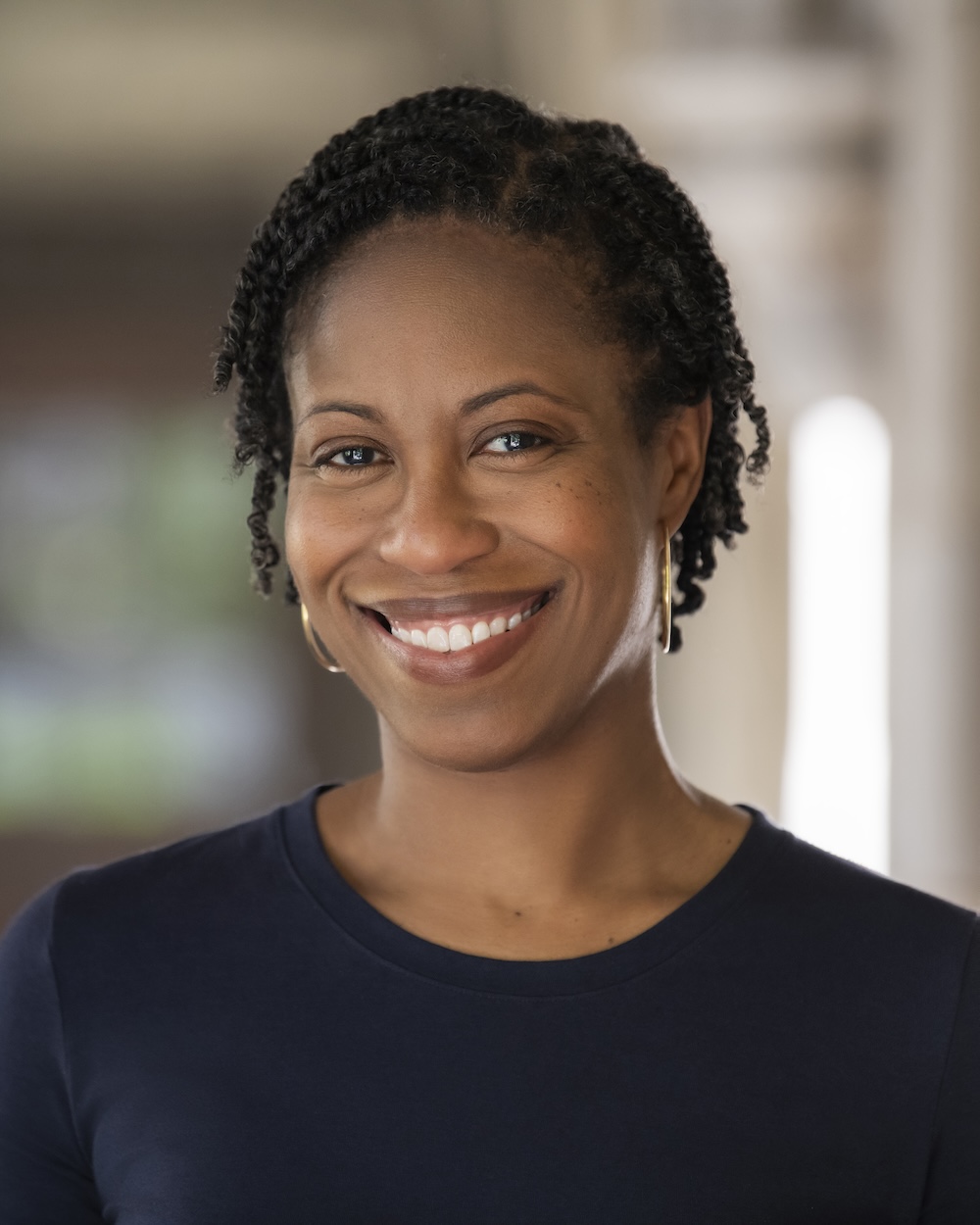
Rashauna Johnson is a historian of the 19th-century African diaspora, with an emphasis on slavery and emancipation in the US South and Atlantic World. She is especially interested in the limits and possibilities of archival histories of enslaved and freed people and the worlds in which they labored and lived. Johnson teaches courses on race, slavery, and nation; methodologies of slavery studies; and the 19th-century US.
Johnson is the author of Slavery’s Metropolis: Unfree Labor in New Orleans during the Age of Revolutions (Cambridge UP, 2016; paperback 2018), which was awarded the 2016 Williams Prize for the best book in Louisiana history and the 2018 H. L. Mitchell Award by the Southern Historical Association for the best book on the southern working class. Slavery's Metropolis was also named a finalist for the 2016 Berkshire Conference of Women's Historians Book Prize, honorable mention for the Urban History Association's Kenneth Jackson Award, and a finalist for the 2017 Frederick Douglass Book Prize. Her second book, Sweet Home Feliciana: Family, Slavery, and the Hauntings of History (Cambridge University Press, 2026), uses her grandmother’s birthplace in rural Louisiana as a prism to illuminate foundational, if fraught, aspects of US history including colonialism, slavery, war, citizenship and unfinished freedom. That project has been supported by the Hutchins Center for African & African American Research at Harvard University, the Mellon Scholars Post-Doctoral Fellowship in African American History at the Library Company of Philadelphi… Read More


