


The Frontier Myth and the People of the Western United States
 Amazon Music Amazon Music
  Apple Podcasts Apple Podcasts
  Castbox Castbox
  Castro Castro
  Deezer Deezer
  Goodpods Goodpods
  iHeartRadio iHeartRadio
  Overcast Overcast
  Pandora Pandora
  PocketCasts PocketCasts
  Podcast Addict Podcast Addict
  Podchaser Podchaser
  RSS Feed RSS Feed
  Spotify Spotify
  TuneIn TuneIn
  YouTube YouTube
 In 1893, historian Frederick Jackson Turner advanced his now-famous Frontier Theory, arguing that the American identity was forged through the process of exploring and adapting to new environments in the frontier west. Key to both Turner’s theory and the myth of the frontier that pre-dated it was the idea that brave white American men conquered a previously empty land through their grit in a relentless march west, but the land was populated long before white Americans arrived, and the people who lived, explored, and settled there were a far more diverse population than the myth acknowledges. Joining me in this episode is returning guest Dr. Megan Kate Nelson, author of The Westerners: Mythmaking and Belonging on the American Frontier.
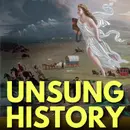
Our theme song is “Frogs Legs Rag,” composed by James Scott and performed by Kevin MacLeod, licensed under Creative Commons. The mid-episode music is “The west, a nest and you,” composed by Billy Hill with lyrics by Larry Yoell and sung by Lewis James on November 16, 1923, in Camden, New Jersey; the performance is in the public domain and is available via the Library of Congress National Jukebox. The episode image is the American Progress, painted by John Gast in 1872; the image is in the public domain and is available via Wikimedia Commons.
Additional Sources:
- “Brief History of the AHA,” American Historical Association.
- “Significance of the Frontier in American History (1893),” by Frederick Jackson Turner, The American Yawp Reader.
- “How the Myth of the American Frontier Got Its Start,” by Colin Woodard, Smithsonian Magazine, January/February 2023.
- “Sacagawea, c. 1788 - c. 1812/1884?” by Teresa Potter and Mariana Brandman, National Women’s History Museum.
- “Sacagawea: Intrepid Indigenous Explorer [video],” The New York Historical.
- “Lewis & Clark Expedition,” National Archives.
- “Indian Treaties and the Removal Act of 1830,” Office of the Historian, United States Department of State.
- “Indian Territory,” Library of Congress.
- “Indian Territory,” by Dianna Everett, The Encyclopedia of Oklahoma History and Culture, January 15, 2010.
- “Cheyenne Sanctuary: The Northern Cheyennes’ Exodus, Mari Sandoz, and Lost Chokecherry Lake,” by Emily Levine, The Nebraska Sandhills, October 23, 2024.
- Northern Cheyenne Tribe.
Advertising Inquiries: https://redcircle.com/brands
Kelly Therese Pollock 0:00
This is Unsung History, the podcast where we discuss people and events in American history that haven't always received a lot of attention. I'm your host, Kelly Therese Pollock, I'll start each episode with a brief introduction to the topic, and then talk to someone who knows a lot more than I do. Be sure to subscribe to Unsung History on your favorite podcasting app so you never miss an episode, and please tell your friends, family, neighbors, colleagues, maybe even strangers, to listen too. At a meeting of the American Social Science Association in Saratoga, New York, in 1884, a group of, "professors, teachers, specialists, and others interested in the advancement of history in this country," voted to establish the American Historical Association, or AHA, in recognition of the newly developing academic field of history. Five years later, in 1889, an act of Congress incorporated the AHA, "for the promotion of historical studies, the collection and preservation of historical manuscripts, and for kindred purposes, in the interest of American history and of history in America." In 1893, the AHA held its annual meeting in Chicago, which was then host to the World's Columbian Exposition. It was at that meeting that Frederick Jackson Turner gave an address that, when published, would become one of the most influential essays in American history. In "Significance of the Frontier in American History," Turner was reacting to a report by the superintendent of the census for 1890, that said that the United States had been settled to such an extent, "that there can hardly be said to be a frontier line." For Turner, this signaled a momentous change, as he noted, "The frontier has gone, and with its going, has closed the first period of American history." His argument was that it was the frontier itself that made America what it was, that the American identity was forged through the process of exploring and adapting to new environments and new challenges. Argued Turner, "Since the days when the fleet of Columbus sailed into the waters of the new world, America has been another name for opportunity, and the people of the United States have taken their tone from the incessant expansion, which has not only been open, but has even been forced upon them. He would be a rash prophet who would assert that the expansive character of American life has now entirely ceased. Movement has been its dominant fact. And unless this training has no effect upon a people, the American energy will continually demand a wider field for exercise, but never again will such gifts of free land offer themselves." Of course, that land was not free for settlers to take. Long before white Americans had pushed westward, Indigenous civilizations had lived on and had traveled the so called frontier. When Meriwether Lewis, William Clark, and their Corps of Discovery traveled west early in the 19th century, on commission from President Thomas Jefferson to learn what they could about the new Louisiana Purchase and beyond, they turned for assistance to an Indigenous woman. Near present day Bismarck, North Dakota, Lewis and Clark hired French Canadian fur trader Toussaint Charbonneau to act as an interpreter. But it was one of Charbonneau's wives, the teenaged Sacagawea, who had just given birth to their son two months earlier, who provided not just additional linguistic support to the expedition, but also gave them information about foods that were safe to eat, how to make clothing and shoes from leather, and importantly, the best route to take. Sacagawea's geographic knowledge came from tragedy. Years earlier, she had been kidnapped from the Lemhi Shoshone people in what is now Idaho by the Hidatsa. For Sacagawea, the trip west was a homecoming of sorts, and her presence among the group helped the Corps negotiate with the Lemhi Shoshone for the horses they needed to cross the Rockies. After visiting her homeland, Sacagawea remained with Charbonneau and the Corps, and she glimpsed the Pacific Ocean before returning east. William Clark was so taken with Sacagawea, and especially with her young son, Jean Baptiste, that he later served as Jean Baptiste's guardian and paid for his education at the pricey St Louis Academy, a Jesuit Catholic school. Many other Indigenous civilizations populated Turner's imagined frontier, and as the United States relentlessly pushed westward, it dealt with the native people in a variety of ways, sometimes opting for diplomacy or extortion, but often turning to violence and genocide. As the 19th century progressed, Americans saw Indigenous nations not as civilized people or even as worthy opponents for the land, but rather as impediments to Manifest Destiny, the belief that white American settlers had the God given right to take the entire North American continent, spreading their vision of democracy. On May 28, 1830, President Andrew Jackson signed into law the Indian Removal Act, which had been passed narrowly by Congress. The law created a process for Jackson as President, to grant land west of the Mississippi River to native tribes that agreed to leave their homelands. The US government would then, in theory, at least, help the Indigenous people to move and would protect them in their new homes. It wasn't the first time that native people had been pushed west. While in the US Army, Jackson had helped negotiate nine previous treaties. The so called Five Civilized Tribes, the Cherokee, Chickasaw, Choctaw, Creek, and Seminole, were forcibly removed to Indian Territory in what is now Oklahoma. Many of the northern tribes were forced on small reservations, but when 1000 northern Cheyennes surrendered in 1877, following losses in battle, they were sent south to Indian territory to join the Southern Cheyenne. Far from their homelands and the environment they knew, and with no buffalo to hunt, many of the Northern Cheyenne were deeply unhappy there. And while they had been promised that they could return if the Indian Territory wasn't to their liking, no offers to do so were forthcoming. Little Wolf, their sweet medicine chief, led 300 Northern Cheyenne in a dramatic escape from Indian Territory, leading them back to present day Montana, ahead of military pursuit. Although the Northern Cheyenne did not return to freedom in their homelands, they fought for their right to remain in the north, and in 1884, President Chester Arthur issued a presidential proclamation reserving 763 square miles in the Rosebud Valley of what is now Montana, for the Northern Cheyenne people. About half of the 12,266 enrolled tribal members of the Northern Cheyenne currently still live on the reservation. Joining me in this episode to talk more about the frontier myth and the actual people who inhabited the West, is Dr. Megan Kate Nelson, author of, "The Westerners: Mythmaking and Belonging on the American Frontier."
Kelly Therese Pollock 11:06
Hi, Megan, thanks so much for coming back on Unsung History.
Dr. Megan Kate Nelson 11:10
Hi Kelly, thank you so much for having me back. It's very exciting to be a return guest.
Kelly Therese Pollock 11:15
Yes indeed. And let's start with then, you're returning because you have another book, another wonderful book out. Tell me a little bit about what got you started on this book, what made you think, "Yes, this is, I want to write a vast history of the West."
Dr. Megan Kate Nelson 11:31
I know, I know. I never thought I was going to do it, but it was, it was actually kind of a perfect storm of a couple of things. I had always been interested in regions and regional identities since I was pretty young. I mean, my parents took us on these summer vacations, which I may have talked about during the Yellowstone book, because they were pretty formative for me, kind of learning about the geography of the United States. We basically drove all across the country many, many years in a row. And this is, you know, the days. This is the this is the late 20th century, Kelly. So, you know, this is like the olden days. So we didn't have anything to keep us occupied, except, like, maybe games in the car or magazines or something. And so I was looking out the window, and we were stopping at all kinds of places. And so I could actually experience the shift between regions, and I understood kind of how different regions were put together, and the differences in food ways and some culture and history and climate and all of those things. So I was always kind of interested in that, and then went to college on the East Coast. I'm from Colorado, by the way, so this is born and raised in Colorado, not many Coloradans at Harvard. And when I would tell people where I was from, a lot of these East Coast classmates of mine were like, "Oh, did you ride your horse to school?" And I mean, I'm sure there are Coloradans who rode their horses to school in the 70s and 80s, but I was not one of them. I grew up in the suburbs of Denver. And so it became very clear to me that people still have these very kind of calcified, very sticky perceptions of other regions in which they did not grow up. And so all through my my career as a professor, I taught regional history classes and brought in literature, both southern and western history increasingly. And so it's always been an interest of mine. And then in 2019, David McCullough published his, what turned out to be his final book, unfortunately, because it is not his best book, and it has the title that sparked a huge debate among well, not debate, a huge outcry, a huge outcry among Western historians. The book was called, "The Pioneers," and the subtitle was something like, "The Eastern Heroes Who Brought American Ideals West," or it was something like that. And, you know, there's no greater encapsulation of the frontier myth, right? And Frederick Jackson Turner's frontier thesis that you can find the core of American identity in this process of white Easterners, kind of creating towns and institutions across the American west by defeating Indigenous peoples and controlling nature. So of course, US Western historians went completely berserko and and published all kinds of hit pieces on David McCullough. And you know, because in academia, US Western historians have been tearing apart the frontier myth for 45 years, something like that. The rise of the kind of new Western historians, Patty Limerick, et al, in the 1980s, but this clearly has not, all the great work that they have been doing, that we all have been doing since then, has clearly not made any kind of impact on American popular culture. And American popular understandings of the American West has not really unseated the frontier myth as the dominant way of understanding the American West in popular culture and sometimes in history. I mean, even today. You know, now, in last couple years, we're still seeing books kind of in that mode of McCullough's books. So, so this kind of got me thinking, and I was like, well, if we're going to try and really battle this idea of the pioneer, what if we thought about all of the very different groups moving in and through the West in all different directions during the 19th century, as Westerners rather than pioneers? Does that help us at all to kind of get away from this notion, this very sticky notion? So that's kind of where it started. And it's I started researching and writing the book in the Biden administration, and I finished it and finished the revisions on it in the first couple months of the Trump II administration. And I think that really shaped the book as well, because it was becoming clear, even in those early months of Trump's second term, how the frontier myth is still with us and is still being used by white Easterners in power to take up more power and kind of convince themselves that white supremacy is alive and well.
Kelly Therese Pollock 16:46
You frame the book around the stories of seven people who don't fit our traditional picture of what a pioneer, a Westerner, might look like. How did you go about finding those people, deciding who you wanted to focus on and how you wanted to weave their stories together?
Dr. Megan Kate Nelson 17:08
Well, some of them had been with me from previous projects. I had run into them. So I had first found out about and read about Maria Gertrudis Barcelo, when I was researching for, "A Three Cornered War," because I was doing a lot of New Mexico history, and she died in 1852. So I couldn't talk about her in "The Three Cornered War," unfortunately, but I I always remembered her. I kind of put my research about her, kind of in my my back pocket, my intellectual back pocket, and was like, if I can write about her at a future time, I will, because she was born in Sonora, moved north to Albuquerque, then Santa Fe, and built a gambling empire in in Santa Fe, and was the wealthiest woman in New Mexico territory when Kearny showed up with his Army of the West as part of the Mexican American War. So I thought that's it. Hers is an incredible story, and I really love her. So I was like, Okay, I'm gonna keep it. So I already knew her. I knew Ovando Hollister, also from "Three Cornered War," because he had written, he's kind of the only one who has that kind of pioneer vibe. He's a white guy from the East who came west for the Colorado gold rush, and was there to volunteer for the US Army when the war began in the West in 1861. So he had written the best account that we have of the campaign from the US Army side, and in "Three Cornered," I was depicting that conflict in New Mexico in 1861 and '62 from the Confederate side. So I didn't really, I had some Ovando Hollister material in there, but not, I didn't really highlight him as a person. And so I was like, "Okay, here's my here's my guy for the Civil War chapters." And then I had not even known about his post war life as a newspaper editor, and then ultimately as this anti Mormon, like agitator in Salt Lake City and a federal employee in Utah. So that gave me an even greater opportunity to talk about the significance of Salt Lake City and Mormons in Utah, and the kind of evolving Republican Party policy toward that. I think I had run into Little Wolf in my research for "Saving Yellowstone," and also Jim Beckwourth, because Jim Beckwourth had lived with the Apsaalooke people, the Crow people, for 10 years in the 1830s. And so I had run into him just doing research in Crow history. And really, after I found out he wrote this autobiography of his life, and his life turned out to be so amazing. He was basically involved with every single major event we think of in US Western history, before the Civil War, as a biracial, formerly enslaved man. And Little Wolf had been part of the large alliance between Sitting Bull and Crazy Horse and several other tribal nations, and did not fight at Little Bighorn, but was in the area, and also his people were kind of suffered the consequences of that fight. And when I found out about the exodus that he led, where he brought his people from the reservation in Indian Territory where the US government had forced them, and he led them 1500 miles back to their homeland in the northern Great Plains, and successfully, then convinced military officials and federal officials to let them stay. And I thought that was just a phenomenal story. You know, and I can't, I've been thinking about this. I can't remember Ella Watson, like she she was a Canadian immigrant. She was first in Kansas and Nebraska, and then she ends up in Wyoming, kind of, filing a homestead claim and buying a small herd of cattle with this dream of becoming a cattle queen in the Sweetwater Valley of Wyoming. And she runs afoul of the Wyoming Stockers Association. So, and I can't remember where I had I probably was reading about prominent Western women or something like that, and found out. And of course, I wanted to write about the cattle industry in the later half of the book, because it's such a perfect, had such a profound effect on on the American West and people's perceptions of the American West. But I knew I didn't want to write about a cowboy or even a cowgirl, really. So I was like, "Well, who else can give me kind of what I need, along with this, this really good story?" And Polly Bemis, I had actually taught the novel based on her life, like way back in the day as a grad student at the University of Iowa, teaching a regional literature class. So I had known about her, and then I came to find that this fictionalization was, in fact, mostly fiction, and and Polly Bemis' life was actually much more kind of normal, and therefore, to me, much more interesting than the kind of spectacular story in the novel. And so I, and obviously, you know, wanted to talk about Chinese immigration also had such a profound impact on the West, but through a woman's experience in the mountains of Idaho. And so the only protagonist, I think you know your listeners will recognize, or maybe not, it depends on their their kind of touch with with US Western history, but is Sacagawea. And I wanted to start the book with an Indigenous voice. I wanted to start with a woman's voice, because they are so lacking in US Western histories. I mean, even today. I mean, there's a there's a book out that just came out in 2025 that purports to be a synthesis of US Western history, and there's not one woman in it. And I'm just like, I mean, yes, women were outnumbered in the US West for a significant amount of time, particularly like European women, but they weren't that outnumbered, and they were there, and they were doing things, and they were building the West alongside men and especially Indigenous women. And I was like, this just cannot stand. So I knew I was pretty intimidated to actually research and write about Sacagawea, because she is so mythologized in our American culture. But I found out so many interesting things about her just from reading the journals and reading all the scholarship that's already been done about her, that I was like, oh, there's I knew I made the right decision to start start the book with her.
Kelly Therese Pollock 23:43
All of these people, of course, are extraordinary, right? They live these amazing lives, traveling and, you know, starting businesses and things. Can you talk some about what, what we can learn about ordinary people through the lives, through the writings of extraordinary people?
Dr. Megan Kate Nelson 24:05
Yeah, absolutely. This has always been, this is something that historians think about all the time, right? Like is, is an event or is a person too atypical, right? Are they too extraordinary? Are they, you know, because we know about them, because they've done amazing things, and have come down to us through records that have been saved in some way, whether they're oral histories or written documents, you know, reports about them, autobiographies. So they are and also, all of these seven people are, in fact, extraordinary. They they did super interesting things. They made the papers for good reason, but they also are very normal people in many ways. They have most of them have families. Most of them are in community with lots of different people. They are connected to a lot of different people, even with someone, even someone like Polly Bemis, who lives in in this really remote area of the Idaho mountains. Bemis Ranch on the Salmon River ends up being this kind of intersection of travel, not only on horseback and foot, because trails crisscross between gold mines up there, but also on the Salmon River itself. I mean, she gets visitors all the time, because people are boating down that river, right, and they're giving her the news, and she knows what's happening. And I knew from the research I had done in these people's lives that, you know, yes, they did extraordinary things, but they also did totally normal things, and their lives were shaped, I mean, they shaped their own lives, but their lives were also shaped by state and territorial and federal laws. They, you know, ran into and benefited from, sometimes or suffered from different kinds of forces, like the transcontinental railroad, like the growth of the US military and the American West. So they are experiencing things within a larger community, and they also have things in common with one another, even though they're very different people, and many of them don't really overlap in space or in time, but all of them have a certain amount of tolerance for risk. All of them are in almost constant movement. And even when they stop moving, they are still engaged with large kinship networks, trade networks, all kinds of movement all around them in their communities, and they also, they build lives for themselves and survive, but they don't do it alone. And this is, I think, one of the, this is one of the great elements of the frontier myth that has really stuck, which is just completely wrong. Like there is not a lone cowboy out there just making his own way, like I just saw. I don't know if you have seen this, I just saw the first trailer for the reboot of Little House on the Prairie. And the voice over says, you know, "We came out here, we built this house. We worked together as a family, and we were alone." And I was like, "This is impossible." Like they were never alone. There were, I mean, there are vast distances between places in the American West. This is something that distinguishes it as a region. But everyone was connected to everyone else. And for many of the people in the book, federal laws helped them in some ways and also stymied them in other ways, or sought to control them in other ways. So they were having experiences with these laws to varying degrees, kind of all through their lives. So, you know, these, they, I think they are extraordinary people. They're super charismatic. They, you know, they either left records themselves or people left records about them. But in many ways, they were also ordinary people, and they lived their lives in a very recognizable way. And this is why I'm so grateful when I was researching Polly Bemis, usually all you hear about her is, you know, she's trafficked from China as a teenager. She ends up in this town. The false story about her is that she was won in a poker game by the love of her life, Charlie Bemis, won for 1000 pieces of gold from her Chinese purchaser, her original kind of Chinese owner. And, you know, the real story is much more basic than that. We don't actually know kind of why she was brought or how she spent the first couple of years in Warren. But ultimately, by 1880 we find her in the census, and she's a housekeeper, and she works for Charlie initially, and then she ends up, they end up together, and they end up running a boarding house and a saloon, and then they end up on a farm. And there are these, very charming, a local historian found the daily diary of one of her friends who lived across the Salmon River. There are these two guys, Shep and Pete, and they ran a sheep ranch together, and one of them kept this daily diary and talked about Polly all the time, and talked about how she would go out in the morning and she would, you know, check on all of her vegetables, and she would dig, and she would weed, and she would dig up these worms that she would put in her apron pocket, which was always starched and clean and beautiful, because clothing was something she really cared about. And she would put them in her pocket so she could fish later in the afternoon. And it would just such a charming detail that she would they would kill one of the chickens, and she would make a chicken dinner for Christmas, and she would give them little presents of little lace items that she made, you know, so it's like you can see your grandparents doing things like this, right, like you, and you may do it yourself like you may go out every morning into your garden, and, you know, tend to it. And these are very human things. And so I think that's what's really important to remember about these people, is that, yes, I picked them. I picked them for various reasons, and there are only seven of them, but they do kind of allow us to think about the lived experience on a lot of different levels in the 19th century.
Kelly Therese Pollock 26:00
You mentioned that they are always on the move, and they do move huge distances, and especially Jim Beckwourth is just like, "I can't stay in one place for very long." But the land is also or the borders at least, are moving over them as well, and their experience becomes so different if you're in Spanish territory or Mexico or suddenly you're in the United States, or if you're in what's a territory versus what then becomes a state with its own set of laws. Can you talk some about what that looks like in their lives?
Dr. Megan Kate Nelson 31:28
Yeah. I mean, so one of the protagonists, Gertrudis Barcelo, she, as I noted before, born in Sonora and moves north. And she's born in Sonora when it's part of New Spain, but she moves north with her family in 1815 which is right in the middle of another one of the revolutions in the Age of Revolution that we don't talk about all that much, which is the Mexican Revolution from Spain. So that is a very long conflict with a lot of different kind of segments to it. And by 1821, Mexico frees itself from Spain and becomes its own country. So she's already living kind of south of Albuquerque by that point, but she becomes a Mexican citizen at that point, instead of a New Spanish colonist. And there are new laws. And this is when you know Mexico kind of creates new tax laws. They restrict enslavement. They have new property laws, but one of the things that they retain is a series of laws that allow Mexican women to hold property in their own names, to keep their own names upon marriage, to get divorced, if they so wish. And also, the culture doesn't change. So in Mexico, you know, there were much kind of looser ideas about gender and about what women what was appropriate for women to do or not do and so, you know, women smoked, they drank, they went to fandangos. This was, of course, very shocking to the more puritanical Americans who always ran into them. And they often described these, these actions, particularly in both sexist and racist terms, because they just could not believe that these Mexican women were so kind of free, right in so many ways. So Barcelo definitely took advantage of all of those kinds of freedoms in building her gambling empire. Because, you know, she had a really mathematical mind. She was really quick. She could read people really well. And those are excellent skills to have if you are going to be a card dealer, which is what she was. She dealt a card game called Spanish Monte, which is played with a 40 card deck. And there are four suits with 10 cards each. And basically it's a it's a betting game on whether a particular suit is going to come up in the fifth turn of a card. And I actually learned to deal Spanish Monte, because I was trying to figure out how she made so much money. So I learned to deal it. And then I got a Spanish deck and I and I learned to deal it. And I gave my husband 20 poker chips, and I took all of his money in six hands. And what I learned from that is, in this particular game, the house is always going to win. It does not matter. And in fact, the more people that actually play and bet, the more the house will win. And so, and especially since she was very smart, her gambling saloon, you it had only one way in and one way out, and you had to walk through the bar to get to the betting tables. And so you would be waylaid, and you would have to have a drink or two, and that, of course, made the gamblers more willing to take risks. And there were changing rules about gambling, also. Initially, it really varied, I think, by province in Mexico, and sometimes there, they would pass, the governors would pass laws that, you know, restricted gambling. But by the time Barcelo could have had her actual gambling saloon, New Mexico at least allowed gambling, and it did, and it helped that she kind of, she would slip the governor and the mayor kind of some money on the side, just, you know, for their work, for their good work, on behalf of, on behalf of the businesses, you know, in Santa Fe. And also Mexico was really welcoming to Anglo businessmen. So they, the same year that they achieve independence from New Spain, the Santa Fe Trail opens, and this becomes a huge boon to New Mexico territory and to Barcelo herself, but she is so immensely wealthy, she has so much money that she ends up investing in currency. She invests in mules. She loans money to Anglo businessmen, and when they don't pay her back, she takes them to court, which is how we have her in the records. Mostly, she was extremely litigious. She took people to court for calling her names. She took people to court for debts, gambling debts and loan debts. And so she's all over the legal record in Santa Fe. So by the time Kearny rolls in with his army in '46 and declares New Mexico territory an American province, she has been dealing with all of this for many years, and she reads the writing on the wall, and she understands that the Americans are here to stay. And so she the first night Kearny is there, she invites him and his officers first to her house for a dinner and then to the gambling saloon, and US Army officers and soldiers become her best customers after that point. And at that point, you know, as you were, you were saying before, the national boundary, kind of leaps over her, and she doesn't move, but she becomes, by virtue of living in Santa Fe, an American citizen in 1848, and then 1850 becomes a resident of New Mexico territory, which is now officially part of the United States. So her example is really interesting, and also kind of tells us, you know, as you were saying, the West is this really kinetic region. People are always moving. They are always establishing connections with far flung places. And it was really fascinating to map all seven people's movements. And there's a frontispiece map in the book, which I wish could be in color so you could kind of more clearly see the ways that they were moving. But they are all over the place. I mean, all of them are traveling more than 1000 miles in all different directions to get where they're going, and they just don't stop. And in fact, at least three of them, even after they died, were disinterred and moved. So even their bodies keep moving after after, their souls leave them, and it's, it's really an astonishing kind of thing.
Kelly Therese Pollock 38:28
Several of these people were relatively well known during their lives, and yet most of them, people today would have never heard of. That happens, of course. But what, what was the process by which this frontier myth took hold, by which the writing out of history of people other than white men explorers is, you know, sort of just taken out of what we think of as the West?
Dr. Megan Kate Nelson 38:58
Yeah, that process. I was actually really surprised. I mean, I think as historians, we are trained, I think most historians have read Frederick Jackson Turner's "Frontier Thesis," and it's 1893 you know, and the images of Western conquest really start to take hold in visual culture in the late 19th century. But really the process of the creation of the frontier myth starts as early as Lewis and Clark, and really even earlier than that was many of Thomas Jefferson's writings and his visions for the future of the country, right at the founding of the nation, right? So this is a process that's going on for almost 100 years before Frederick Jackson Turner kind of grabs that frontier myth and turns it into one of the most influential and enduring historical theories and of really US, like the whole field of US history, and then, you know, in the American imaginary also. But you know. You can see in the journals of Lewis and Clark, they're engaging in the language of the frontier, where they are, you know, the predominantly white Corps of Discovery, moving into an unknown land, claiming it for the US government, even though they had no right to at within about two months of leaving the Knife River Villages, which is where they they hired Toussaint Charbonneau and Sacagawea, they moved out of the Louisiana Purchase like lands. They were not in US. They were in Indigenous territory. They were in parts of the continent that the French had claimed, that the Russians had claimed, that the English had claimed. And of course, these are all this is an Indigenous world they're moving through from the very beginning, but they are engaging in a lot of the imagery of the frontier myth that we are used to. And they are also, you know, kind of by that point, the most famous part of the Corps of Discovery's expedition moves from east to west and then back again, from west to east, but it's really that east to west movement that gains the most attention in American culture. So even that early in the 19th century, this idea is emerging that the most truly American experience is this kind of linear, simple movement through space where, just by virtue of moving through it, Lewis and Clark, who are representatives of the federal government, who are representative Americans, are kind of taking control or even claiming the country, even though they're very careful to say to all of the Indigenous people they meet like we are just here to establish trade relationships with you. But Jefferson is very clear that the establishment of trade will lead to the building of trading forts, which will then lead to the expulsion of native people from their lands.
Dr. Megan Kate Nelson 42:07
So it gets rolling. And then anyone writing a travel narrative, anyone you know, publishing sketches, creating paintings, and then later in the century, photographs, are often depicting this incessant, compelling movement from east to west. You know, we have the Courier and Ives lithograph called "Across the Continent" and then "Westward the Course of Empire Takes Its Way." And it's a train moving from the foreground of the image on the right to the background on the left, and moving into this kind of empty wilderness. And the smoke of the train is completely consuming the two Indigenous people who are there, right? Indigenous people are vanishing. US settlers are pushing, literally pushing them out of the frame of the image. So there's a lot of work being done by writers, by artists, in addition to politicians, and then also, ultimately, historians. And that's why I wanted, you know, I was on a panel a couple weeks ago with some other authors of Western books. And we were joking that, you know, it's a US Western history book, if Frederick Jackson Turner shows up in the prologue or in the epilogue, or both and and he shows up in the prologue here because he is in Chicago, sweating in a University of Chicago dorm, trying to finish his paper for on the frontier thesis for this meeting, and his wife Mae just leaves him there. She's like, "Well, I'm going to the fair. I'm going to the I don't care what you're doing. This is vacation. We left the kids at home, so I'm going to go to the fair. You finish your paper that you procrastinated like so hard on that you can't leave." But what I wanted to show is that, you know, the ideas like the frontier thesis and and historical arguments don't come just, they don't just appear out of the ether. You know, like we are, historians are real people. We're people who live life in 3D. We're people who study topics for a reason. And, you know, here's Turner. He's from Wisconsin. He's trying to, like, get tenure at his at his home state university. He has his PhD from Johns Hopkins, where I think he may have had some experiences, sort of like me, with the Eastern kind of elite historians. And this is right at the beginning when history is a field, and academia is starting to kind of come together as we know it today. And he develops this manifesto that really making the argument that US institutions did not come from European antecedents, that they were created within the United States and that they were homegrown, and that they were homegrown in this process, this, this, you know, kind of cyclical, ever moving process of taming the frontier. And and so I felt like it was important that he the and he ultimately actually confesses later he's like, these were not new ideas, right? And in fact, Teddy Roosevelt writes him a letter to that effect, like, "Oh yeah, I've been thinking about these ideas too, and he's been writing about them in "The Winning of the West." And and Turner says, you know, that these ideas were floating around in the zeitgeist, like, this was not, I did not like pick this out of out of the air, and they had been, in fact, for like, almost 100 years. And so I felt like it was really important, though, to kind of point to this moment and say he gives the historical imprimatur to this what would just have kind of looked like popular culture representations, but he turns that into historical reality. And you know, the compelling nature of that story has stayed with us, and it's still in our political culture today. I mean, last summer, the Department of Homeland Security was busy tweeting out, you know, images of John Gast's lithograph "American Progress" with that giant kind of lady of conquest floating along and bringing the bringing telegraph wire and the railroad with her, and chasing bison and Indigenous people off of the page, you know. So these images are still with us, and white Easterners kind of used them to justify and also kind of understand and promote white settlement of the American West and and to promote the the taking of land and the taking of rights away from Indigenous people, away from particularly Chinese and then later Japanese immigrants, and then also, and as we are currently seeing, especially Mexican and Mexican American communities.
Kelly Therese Pollock 47:13
Yeah, as a child of the 80s, I think my predominant vision of the West for so long was based on Oregon Trail.
Dr. Megan Kate Nelson 47:21
Yes, did you die of dysentery many times?
Kelly Therese Pollock 47:24
Many times, many, yes.
Dr. Megan Kate Nelson 47:25
Yes, and that too, like linear movement across the screen and the wagon as the primary mode of of travel. Yep, yep.
Kelly Therese Pollock 47:41
Well, to encourage listeners to have a different vision of the West, I'd like them to read your fantastic book. Can you tell them how they can get a copy?
Dr. Megan Kate Nelson 47:50
Absolutely. I'm very excited that "The Westerners" is available in hardcover. It is also available as an e book if you prefer to read that way, and then also as audiobook if you prefer to read that way, and you can order "The Westerners" in any of those formats from your favorite local indie bookseller or whatever online forum you would like to choose.
Kelly Therese Pollock 48:13
Was there research in this book that didn't make it onto the page that you're like, maybe that's the next book?
Dr. Megan Kate Nelson 48:19
Maybe. There are a couple of people who didn't make the cut. One was an Italian immigrant who actually came in from Sicily through New Orleans in 1870 and ultimately ended up in Denver because he was tracking a fellow Italian immigrant who had stolen money from him. And I had actually pitched this as a book idea, because he ends up murdering, spoiler alert, ends up murdering this man and several of his compatriots, and is pursued by the founder of the Rocky Mountain Detective Agency. And this is 1875. This is right when Colorado is about to become a state, because, of course, they are the the Centennial State. It is their 150th anniversary this summer, along with the America 250th. So I, you know, I mean, I've always been interested. I read a lot of crime fiction, I watch a lot of watch a lot of detective procedurals.
Kelly Therese Pollock 49:19
So do I.
Dr. Megan Kate Nelson 49:20
Yes, yay. And so I I still think it's a good book idea. I had pitched it and it didn't go anywhere a couple of years ago. And I thought I was going to include the murderer as one of the protagonists in "The Westerners," but it just wasn't his story just wasn't fitting well in the story I wanted to tell, and also it would have made the book probably 50 pages longer, which my editor was not excited about. And then also Henry Johnson was a potential protagonist, and he was a Buffalo soldier. And I think there's still a really good book to be written about Buffalo soldiers and their experience because they are a super fascinating element of the US federal government and the Army's attempts in this period to defeat Indigenous peoples for good. And it's such a complicated racial story. It's a really interesting story of emancipation, and the whole idea that these men would be demonstrating their masculinity and their freedom and their equality through violence against other people of color. And some of the things that they did were extraordinary, and they were some of the most well traveled people, also in the period. So, so maybe, you know, I, again, I keep all these people kind of in my back pocket, and I'm like, "Well, let's see what we could do with them at a later date." So maybe, maybe.
Kelly Therese Pollock 50:53
I love it. Megan, thank you so much for speaking with me. I loved reading "The Westerners," and it's been, as always it's fun to talk to you.
Dr. Megan Kate Nelson 51:02
Oh, well, thank you so much for having me, and thank you so much for reading the book.
Teddy 52:17
Thanks for listening to Unsung History. Please subscribe to Unsung History on your favorite podcasting app. You can find the sources used for this episode and a full episode transcript @UnsungHistoryPodcast.com. To the best of our knowledge, all audio and images used by Unsung History are in the public domain or are used with permission. You can find us on Twitter or Instagram @Unsung__History or on Facebook @UnsungHistorypodcast. To contact us with questions, corrections, praise, or episode suggestions, please email Kelly@UnsungHistoryPodcast.com. If you enjoyed this podcast, please rate, review, and tell everyone you know. Bye!
Transcribed by https://otter.ai
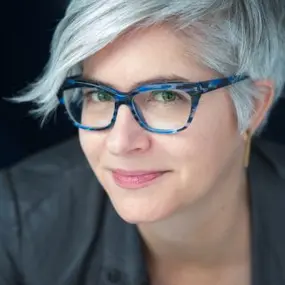
Megan Kate Nelson is a historian, cocktail enthusiast, Pulitzer Prize finalist, and the author of five books.
Her forthcoming book, The Westerners: Mythmaking and Belonging on the American Frontier tells two richly detailed and interwoven stories.
The first reveals the captivating lives of women and men moving through the American West — Indigenous peoples, Black Americans, Mexican Americans, and Canadian and Asian immigrants—in the nineteenth century.
The second tracks the attempts of many Americans to remove these westerners from history, through a frontier myth that lionized individualism and conquest and celebrated white settlers traveling west in search of prosperity.
The Westerners is one of LitHub’s Most Anticipated Books of 2026!
Megan is also the author of The Three-Cornered War: The Union, the Confederacy, and Native Peoples in the Fight for the West, which was a 2021 Pulitzer Prize finalist in History, and Saving Yellowstone: Exploration and Preservation in Reconstruction America, winner of the 2023 Spur Award for Historical Non-Fiction, as well as Ruin Nation: Destruction and the American CIvil War, and Trembling Earth: A Cultural History of the Okefenokee Swamp.
A fellow of the prestigious Society of American Historians, Megan is also a regular guest on radio shows and TV documentaries about U.S. Western history and popular culture. She has recently become a podcast host, interviewing book authors as part of the “Historians and their Histories” podcast for the Massachusetts Historical Society.
Megan al… Read More


.jpg)