


The Declaration of Independence
 Amazon Music Amazon Music
  Apple Podcasts Apple Podcasts
  Castbox Castbox
  Castro Castro
  Deezer Deezer
  Goodpods Goodpods
  iHeartRadio iHeartRadio
  Overcast Overcast
  Pandora Pandora
  PocketCasts PocketCasts
  Podcast Addict Podcast Addict
  Podchaser Podchaser
  RSS Feed RSS Feed
  Spotify Spotify
  TuneIn TuneIn
  YouTube YouTube
 The Continental Congress voted to break from Great Britain on July 2, 1776, and approved the text of the Declaration of Independence on July 4, but it took weeks for the news to spread throughout the new country and even longer to reach the country they were breaking from and the countries with whom they hoped to find alliances. Along the way, people learned the news from printed broadsides, newspapers, public readings, and letters from friends. I’m joined in this episode by Dr. Emily Sneff, author of When the Declaration of Independence Was News.
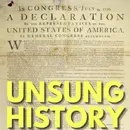
Our theme song is “Frogs Legs Rag,” composed by James Scott and performed by Kevin MacLeod, licensed under Creative Commons. The mid-episode music is “Yankee Doodle,” performed by the U.S. Army Chorus, featuring MSG Michael White and SSG Matthew Bell of The Old Guard Fife and Drum Corps; the composition and audio are in the public domain. The episode image is the Dunlap Broadside of the Declaration of Independence, printed in John Dunlap’s Philadelphia shop on the night of July 4, 1776; the image is in the public domain and is available via the Library of Congress.
Additional Sources:
- “Declaration of Independence (1776),” The U.S. National Archives and Records Administration.
- “Diary of John Adams, volume 3: Wednesday, May 15, 1776,” Adams Papers Digital Editions.
- “Virginia’s Independence Resolution, May 15, 1776,” Colonial Williamsburg.
- “Delegate Discussions: The Lee Resolution(s),” by Emily Sneff, The Declaration Resources Project, Democratic Knowledge Project, June 07, 2018.
- “Jefferson's ‘original Rough draught’ of the Declaration of Independence,” reconstructed by Julian Boyd, from: The Papers of Thomas Jefferson. Vol. 1, 1760-1776. Ed. Julian P. Boyd. Princeton: Princeton University Press, 1950, pp 243-247.
- “The Declaration of Independence and the Pursuit of Equality,” The Gilder Lehrman Institute of American History.
- “Watch How (Slowly) News of the Declaration of Independence Spread in Real Time,” by Ben Panko, Smithsonian Magazine, July 11, 2017.
- “Rare Book of the Month: A Revolutionary Woman and the Declaration of Independence,” by Wendi Maloney, Timeless: Stories from the Library of Congress, Library of Congress Blogs, May 19, 2018.
- “Mary Katherine Goddard's Declaration of Independence,” by Mark Boonshoft, New York Public Library, June 29, 2016.
Advertising Inquiries: https://redcircle.com/brands
Kelly Therese Pollock 0:00
This is Unsung History, the podcast where we discuss people and events in American history that haven't always received a lot of attention. I'm your host, Kelly Therese Pollock. I'll start each episode with a brief introduction to the topic, and then talk to someone who knows a lot more than I do. Be sure to subscribe to Unsung History on your favorite podcasting app, so you never miss an episode, and please tell your friends, family, neighbors, colleagues, maybe even strangers to listen too. Citizens of the United States celebrate the birthday of the country on July 4, the date listed on the Declaration of Independence, but two other documents important to the country's founding preceded it by a month and a half. Both were approved on May 15, 1776. On May 10, the Continental Congress approved a resolution that recommended to the 13 United Colonies, "Where no government sufficient to the exigencies of their affairs have been hitherto established to adopt such government as shall, in the opinion of the representatives of the people, best conduce to the happiness and safety of their constituents, in particular, and America, in general." The May 10 vote was unanimous, but Georgia was not yet represented in the Congress. The preamble to the resolution, written by John Adams and approved on May 15 was much more divisive. In it, Adams declared that since the king refused to answer the humble petitions of the colonists, "It is necessary that the exercise of every kind of authority under said crown should be totally suppressed." Adams believed the document to be independence itself, and the King of Portugal, an ally of Great Britain, agreed. When he learned of the resolution, he issued an edict, ironically on July 4, ordering all ships from the rebellious colonies to leave Portuguese ports, and banning new ships from arriving. Also on May 15, the delegates of the Fifth Virginia Convention unanimously resolved to instruct Virginia's representatives to the Continental Congress, "to declare the United Colonies free and independent states, absolved from all allegiance to or dependence upon the Crown or Parliament of Great Britain." It took time for the news from Virginia to reach Philadelphia, where the Continental Congress was convening, and by then Congress was busy in meetings with George Washington, who was in town at the request of John Hancock, then president of the Continental Congress. Finally on Friday, June 7, Virginia delegate Richard Henry Lee read three resolutions that the "United colonies are and of right ought to be, free and independent states," that they should prepare for forming alliances, and that they should prepare a plan of confederation. After debating the resolutions on June 8, Edward Rutledge of South Carolina wrote to New York delegate John Jay that while he was happy to unite the colonies and prepare for treaties, he saw, "no wisdom" in declaring independence before they had formed a confederacy, since they would be "giving our enemy notice of our intentions before we had taken any steps to execute them," and "rendering ourselves ridiculous in the eyes of foreign powers by attempting to bring them into a union with us before we had united with each other." Thus, on Monday, June 10, Rutledge proposed postponing the debate over independence, which Congress voted to do, pushing the debate to Monday, July 1. Three weeks, however, was not long enough for mail to get from Philadelphia to the furthest colonies and back. The New Hampshire delegates were proactive, writing home for guidance on May 28, as soon as they learned that the Virginia delegates had instructions to propose independence. The North Carolina delegation already had instructions in hand to join any resolution for independence. The correspondence back from Maryland arrived on July 1. In the meantime, committees within the Continental Congress worked on the proposed plans for confederation, for treaties, and for declaring independence. The committee charged with drafting the Declaration of Independence was made up of John Adams from Massachusetts, Benjamin Franklin from Pennsylvania, Thomas Jefferson from Virginia, Robert R. Livingston from New York, and Roger Sherman from Connecticut. Jefferson wrote the first draft, and Adams and Franklin provided edits. On June 28, a manuscript of the Declaration approved by the committee was presented to the whole Congress prior to resumption of the debate. By this point, most of the delegates agreed that it was time to split with Great Britain, although there were still some who disagreed. Rutledge's earlier concerns about the order in which to do so still loomed large, with John Dickinson of Pennsylvania likening declaring independence before planning a government or securing allies to a man destroying his house in winter with nowhere prepared to live, and without warning his neighbors. On the morning of July 2, Congress voted to declare independence. Dickinson skipped the vote, and the New York delegation, who had not yet received their instructions, abstained. After the vote, they turned their attention to the Declaration itself, debating over and changing some of the draft's language, including removing a grievance regarding the transatlantic slave trade, to the chagrin of Abigail Adams, who had read the earlier draft. On July 4, 1776, the Continental Congress approved the revised Declaration of Independence, with the New York delegation again abstaining from the vote. It would take weeks for the news of the declaration to travel through the colonies, with the residents of South Carolina and Georgia celebrating a full month after the vote. On the night of July 4, John Dunlap, a Philadelphia printer who had immigrated from Northern Ireland, printed the first broadsides of the Declaration at the request of Congress. It's unknown how many copies he produced, though it was likely hundreds. Only 25 are known to survive today. The broadsides were mailed out across the new country, and the text was printed in newspapers radiating out from Philadelphia as soon as the news reached. Others learned of the news by public readings of the text. The delegates did not sign the Declaration on July 4. On July 19, Congress ordered that the declaration be engrossed on parchment and signed with the title, "The Unanimous Declaration of the 13 United States of America." The New York delegation had finally approved on July 9. Starting on August 2, with John Hancock, the delegates signed the parchment in state order from north to south. By that point, the delegates to the Continental Congress differed from those who voted on July 4, so some of the signers were not part of the original vote, and some of the original voters did not sign. Eventually, 56 men signed the parchment, although the final signature from Thomas McKean was not added until months or possibly years later. On January 18, 1777, Congress, now physically located in Baltimore, Maryland, ordered an authenticated broadside copy with the names of the signers. That print job went to Mary Katherine Goddard, whose broadsides included only 55 signatures. Thomas McKean's is missing, but Goddard added one name to the sheet, her own as printer. John Hancock mailed copies of the broadsides to each of the newly formed states, asking for them to, "be preserved in the most careful manner that can be devised." 11 copies are known to exist today. I'm joined in this episode by Dr. Emily Sneff, author of, "When the Declaration of Independence Was News."
Kelly Therese Pollock 11:24
Hi, Emily. Thanks so much for joining me today.
Dr. Emily Sneff 11:28
Thank you for having me.
Kelly Therese Pollock 11:29
I am very excited to talk about this book. Want to ask first, how you got started on this topic, and at what point you realized you'd be able to publish before the 250th.
Dr. Emily Sneff 11:44
Yeah. I've had so many people telling me at different book events, like, "Oh, this is timed so well for the 250," and that is the result of about a decade of planning on my part. I became interested in the Declaration in a sort of backwards way. I had never taken early American history. I had been focused on world history. I studied medieval history in undergrad, and I was in the museum's space. And so the way that I ended up working on the Declaration was through research for a museum exhibition about Thomas Jefferson, which included copies of the Declaration, and coming in from that perspective, really made me aware that although I had naively thought we know everything there is to know about the Declaration and the founding of the United States, we don't. There's still a lot of work to be done, and so that really motivated me to kind of hyper focus my work on the Declaration. I went to grad school. I knew I wanted to write a dissertation that was about the Declaration, and I knew that I wanted to write a non-traditional dissertation that could be very quickly adapted into a book for a broad audience for the 250th. So thankfully my committee at William and Mary was also very understanding of that, and that I was coming in with an understanding of the kinds of assumptions that the public has about the declaration, so I was able to write really the book that I wanted to write, rather than the more traditional academic dissertation, and make sure that it got to a publisher in time for the wheels to turn before July 4, 2026. So my goal really has been to make as much of an impact on our planning for the 250th as possible, and that has included the book, as well as broader work, working with organizations that are preparing for the anniversary and trying to make it a meaningful moment for Americans, but also people all over the place.
Kelly Therese Pollock 13:55
The work of historians, of course, is often like detective work, but this seems especially so, trying to figure out, like, where did these various copies of the early Declaration end up? Can you talk a little bit about the kind of research that you did?
Dr. Emily Sneff 14:09
Exactly. There is a lot of detective work involved. There's a lot of copies of the Declaration that are very well known because they are in major institutions, or they went at astronomical prices at auction, and, and those are the stories that we tend to focus on. It tends to be very focused on the value of copies, or the rarity of copies. In reality, every piece of paper that we have from 1776, it's astonishing that we still have it. Paper was not really meant to survive for 250 years, and so what I found most interesting is looking for the Declaration in institutions where you might not expect to find it, in town record books where clerks transcribed it, in broadsides that are not necessarily attributed to a specific printer. We don't know where they were created, but also broadsides that have tremendous material evidence on them. And I say all of that to say that I'm the person who has to, when I go to a museum or library and archive, I can't work with the microfilm, I have to see the real thing, I have to see both sides, I have to be able to flip it over, because a lot of that evidence that points us in the direction of the story behind the Declaration is typically on the back, or it's something that might get cut off when an item is microfilmed. I also spend a lot of time using digitized newspaper databases, especially for finding the Declaration either in full or in excerpts or summarized in European newspapers. That was a lot of the work that I actually did during the pandemic, when, when I couldn't travel to archives in person, and I am the beneficiary of digitization efforts. My book could not have been written a decade ago. That's how quickly things have been digitized and made accessible to people on the other side of the world. So, really looking in a lot of different places and through a lot of different formats and trying to find not only the copies of the Declaration but all of the supporting material of how people received that news in 1776.
Kelly Therese Pollock 16:25
So let's set the stage a little bit. Nowadays, of course, if a country declared its independence, they would tweet it out and we'd all immediately have the exact words that they meant to use in the exact format they meant it. That, of course, is nothing like what it was in 1776, so what did that dissemination process look like?
Dr. Emily Sneff 16:46
Well, news traveled at the speed of the fastest horse or the fastest ship, or you know, however fast someone could compose the text, you know, letter by letter on a printing press. So, yeah, the technology looked totally different in 1776. The way that the Declaration moved was typically through broadside and newspaper printings, which were then copied by other printers and copied by other printers, and so on. So that process begins in Philadelphia. We have the first broadsides, or poster-sized printings of the Declaration, which could be used in public spaces and for public readings of the Declaration. We have the first newspaper printings in Philadelphia within days of July 4, and also the first translations of the Declaration are created in Philadelphia. It was translated into German for the significant German American population in the United States, and especially concentrated in Pennsylvania. So we have all the beginnings of this multi-dimensional process in Philadelphia; but also everywhere else, July 4 was just a Thursday. No one knew about the Declaration on that day, In Philadelphia, they have the privilege of having known on that day at least people who were in sort of the oldest part of Philadelphia, right around Independence Hall. So, when you think about the technology, you have to account for the time that it took for the Declaration to travel to different places, which would have been a couple of days to get to New York and Baltimore, about a week and a half to get up to Massachusetts and down to Virginia, a full month to travel over land from Philadelphia to the southernmost colonies, and about five weeks to cross the Atlantic, where the Declaration was printed first in London. So if you're looking for the Declaration of Independence in a newspaper, or you're looking through someone's diary, you have to account for the time that it took for the news to spread.
Kelly Therese Pollock 18:54
You mentioned that it would be published in a newspaper and then copied in another newspaper. What is that process? I mean, we're all familiar with, like, game of telephone as things change over time. What sorts of artifacts does that end up introducing into what people see down the road?
Dr. Emily Sneff 19:12
Exactly. It means that every printing of the Declaration looks a little different, is a little unique. In some cases, printers made intentional choices about how to present the text, for example, using all capital letters for phrases like free and independent states, you know, really emphasizing the importance of those words; but we also see typos enter the process, and those wouldn't have necessarily impacted how a reader understood the Declaration in 1776 but for us 250 years later, it is weird to see typos in a document as important as the Declaration. In fact, there are also typos in the handwritten parchment copy, which the delegates in Congress find, that had to be corrected with little carets added in. So that's all part of the process, and it really shows the human elements that there are not only the people who voted for independence, who signed the Declaration, but all these people involved in the process, from printers to the many other folks working in printing offices, composing the type, preparing the paper, and everything. The most interesting sort of game of telephone that enters the process actually happens when the Declaration travels to London. There's a little switcheroo that happens with a phrase in the list of grievances, which makes it very clear which copies of the Declaration were printed in London, because it only appears then. It's not in any of the copies of the Declaration that were created previously in the United States. It begins in mid August in London, and then that is copied not only by other printers in Great Britain, but it informs the translations of the Declaration created in Europe. Where that entered the process, we're still not totally sure. I think it must have been someone transcribing the Declaration and just, you know, got got the words mixed up, or even when they went to set the type, just, you know, flipping around the phrase, so there's things like that that we can see as not only evidence of the people involved, but also the exact sort of map of how the Declaration spread from one place to the next.
Kelly Therese Pollock 21:29
And of course those printers in London didn't get it purposely from the new United States. It just sort of ends up in London.
Dr. Emily Sneff 21:38
Exactly. Yes, the Declaration is not intended for the king or for Great Britain. It's intended for everyone else. It's really, the Declaration, the text of it, says much less about what the independent United States will look like and much more about how the king and Britons have turned their back on the colonists, and that's why independence is now necessary. So I get the question all the time of how did the king react to the Declaration. There's a longstanding story that John Hancock signed his name big enough for the king to read without his spectacles. If you start to think about that story, it falls apart because the parchment that was signed was not intended for the king, and if he ended up with it, then it meant that things had gone really badly for the Continental Congress. But yeah, the Declaration travels to London on British mail ships, which had arrived in New York with this massive fleet of British ships, including General William Howe, who had evacuated from Boston and was coming back from Halifax, as well as his brother, Vice Admiral Richard Howe, who had sailed from England. So all of these British warships are accompanied by British mail ships, which need to bring the latest reports back to England, and so that's how the Declaration travels to the imperial capital. It doesn't travel in an official capacity from the Continental Congress. It's through copies of the Declaration that end up in the hands of British officers in New York, who enclose them in letters back to the Secretaries of State in London. And so the Congress really has no control whatsoever over how the Declaration is printed and really mediated by newspaper publishers in London.
Kelly Therese Pollock 23:27
On the other hand, the Continental Congress did intend for a copy to get to Paris and did not get there. Can you talk about poor Silas Deane?
Dr. Emily Sneff 23:38
Oh, poor Silas Deane. Yeah, one of the real benefits of the book is it's a very short timeline. I focus on May, 1776 to January, 1777, and so I try largely to treat people in their own moment, irrespective of what comes later, be it Thomas Jefferson and John Adams' political careers, or in the case of Silas Deane, the fact that he kind of falls out of favor with the Continental Congress. But in 1776 he's a very sympathetic character. He was the Congress's secret agent in France. He had arrived in France in July, 1776, anticipating that the Congress had probably declared independence, but not totally sure, and unfortunately for Silas Deane, the Continental Congress tried to send him one of the first printings of the Declaration within a few days of July 4, but they had given the captain of the ship carrying this copy of the Declaration instructions that if he encountered a British vessel he should pitch it overboard, and of course that's immediately what happens, and the Congress did not plan to send duplicate or triplicate copies, or multiple copies on multiple ships. They waited a full month to send a backup copy to Deane, which means that he was sitting in Paris for months while the news of the Declaration of Independence spread all around him, and he is writing these letters back to Philadelphia all through the fall, which grow increasingly more anxious because he feels like he's been ghosted by the Continental Congress. And so he's writing like, "Do you not believe in me anymore? Do you not want an alliance with France? How could you not send me the Declaration?" And then he finally does receive it in November, by which time, as he writes, it had become an old story in every part of Europe. So, when he goes to present it finally to the Court of Versailles, they're really not convinced that it is the sort of alliance making documents that the Continental Congress had intended it to be, and so he is so frustrated by having to wait for the news, and it's an interesting sort of counter example to the rest of the book, which is people receiving the Declaration and reacting to it. Instead, we have Deane not receiving the Declaration and reacting to that, and when he finally does get it, and it's just a printed piece of paper, he's even frustrated by that, you know, he says that the courts of Europe expect something more formal. He wanted something with a seal, with some parchment, something that would stand up to the gilded halls of Versailles. So 1776 was a rough time for Silas Deane.
Kelly Therese Pollock 26:24
And it seems so shocking now, but the Continental Congress didn't provide a copy in French, right? Like Deane had to himself figure out how to translate it.
Dr. Emily Sneff 26:35
Yeah, it's one of the baffling facts of 1776, because there were a number of delegates in the Continental Congress, including Thomas Jefferson, as well as the Secretary Charles Thompson, who knew enough French that they could have translated the Declaration authoritatively into French in Philadelphia, and then sent it off to Paris in that way. There were also a number of French men who had come to Philadelphia wanting to support the Continental Congress and the Continental Army, so there was no shortage of resources for translation, and yet the way that the Congress treated Silas Deane was to send him everything in English and trust that he could find a reliable translator, because Deane himself did not know French. And so I really do wonder not only if the Congress had sent multiple copies, but if they had sent French copies of the Declaration to Deane, if that might have swayed the French court towards supporting independence a little bit sooner. Unfortunately, he ends up with just the printed English copy of the Declaration, and he's also sort of the victim of this bit of misinformation, which begins in London, which claims that there were ships waiting in the Delaware River to bring the Declaration of Independence to France and Spain, when it was approved. That was completely invented, that that was not true. Would have been a great plan if the Continental Congress had actually thought that far ahead and gotten ships ready to go. So there's this expectation of speed, as well as the sort of efficacy of translation that Deane is the victim of, and he finally, you know, is able to present the Declaration. It still doesn't change anything. And thank goodness for him that Benjamin Franklin shows up right after that to sort of save the day and begin the United States's diplomatic efforts in earnest.
Kelly Therese Pollock 28:41
You mentioned that Deane would have preferred a copy with a seal on it. There, of course, was no United States seal. Can you talk a little bit about that? That's not the only thing that they didn't put in place before presenting the Declaration to the world, but it's an important one.
Dr. Emily Sneff 28:57
Absolutely, one of the defining characteristics of how the Declaration of Independence spread was that when it was read aloud in these public gatherings, afterwards there would be cheers and cannon fire and bells ringing, and then the royal symbols of the king would come down, and in many places they were fuel for bonfires that would light up the night. So you suddenly have all of these blank spaces where the royal coat of arms used to be, and there's nothing to fill it. The Congress was thinking about some sort of visual representing the United States on July 4. They appointed Thomas Jefferson, John Adams, and Benjamin Franklin as a committee to begin work on a seal, and there's some evidence from the correspondence of the delegates in Congress that they thought a seal might be incorporated into the signed copy of the Declaration that would stay with the Continental Congress and give it that sort of officialness, But the committee has completely differing ideas about what kind of a seal they want to choose, and ultimately it's years before the Great Seal of the United States is actually agreed upon, and so in the interim you continue to have these blank spaces that the royal symbols are gone, but there's no new definitive American symbol in its place, and so it's a really fascinating example of what the Congress could have worked on before declaring independence. Also, of course, the Articles of Confederation, a plan for foreign treaties, like there's all these things that could have come first. Instead, the Declaration comes first, and they have to kind of play catch up with all of these other elements of defining the new civic culture for the United States.
Kelly Therese Pollock 30:52
In retrospect, it doesn't seem surprising that a committee of Jefferson, Adams, and Franklin couldn't agree on something, but...
Dr. Emily Sneff 31:01
Fair enough.
Kelly Therese Pollock 31:03
One of the most fascinating things to me, as someone with a degree in religious studies, was to think about the ways that the representatives of the Church of England suddenly had to figure out, like, oh wait, we're not part of England anymore, and people don't want to pray for the king anymore. Can you talk through some of what that looked like?
Dr. Emily Sneff 31:23
Yeah, the last chapter that I wrote for the book, actually after the dissertation, before the book was about Anglican ministers, and the title of the chapter is "Embarrassment." And that's a word which one minister in particular used to describe the status of Anglican ministers after the Declaration of Independence, that they were embarrassed because you have this change in political status, but you have these men who had sworn an oath at their ordinations to the king as the head of the church. And so they're put in this really uncomfortable position of being forced to either close their churches, sometimes under threat, to change the Book of Common Prayer, which would go against the oath at their ordination, or to continue as if nothing had changed, and just kind of wait it out and see when the local authorities would come after them. And we see ministers take all of these paths forward, and so what I found with the records of the Society for the Propagation of the Gospel is all of these men writing letters about how the Declaration of Independence had really changed their lives in profound ways, either making them question their oath from their ordination, or making them sort of ostracized by their communities, or you know, just feeling like they had been completely lost. They had lost their salaries, they had also lost their communities. And you know it was a great sort of way of capturing that immediate impact of the Declaration on certain people. In other places, you know, people who had been anticipating the Declaration, they celebrate, or people who were not prepared for independence, they kind of mourn; but for these individuals, it's not just the political stakes, there's moral stakes involved. And so I found it really fascinating to see how these different Anglican ministers responded or chose not to respond to the Declaration, including in Massachusetts, when they were actually required to be part of the dissemination process. The state of Massachusetts ordered that the Declaration should be printed and sent out to every parish, and that the minister of that parish should read it aloud at their church and then sort of deposit the Declaration with the town clerk and so there's some ministers who are really put off by being you know told to read the Declaration aloud in their churches. And there's also some people in the congregations who are upset with that. There's a great letter, which I just learned about at the Massachusetts Historical Society by a woman who writes that at least the pastor waited until the end of the service to read the Declaration, so that she could leave and everyone else who, you know, who didn't agree with it, could get up and leave. So I found that these Anglican ministers, similarly to Silas Deane, to be very sympathetic characters from 1776 who were really thinking about, is independence going to be permanent, or is it only a temporary change, and can we take such a step against our oaths and our vows to the church, if it's just going to be temporary?
Kelly Therese Pollock 34:44
So of course the first countries that they're interacting with are not in Europe, but are the Native American nations that are right around the New England area. So you mentioned that there isn't a sort of treaty model in place yet, so they can't formally come up with these treaties at the country-wide level, but what does that look like as they're interacting with these Native American nations?
Dr. Emily Sneff 35:13
Yeah, one of my favorite examples of the Declaration as a news item, it comes in treaty proceedings in Watertown, Massachusetts, outside of Boston. There were these Wolastoqiyik and Micmac chiefs who had come down from New Brunswick and Maine, hoping to meet with George Washington in Boston. Instead, Boston is under smallpox quarantine. The Massachusetts government is meeting in Watertown, Washington's in New York, and so the local government really scrambles to have a kind of hasty treaty meeting with these seemingly willing allies, and in the middle of this meeting, the Declaration of Independence arrives in Watertown, and it was translated into French for the chiefs, who could then further translate for their colleagues into the Algonquian languages, and one of the Wolastoqiyik chiefs, Ambrose Bear, responds, "We like it well," and that marks the first time that the United States is actually acknowledged by a foreign power, and it happens in this spur of the moment treaty meeting with Indigenous nations, you know to the north of the United States, and in the conversation about the treaty, the language that they're using says that now the colonies form a chain of United States, and that chain includes links that go up to the Wolastoqiyik and Micmac nations. So it's a really interesting moment of affirming the United States as an independent power, but the treaty itself is not with the United States, as you mentioned. The treaty is between the state of Massachusetts and these representative chiefs, and it's really focused on them fighting alongside the Continental Army, you know, kind of turning their backs on any previous British alliances and going to fight alongside George Washington; but the treaty incorporates the last paragraph of the Declaration into the first paragraph of the treaty, so it's clear that the arrival of that document and the affirmation of independence kind of changes the conversation at this meeting. It's also an important corrective to the fact that the only reference to native people in the Declaration is about violence instigated by the British, and so to have that, you know, slur against native people within the text is a challenging legacy for the Declaration, and so I find it really important to remind folks that our Indigenous neighbors were the first to acknowledge us as independent, and it comes within days of the Fourth of July, and with very little convincing, unlike France and other European nations. So there were certainly some native people involved in violence, a lot of people who wanted to remain neutral in the conflict, but then we have these examples as well of allies, staunch allies literally jumping out of their chairs, they're so eager to go fight alongside George Washington, and all of that happens in this time period when the Declaration was news.
Kelly Therese Pollock 38:28
We've been mostly talking about men. There's also a lot of women in your story, but what I want to highlight is one of the printers of the Goddard Broadside. Could you talk a little bit about that, and was it unusual for a woman to have this kind of position? How did she end up being the one who got to do this important broadside?
Dr. Emily Sneff 38:48
This is one of those things that it wasn't until I was on the road, really talking about the book with a lot of people, that I realized I needed to give more explanation, because in my own research on early American print culture, there's a lot of women, not all of them are the people with their name on the final printed product, but there's a lot of women working in printing offices, the wives and daughters and sisters of the sort of main printer. But it's really shocking to a lot of people today that there was a woman who had her own printing business, and especially had this responsibility of printing the Declaration. So I love talking about Mary Katherine Goddard to sort of get around some of those expectations about what the printing business would have looked like in 1776. She was located in Baltimore, she had learned the printing trade alongside her brother William Goddard and her mother Sarah. She was also the postmaster in Baltimore, and her father had been a postmaster as well. So it's very much a family business for her, but she is a single woman, you know, entrepreneur in Baltimore, running the show. And she prints the Declaration first in July, 1776 in her Baltimore newspaper. I love her printing because just above the text she has this little block of ornamental type and like pointing fingers to a notice that the 13 colonies have declared independence. Like clearly she was very excited about this, and proud to be able to print this news. So that's her first go at the Declaration. And then in January, 1777 she is the first to print copies of the Declaration with the names of the men who had signed the parchment. The reason why she gets this job is because the Continental Congress had evacuated Philadelphia fearing a British attack, and they had reconvened in Baltimore. You know, she is an established printer there. She's also handling all of their mail. You know, it seems like she was a trusted person to take on this job. And these broadsides were important, not only because they were a record of the men who signed the Declaration, but also because they were intended to be sent out to every state to lay the foundation of each state's archive, and so for me they marked the end of the time period when the Declaration was news and the beginning of the time, which continues to this day, of the Declaration being archival treasure. And she printed them with her full name at the bottom of the broadside, she often printed under her initials, MK Goddard, but here she prints Mary Katherine Goddard, and it seems likely that she was proud of her contribution, and even though things were not looking so great for the Continental Army, the Continental Congress, the independence of the United States in this sort of bleak winter of '76 to '77, she's proud to print the Declaration, and essentially she is pledging her life alongside the men who had signed the document itself. So she's a really fascinating figure, and not totally unique as a woman running her own business, but in this particular moment she's the only woman who prints the Declaration under her own name in the United States.
Kelly Therese Pollock 42:15
You mentioned that you started in the museum space. Could you talk a little bit about the importance of public history, especially now as the Declaration is celebrating its 250th?
Dr. Emily Sneff 42:27
Absolutely, I think that when it comes to a founding document like the Declaration, the spaces where people encounter it are going to be in the sort of civic education side of things, and in museums and libraries where copies of the Declaration exist. And so for the 250th, much like the bicentennial, everyone is bringing out their copies of the Declaration and telling the stories behind them. I was privileged to work on several exhibits for the 250th including the Declaration's journey at the Museum of the American Revolution and Window to Revolution about Pennsylvania Germans at Historic Trappe, which is actually where I grew up in Pennsylvania, and in these exhibits we have particular printings of the Declaration, which tell certain stories. So, at Historic Trappe, we have on loan the German newspaper printing of the Declaration from July, 1776, to showcase how people in immigrant communities would have been able to access the news of independence. And then in the Declaration's journey at the Museum of the American Revolution, we have the German broadside printing, the first of many translations of the Declaration in the exhibit, and then also other sort of exemplar copies. The first newspaper, you know, Goddard's printing. We have a Dunlap broadside, which traveled to the British National Archives, even though it was intended for someone in Amsterdam. It ended up in the intercepted papers in the British Archives, and has now returned to Philadelphia. I like to say it's a very long return to sender. It only took 250 years, but I love those spaces, because not only for me it brings the words in the book off the page and onto the walls of museums; but I also think showing people different copies of the Declaration, ones that visually might not be familiar to them. It makes them feel a closer connection to the founding of the United States, that there's all these more, you know, more people involved in the process of declaring independence than they expected, and the focus isn't entirely on the 56 men who signed the parchment. So it's been really great in that sort of public history vein to engage with people not only in museum exhibitions and special programs, but also in Pennsylvania, there's been a lot of preparation for public readings of the Declaration to mark the 250th. And I've had a lot of fun guiding the organizations that are hosting those public readings to give the historical context of what it would have looked like in 1776, and then also to prepare organizations for the fact that the Declaration is a politically charged document, and at every major anniversary people have used the Declaration to celebrate, but also to protest, and so just being aware of that history and allowing that to inform public engagement during this anniversary, but also in July 4ths to come, that has been really cool to take that very specific historical context from 1776 and make sure more people know about it, and that they feel a connection to that history.
Kelly Therese Pollock 45:46
It's such a great book. Can you please tell listeners how they can get a copy?
Dr. Emily Sneff 45:52
You can order directly from Oxford University Press, either the physical book, ebook, or audio book. Can also get it wherever you support your local booksellers, and I've also been all over the place talking about the Declaration and the book, and I often have books with me. So, if you see me on the road this summer, you can probably pick up a copy there as well.
Kelly Therese Pollock 46:14
Is there anything else you wanted to make sure we talk about?
Dr. Emily Sneff 46:17
Just as we celebrate the 250th anniversary of the Declaration, remember the all of the people that you know took part, either through producing the news, printing copies, you know, transcribing it, but also all the people in the audience, all the people reacting to it. I had a lot of fun with this book, highlighting some names that are not familiar to most Americans, but really became very special characters to me to talk about this foundational moment, and so I hope that people find someone or some story or some particular copy of the Declaration to connect to for this 250th moment.
Kelly Therese Pollock 46:57
Emily, thank you so much for joining me.
Dr. Emily Sneff 47:00
Thank you.
Teddy 48:08
Thanks for listening to Unsung History. Please subscribe to Unsung History on your favorite podcasting app. You can find the sources used for this episode and a full episode transcript @UnsungHistoryPodcast.com. To the best of our knowledge, all audio and images used by Unsung History are in the public domain or are used with permission. You can find us on Twitter or Instagram @Unsung__History or on Facebook @UnsungHistoryPodcast. To contact us with questions, corrections, praise, or episode suggestions, please email Kelly@UnsungHistoryPodcast.com. If you enjoyed this podcast, please rate, review, and tell everyone you know. Bye!

Dr. Emily Sneff is an early American historian and leading expert on the Declaration of Independence. She earned her Ph.D. in History from William & Mary. She was a consulting curator for exhibitions marking the 250th anniversary of the Declaration at the Museum of the American Revolution and Historic Trappe. She is the author of When the Declaration of Independence Was News.


