


An American History of Purses
 Amazon Music Amazon Music
  Apple Podcasts Apple Podcasts
  Castbox Castbox
  Castro Castro
  Deezer Deezer
  Goodpods Goodpods
  iHeartRadio iHeartRadio
  Overcast Overcast
  Pandora Pandora
  PocketCasts PocketCasts
  Podcast Addict Podcast Addict
  Podchaser Podchaser
  RSS Feed RSS Feed
  Spotify Spotify
  TuneIn TuneIn
  YouTube YouTube
 Today the US handbag market is estimated to be nearly $12 billion, with most of the purchasing done by women, but into the early 20th Century purses hadn’t yet become the nearly-exclusive domain of women. The integration of pockets into men’s clothing, and the marketing push of toiletry items to women in the 1920s and 1930s drove this differentiated market development. Joining me in this episode is Dr. Kathleen B. Casey, Professor of History and Director of the Women's, Gender, and Sexuality Studies Program at Furman University and author of The Things She Carried: A Cultural History of the Purse in America.
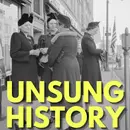
Our theme song is “Frogs Legs Rag,” composed by James Scott and performed by Kevin MacLeod, licensed under Creative Commons. The mid-episode music is “Pack up your troubles in your old kit bag,” composed by Felix Powell with lyrics by George Asaf” and recorded in Camden, New Jersey, on December 22, 1916; the performance is in the public domain and is available via the LIbrary of Congress National Jukebox. The episode image is “Shoppers. Amsterdam, New York,” photographed by John Collier, Jr.; the photograph was taken in October 1941, and is available in the public domain via the Library of Congress.
Related Episodes:
- Fashion, Feminism, and the New Woman of the late 19th Century
- French Fashion in Gilded Age America
- Amelia Bloomer
- The Women who Entered the Federal Workforce during the Civil War Era
- The History of Blue Jeans
- Ericka Huggins & the Black Panther Party
- The 1966 Compton's Cafeteria Riot
- Alice Roosevelt Longworth
Additional Sources:
- “Ötzi the Iceman: Examining New Evidence from the Famous Copper Age Mummy,” by: M. Vidale, L. Bondioli, D.W. Frayer, M. Gallinaro and A. Vanzetti, Penn Museum Expedition Magazine, Volume 58 / Number 2, 2016.
- “MALE ATTIRE.; Charlotte P. Gilman Inveighs Against It but Finds Redeeming Features.” From The Independent, New York Times, March 5, 1905.
- “What you may not know about the Triangle shirtwaist factory fire,” by Peter Liebhold, National Museum of American History, September 5, 2018.
- “The Surprising Origins of Kotex Pads,” by Kat Eschner, Smithsonian Magazine, Originally published August 11, 2017, and updated November 9, 2018.
- “Handbag Market (2026 - 2033),” Grand View Research, GVR Clothing, Footwear & Accessories Research Team, April 2026
Advertising Inquiries: https://redcircle.com/brands
Kelly Therese Pollock 0:00
This is Unsung History, the podcast where we discuss people and events in American history that haven't always received a lot of attention. I'm your host, Kelly Therese Pollock. I'll start each episode with a brief introduction to the topic, and then talk to someone who knows a lot more than I do. Be sure to subscribe to Unsung History on your favorite podcasting app, so you never miss an episode, and please tell your friends, family, neighbors, colleagues, maybe even strangers to listen too. If you've ever worn women's clothing, you've probably bemoaned the lack of adequate pockets or responded when someone complimented a dress with, "Thanks, it has pockets!" In the 17th century, women did have access to pockets, albeit not pockets that were integrated into their dresses. Rather, the fabric pouches were tied on around the waist and worn under layers of clothing, accessible via slits in the skirts. As dress profiles became slimmer, tie-on pockets disrupted the silhouette and fell out of favor, and by the end of the 19th century, they were no longer in use. In the early 19th century, upper-class women carried small ornamental bags called reticules that were carried over the arm on a cord or a chain. Reticules did not typically hold much, but could be used to carry a fan, calling cards, a handkerchief, and maybe smelling salts. Bags, of course, were nothing new. A 5000 year old Iceman mummy discovered in the Alps was found with the remnants of a backpack and a leather pouch. In the mid 19th century, men as well as women carried bags, including carpet bags, a type of lightweight luggage, especially popular for train travel. Men, though, also increasingly had pockets sewn into their clothes, and by the late 19th century, designers of men's clothing were adding lots of specialized pockets into men's suits. When Levi Strauss and Company introduced blue jeans in 1873, they had four pockets, two front pockets, one rear pocket, and the tiny watch pocket. In 1901, they added a second back pocket. Women in the late 19th century and early 20th century were increasingly moving out into the world, and were demanding their rights. They noticed this discrepancy in pockets. As feminist writer Charlotte Perkins Gilman noted in the New York Times in March, 1905, "Women have from time to time carried bags, sometimes sewn in, sometimes tied on, sometimes brandished in the hand, but a bag is not a pocket. If your bag be small and holds but a few things, it is of little use. If it be large and holds many things, there is much trouble in finding the article wanted. Pockets, in the masculine sense, are trim, flat, vertical pouches, keeping their shape and place, so that the accustomed hand can fly to them instinctively." Lacking sufficient pockets, though, women turned to purses. In a 1909 Sears Roebuck and Company catalog, the purses for sale were typically black leather with metal frames and clasps and lined interiors, ranging in price from 21 cents to $3.98, or about eight to $145 in today's money. These purses were often significantly larger than reticules, and working women could use their purses to carry time cards, keys, their lunch, maybe even a change of clothes. Employees at the Triangle Shirtwaist Factory had to submit to examination of their purses as they departed for the day, an invasive and sometimes embarrassing process, because the owners feared that their employees would steal from the factory, smuggling finished shirtwaists in their purses. It was because of this insistence on checking each woman as she left that most of the exits of the factory were locked, forcing women through the checkpoints. When the factory caught fire on March 25, 1911, workers were trapped in the building, and 146 employees, 123 women and girls, and 23 men were killed. Purses hadn't yet become the exclusive domain of women in the early 20th century, but this began to change by the 1920s, alongside a shift in hygiene habits. Advertisements for toiletries skyrocketed, with only food being more heavily advertised in 1925. Following the influenza epidemic, Americans became obsessed with cleanliness, and advertisers targeted women with products like perfume and deodorant, mouthwash, and painkillers, and many of those came in purse-sized containers, so that women could always have them at hand.
Kelly Therese Pollock 6:27
In 1920, the Kimberly Clark Corporation introduced its Kotex disposable sanitary pads made from a material called cellucotton, developed during World War I to be used for bandaging. Advertising Kotex proved challenging in an age where menstruation was not publicly discussed, and women who bought products at stores would quickly slip them into their bags. Kotex used this association between their products and bags in their ads, noting that a "supply can be carried easily in a lady's handbag." Tampax tampons, introduced in 1936, were even more portable, with the advertisements touting that, " month's supply came in a purse-sized package," with images of women's hands slipping the packages into their purses. Discreetly holding unmentionable items was only one of the functions of purses. In 1943, Rosa Parks utilized her purse to advance the cause of civil rights. 12 years before her famous arrest, Parks boarded a city bus in Montgomery, Alabama, driven by James Blake, the same driver who would later have her arrested. Parks paid her fare and was instructed by Blake to reboard the bus at the back. When she wouldn't do so, Blake tried to physically force her to, but as Parks later explained, "I dropped my purse. Rather than stoop or bend over to get it. I sat right down in the front seat, and from a sitting position, I picked up my purse" navigating herself into a section of the bus where she wasn't otherwise welcome. From there, she said to Blake, "You better not hit me." He didn't. Parks was not alone in deploying a purse in activism. Other Black women carried guns in their purses, like Tarika Lewis of the Black Panther Party, starting in 1967, and some trans women carried bricks in their purses. Marsha P. Johnson is purported to have smashed the windshield of a police car with her brick-laden purse during the Stonewall riots in June, 1969. Despite the increasing introduction of pockets into women's clothes in more recent years, and the rise of mobile wallets, purses are not going anywhere. As of 2024, the US handbag market was estimated to be nearly $12 billion. Globally, the handbag market is expected to grow from 86.88 billion in 2025 to 146.02 billion by 2032. Joining me in this episode is Dr. Kathleen B. Casey, Professor of History and Director of the Women's, Gender, and Sexuality Studies Program at Furman University, and author of, "The Things She Carried: A Cultural History of the Purse in America."
Kelly Therese Pollock 10:29
Hi Kathleen, thanks so much for joining me today.
Dr. Kahleen B. Casey 10:32
Hi, it's great to be here.
Kelly Therese Pollock 10:34
So, my first question for you is, you write in your book that you're not really a purse person per se, so I'm wondering what got you started on writing a whole book about purses?
Dr. Kahleen B. Casey 10:47
Yeah, well, in the introduction, I tell this story, and it's, it's kind of really about my family and my relationships with my sisters. I have one sister who's very sort of fashion forward and gender conscious, but in a different way than I am, and so she's very in tune with trends, and you know, really thinks a lot about her wardrobe, and that's not something I am particularly famous for doing, although I'm interested in clothing as a sort of cultural artifact, and as a lens through which to study history. And in graduate school I used to carry around this burlap sack, sometimes I refer to it as my little sad sack, and it was not very feminine at all. I wore it across the body, and it had no closing mechanisms. It was not secure or private at all, and it didn't have any feet, like a lot of purses today will be made of leather, and then they will have like little pedestal feet that they can sit on, so they never actually touched the floor. This was all over the floor and bathroom stalls, and I took it everywhere, and it started to get really ripped and stained over time. And it really bothered my sister to the point where she didn't want to go places with me while I was carrying the sack. And I just thought, "Why does this one bag matter so much to this other person who's not even carrying it, right?" Like, what is it about this kind of item, this item in particular, but also this type of item, the genre of items that seems to matter so much about women, and how did things come to be that way, right? You know, obviously, ideas about feminine femininity changed radically over time, across time, place, space, and I would say, you know, that's a historically contingent phenomenon, but I sort of wanted to know how we got to where we are today with purses and bags and pocketbooks, and I kind of talk about all of these things. Sometimes I'll use different synonyms, but I recognize these are all sort of different genres, different types of bags and containers, and sometimes you know people over a certain age or under a certain age are more likely to use one term or another. If you live in the South versus the North, you're also maybe more likely to use one term over another, but I wanted to look at these like personal containers across time, and so I basically cast my eye back almost 200 years and tried to retrace our steps to how we got to where we are today, even though I personally am not a huge purse fan, and I can defend that position if you'd like.
Kelly Therese Pollock 13:22
I am a huge purse person, which is funny, because I'm not particularly feminine in other ways, but I do have.. I just love buying purses, and not entirely sure why or what that might say about me.
Dr. Kahleen B. Casey 13:36
Well, I think the research in the book, I hope, uncovers the fact that purses are also incredibly utilitarian and very strategic, and can be used as political tools, right? And that's what I didn't really expect to find, and was kind of overwhelmed by the examples, and the number of examples I found that did actually demonstrate that quite clearly. Yeah, and we all want to have our stuff, right? It makes us feel more secure, it makes us feel safer, you know, like we can be away for longer with less problems, and of course women have over time been away for longer and longer from the home, and you know, taken on many more roles, and for the most part, their bags have gotten bigger and more secure and more sturdy as a reflection of that. That's not been a totally linear process, but you know, overall you can kind of see that arc.
Kelly Therese Pollock 14:24
So you call this a cultural history. So, for listeners who are not as familiar with maybe different types of history, can you explain a little bit what that means and how that focuses the kind of stories and the kind of evidence you're using in the book?
Dr. Kahleen B. Casey 14:41
Yeah, I mean, there's different ways of studying history. For a long time, the sort of ways that that most people used tended to sort of privilege the activities of men, of people in power, of famous people, of wealthy people, and that left a lot of stories untold, right. And so when you think about, for example, even if you want to study the issue of clothing, which historically historians did not do for a long time, if you go to a museum collection, you're going to find collections donated typically by wealthy or famous people, often both, but the clothing that perhaps enslaved people wore, or indentured servants wore, or you know, immigrant factory workers wore, is not going to be on display. It's not going to be anywhere in the collection, right. And so to tell those stories, sort of from the ground up, so it's kind of a combination of social history and cultural history, I'm really interested in people's ideas and understandings, and their beliefs, and their practices. So, I see it as a sort of blend of social and cultural history from the bottom up. There are a few famous women that I talk about, but for the most part, these are - I mean, the word ordinary is sort of doesn't have a whole lot of meaning, because it's so context dependent, but these are these are like your average work-a-day women that I focus on in the book, whose apparel is not typically in museum collections, and so that's kind of how I approach cultural history. It's about the stories about women's lives that centering purses can reveal.
Kelly Therese Pollock 16:24
Since you then don't have the material culture in most cases, because these are not things that were saved or donated to museums, what are the kinds of sources that you tap into as you're thinking about these stories?
Dr. Kahleen B. Casey 16:40
Okay, well, I should, I should partly amend what I previously said, in that there are random collections of purses throughout the world. There is, there was actually a whole museum, the Tassenmuseum in Amsterdam, which I think had something like 5000 different artifacts. They actually closed, they were an early victim of the COVID pandemic. And there are a couple of smaller collections or high fashion collections, but what I was able to do is actually go to very small museums and historical societies, and also just talk to women, especially for the later chapters on more recent history involving people who are still living. I was able to look at photographs and ask them about their purses, right, and some cases women even still had them. And so I learned to read purses as a kind of text, right, and so I looked at purses of women who I didn't know who owned the purse, and sometimes I didn't even know how old it was, or you know, sort of what its provenance was, but I might go to, for example, early on I went to the New York State Museum in Albany, and they just had a bunch of bags, and it turns out that they actually had a whole collection of bags, suitcases, and purses from survivors of what was called the Willard Insane Asylum. These were found by a staff member after the after the hospital closed, in the attic, and men's were all on one side and women's are on the other, and they just had like patient numbers associated with them, and these are people who largely got dropped off and never picked up. They were buried in unmarked graves, but we had their bags, which was incredible to me, to be able to.. it was almost like talking to them, to be able to look in their bags, you know. And so there were lots of opportunities like that, where I got to look at purses, and I didn't know a whole lot about the context or the carrier or owner, but I was still able to look at the material qualities of the purse to think about, you know, its feel, its heft, its smell, its closing mechanisms, what sound it makes, how it would interact with the body, and compare that with advertisements for purses, photographs of women with purses. I even looked at trial transcripts with regard to the Triangle Shirtwaist Factory, and was surprised to see how many times purses, or in this case pocketbooks, actually came up, and what a significant role they played in the Triangle Shirtwaist Factory fire in 1911. And so you know, I looked at those things, and I also looked at trade journals, I looked at department stores, and just it was a whole sort of constellation of different kinds of sources, some of which were textual and some of which were material, that I was able to put in conversation with each other to sort of reveal this larger, more three-dimensional story about these bags. It was time consuming, and it wasn't always sort of obvious what those connections were going to be, but it was through the routinization and doing it over and over and over and over that I was able to sort of see these patterns emerge, and how important things like privacy and power were for the women who carried these purses.
Kelly Therese Pollock 20:07
Most people today in the US probably take it for granted that purses are something that women carry, but that wouldn't have necessarily had to have been the case. It wasn't always, in fact, the case. Can you talk some about how the gender norms and purses becoming identified with women, how that sort of comes about over time?
Dr. Kahleen B. Casey 20:31
Yeah, and you know, again, these things don't necessarily.. it's not like you go to bed on Sunday and you wake up on Monday and now men are no longer carrying bags, right? So these things happen in kind of uneven, halting processes, and it's not always linear, but I was able to identify the 1920s and the 1930s as critical decades in which purses really became so closely and exclusively linked to women and women's bodies and the maintenance of their bodies, right? So, they essentially become like a tool kit for women's bodies to make sure that they are fresh, always have perfect makeup, you know, never smell anything but like lovely roses, and you know, and then there's all these purse-size products get produced, particularly around the issue of hygiene, when expectations for bathing and teeth brushing, and these sorts of things go up quite a bit in those decades. It's also when way more magazines are published, and they're really marketed towards women as well. So I pinpointed the 20s and 30s as two decades in which which women and their bodies and bodily functions get so linked to purses that men essentially start to disappear from the picture, whereas you know, in a Sears and Roebuck catalog in the late 1800s or even early 1900s you might have found an advertisement for a men's purse and a woman's purse, and they'd be side by side, and they'd look very similar. They tended to be smaller, and they're made of leather. They were often black, and in both circumstances, but you see that phrase, "men's purse" go away after the 20s and 30s, and that's where we start to get to a point where at least straight cis men in America, many of them feel that they, they, they shouldn't be seen with a purse, they shouldn't touch a purse, they shouldn't even hold a purse for another woman, and in fact, I cite examples where people were violently attacked and even murdered for carrying purses. I talk about that in the last chapter, chapter six. So, yeah, and I think it, you know, it's happening across the 20th century, but those two decades in particular, when you have the makeup industry really blow up, and when you have the invention of sanitary pads that are commercially available and disposable, and you have the invention of tampons, these sorts of things really start to make purses seem like sort of ciphers or metaphors for women's bodies, right, and you have the idea of the sort of deep, dark, cavernous womb-like space, right, that shall not be penetrated by anybody else. Purses start to become this really intimate space that's kind of forbidden for men.
Kelly Therese Pollock 23:16
Yeah, I want to explore that a little bit. This idea of a purse as kind of a, an external private place for a woman, and I found that section on the rise of disposable sanitary pads and tampons and stuff, and their association with purses to be so fascinating, because you know, most women probably have the experience of having carried such products in their purses. So you know what, what does that look like to say that this, this thing that you carry external to your body, but is is somehow a place, not just in a sexual way, but is sort of a place where women have a certain amount of privacy from the outside world, even though they're in public,
Dr. Kahleen B. Casey 24:09
Yeah, and they get, and that that space can be violated, which is, which is deeply disturbing for women, right? I mean, I think probably everybody who has carried a purse, and I'm talking mostly women here in America has probably felt the sort of cringe or physical resistance to seeing someone else's hand go inside their purse, whether it be a child or a partner or a stranger, right. And that's, I think, the phenomenon of purse snatching is also a very particular kind of crime that has subtexts that are a little bit different than other crimes revolving around theft, right. There's something more intimate about snatching a woman's bag, I mean, that makes it worse, right. And then the idea that women carry, like, their secrets in their purses, right. So stealing a woman's bag is like, it's almost like unzipping her as a person, right, and looking at her flesh. Like it's, it's, it's, it's her dignity, right, and it's how she protects herself from the world, and so stealing that is not just a crime of, of theft, you know, in a sort of physical sense, but it's sort of spiritual and emotional on top of being physical. That's also the duality of purses, right? Like, they, they hide things for you, right, and they protect you and your possessions, so that no one can see what you have with you, or what you even feel you need to have with you, right, but at the same time, you know, I found lots of newspaper articles that were breathlessly talking about women being victims of purse snatchers and vulnerable in city spaces, particularly by themselves, as we start to see more women walk around cities in sort of unchaperoned areas, right, and you know, they're getting out of work later, and they're coming home in the dark, and so there's a lot of worry about women becoming victimized because they're carrying this, you know, desirable object that has all their secrets and could contain even things like not just cash but like jewelry, right, and and bonds. I read tons of stories about people carrying around diamonds in their purses, and then having them stolen or leaving them behind somewhere by accident, and then stories about, like, men finding purses and trying to understand the woman who owned it, right, as if it would, you know, reveal who she really was, and yeah, it's just this interesting duality with between the public and the private, and it's a way in which women could navigate public space in ways that they were often sort of criticized for doing so, or told that was unwise, that they were putting themselves in danger if they did do that, but they have their whole private world, it's almost like a little mobile home, right? You can take everything you need, a miniature version of what you need from your home, and leave for 12 hours, 13 hours, 14 hours, and especially if you're able to take things like medication, makeup, sanitary products, you can be gone a long time, right, and still be productive and feeling safe and dignified. So, it's this dual nature of purses that's particularly interesting to me, the private versus the public, but also the ability for women to become victims and vulnerable, but also that women can use purses to steal, themselves, and they can achieve, you know, their own political ends without other people realizing it, because this is basically a wonderful hiding space that they can take with them everywhere.
Kelly Therese Pollock 27:52
And a good hiding space for weapons too. I found that really interesting, the number of women in all sorts of different kind of circumstances, who might have a gun with them, or a brick in the purse, or use the purse itself as a weapon.
Dr. Kahleen B. Casey 28:08
Yeah, and today, I mean, I carry around pepper spray much of the time, right? I tend to carry a book bag that also has a laptop and a couple of books in it too, but I always carry pepper spray everywhere I go, and it's again, it makes me feel safer and more secure. I've never had to use it, but just having it and being able to know that it's in the bottom of my bag provides some sort of, it feels like, you know, insurance in some ways.
Kelly Therese Pollock 28:36
There's, of course, different ways, all sorts of different ways that purses play out over time, but also a somewhat difference over different races, and how purses are conceived of, how purses are used. Can you talk some about that? And you start the book by talking about the kinds of bags that enslaved women were carrying, and of course weren't called purses necessarily, but have a lot of the same sort of functions and the same sort of idea of privacy and public spaces?
Dr. Kahleen B. Casey 29:12
Yeah, and those were incredibly malleable tools, right, so they could take, you know, the bags that food rations came in, or even the bags that they were forced to use to pick cotton, and they could repurpose them, right, and they could perhaps create, you know, hidden detachable pockets under their skirts, or they could literally have, like, a runaway pack that they buried out in the woods and would keep adding to as they had collected more things, more perhaps more cash, more more nuts, something that would help sustain them, and so they used bags really strategically as well to prepare and protect their families, right, and so I thought that was really interesting, especially when you fast forward, and you think about how Black women in the civil rights movement were using purses to protect themselves, their bodies, and their families, and also prepare to do things like sit in and go to jail, and for me that was some of the most exciting findings for the book, when I, when I learned that story about Rosa Parks. How she actually got on a bus with the same bus driver 12 years before she was famously arrested on December 1, 1955, and she used her purse to literally, like, desegregate a bus in Montgomery, Alabama. And it's, you know, I know a lot about Rosa Parks, and I know a lot about women's history. I also know a lot about the Triangle Shirtwaist Factory. I've been teaching about these people and events for years, but it wasn't until I decided to sort of insist that purses were like a main character and history, and see, you know, if I went in with that approach, what I could find, that I saw these things and learned the roles that purses played, because purses don't talk, and it's often very difficult to look at a photograph, or to hear a story about a woman who no longer is living, and really have any idea what she might have put in her purse, right? So it's challenging work to do, and at first I didn't know, can I actually do this right, like be able to know enough about how women thought about their purses and what they put in them, because of fashion histories of purses have been written, and there's plenty of coffee table highly glossy illustrated books talking about the history of different fashion houses and high-end bags, but it's kind of the opposite of what I was interested in. And you know, it turned out that there was really a space to tell a new story from that lens.
Kelly Therese Pollock 31:50
I'm not even sure I could tell you what's in my purse right now, much less what might have been in my purse 20 years ago.
Dr. Kahleen B. Casey 31:57
Yeah, well, our lives are also very chaotic, and we're constantly multitasking and playing so many different roles. Yeah, sometimes we, we don't actually even know what's in our purses, but purse organizers that were actually, and purse tidiness were really important, especially for Black southern women, because purses could sometimes be seen as a symbol of your purity, right, and your ladyhood, and how respectable you were, and if you had a dirty purse that you had not replaced, or you had a purse that was messy and you couldn't find anything, then that wouldn't send a message to others that you might want to send about yourself, right? And so these standards for Black women are higher than they are for white women, because they have to overcome all of these stigmas and stereotypes that have been with us since enslavement, about, you know, Black women carrying contagious diseases and being Jezebels, and so I thought it was really important to think a lot about race, in addition to class and sexuality, in the book. Purses are very adaptable and malleable objects, but they can't work in the same way for everyone, right? Who the carrier is and what the context is in which they live really matters.
Kelly Therese Pollock 33:10
And then, as you start to get to toward the end of the book, the idea of purses being so feminine coded means that you can also use purses to or not use purses to convey certain messages about who you are, your sexuality, your gender markers. Can you talk some about how that plays out?
Dr. Kahleen B. Casey 33:36
Yeah, so chapter six, I went to San Francisco to do a bunch of research on LGBTQ folks and purses, and you know, I sort of am very familiar today with, you know, American stereotypes about gender and sexuality, and you know, the presumption is often that if you see a man carrying a purse, even though it has nothing to do, what he carries has nothing to do with who he desires inside his brain, right. We often make the assumption that that is a man who is not straight, right, and that happens every day, 1000 times a day. And I wanted to understand how that came to be, right. Why was this something that was just verboten for straight men? And then how did.. how did it? Well, first I discovered that it became a way for some men to actually come out silently, right? And then I wanted to understand, like, why and how as well. And in the process, I learned a lot about lesbians having a real distaste for purses and almost sort of fear of purses and being associated with heterosexuality, once they were out. They did not feel that purses were part of, you know, the ensemble of a lesbian, right, and that people would actually question how lesbian you really were if you were carrying a purse, and so it becomes a way for queer men and women to either come out or not come out, right, to, you know, appear to be one thing and be another, right, and luckily this is something you can take on and off. But again, the stakes are not the same, some people face more risks than others, right, and so I talk a bit in the book about immigration too, and how no, not being a citizen also made you more vulnerable, and I talk about a couple of cases of men entering the United States with purses and being turned away, having their passports stamped sexual deviant simply because they carried a purse, right. So you have immigration and naturalization services doing these visual scans of people and simply carrying a bag, this is how deeply embedded purses have become with womanhood and femininity, and how male homosexuality was equated so much with femininity and womanhood that you know these inspectors thought they could just glance at someone, and if there was someone who appeared to be a man carrying a purse, they could refuse them entry into the country, and the consequences for having your passport stamped in that way could be devastating, right? You could lose your job, you could be kicked out of your family, it could just ruin your future, all because you had a bag, and so I thought that also really illustrated the power of the purse, right. So, while the purse helped, for example, Black women defend their bodies and stay safe during the civil rights movement, it also rendered other people incredibly vulnerable, right. And I talk about trans women as well, to using purses like studying how to carry a purse to not get read right as being transgender, and what to pack in the purse right if you get pulled over by the police. So, a lot, lots of preparing and thoughtfulness goes into this object, and how people used it over time.
Kelly Therese Pollock 37:05
Well, if listeners would like to get a copy of the book to keep in their purses, or whatever bags they can carry, how can they get a copy?
Dr. Kahleen B. Casey 37:13
So it's pretty much everywhere. You can get it on bookshop.org. You can get it in some larger bookstores. It's available at pretty much all online retailers, and you can always go to my website, www.kathleenbcasey.com, and there is a discount code that you can use and order directly from Oxford University Press as well.
Kelly Therese Pollock 37:39
Is there anything else you wanted to make sure we talk about?
Dr. Kahleen B. Casey 37:43
Yeah, I guess I would say just that I hope this, this book encourages people, especially students, to think about how material objects can tell entire stories, right? And so the things that we put on our bodies every day are not just the things we use to cover our skin from the sun and to keep warm, cool, but they can reveal inner truths, not just about us, but about all people who came before us, that it's really worth pausing to look at objects with rigor and to really scrutinize them and think about their histories, because there's lots of other stories about lots of other objects that still remain to be told, and I think students really have access to objects, so they don't have to be old or rare, and they can really dive in and do this themselves and sort of reap the rewards of doing material history.
Kelly Therese Pollock 38:43
Kathleen, thank you so much for speaking with me today.
Dr. Kahleen B. Casey 38:47
It's been a pleasure to speak with you. Thanks,
Teddy 38:52
Thanks for listening to Unsung History. Please subscribe to Unsung History on your favorite podcasting app. You can find the sources used for this episode and a full episode @UnsungHistoryPodcast.com. To the best of our knowledge, all audio and images used by Unsung History are in the public domain or are used with permission. You can find us on Twitter or Instagram @Unsung__History or on Facebook @UnsungHistoryPodcast. To contact us with questions, corrections, praise, or episode suggestions, please email kelly@UnsungHistoryPodcast.com. If you enjoyed this podcast, please rate, review, and tell everyone you know. Bye!

Kathleen Casey earned her PhD in History and a graduate certificate in Women’s and Gender Studies at the University of Rochester in 2010. After teaching at the University of Wisconsin-Milwaukee Honors College, she spent the next decade teaching at Virginia Wesleyan University, a small liberal arts college in Virginia where she served as the Coordinator of the Women, Gender, and Sexuality Studies Program. Dr. Casey now lives in Greenville, South Carolina and is the Director of the Women's, Gender, and Sexuality Studies Program at Furman University, where she also has a joint appointment in the History Department.
Casey is the author of The Things She Carried: A Cultural History of the Purse in America, which was published by Oxford University Press in 2025. Her book has been featured in Literary Hub, Ms. Magazine, Medium, Library Journal, Foreward Reviews, Nasty Women Writers and on several podcasts.
Dr. Casey's first book, The Prettiest Girl on Stage is a Man: Race and Gender Benders in American Vaudeville was published in 2015 by the University of Tennessee Press. She has also published articles in Gender & History, Frontiers: A Journal of Women’s Studies, the Journal of American Culture and Ms. Magazine.


