
Women's History Episodes

227
July 13, 2026
The All-American Girls Professional Baseball League
During World War II, afraid that major league baseball would need to pause while men were overseas fighting, Philip K. Wrigley, chewing gum mogul and owner of the Chicago Cubs, spearheaded a new professional ball league, this one made up of women players. In the twelve years of All-American Girls' Professional Baseball League play, over 600 women had the chance to play professionally, earning substantial salaries and delighting fans across the Midwest. Joining me in this episode is baseball hist...
Guest: Leslie Heaphy

224
June 1, 2026
An American History of Purses
Today the US handbag market is estimated to be nearly $12 billion, with most of the purchasing done by women, but into the early 20th Century purses hadn’t yet become the nearly-exclusive domain of women. The integration of pockets into men’s clothing, and the marketing push of toiletry items to women in the 1920s and 1930s drove this differentiated market development. Joining me in this episode is Dr. Kathleen B. Casey, Professor of History and Director of the Women's, Gender, and Sexuality Stu...
Guest: Kathleen B. Casey

223
May 18, 2026
The Lady Bird Special
On the morning of Tuesday, October 6, 1964, the Lady Bird Special, a 19-car train carrying First Lady Claudia “Lady Bird” Johnson, her supporters, members of the press, and a security detail, departed Union Station in Washington, DC, for an ambitious 1,682-mile whistle-stop campaign tour of Southern States. In four days, Lady Bird gave 47 speeches to over 200,000 people, demonstrating that despite the growing resentment of white Southern Democrats to President Johnson’s signing of the Civil Righ...
Guest: Shannon McKenna Schmidt

221
April 20, 2026
The Frontier Myth and the People of the Western United States
In 1893, historian Frederick Jackson Turner advanced his now-famous Frontier Theory, arguing that the American identity was forged through the process of exploring and adapting to new environments in the frontier west. Key to both Turner’s theory and the myth of the frontier that pre-dated it was the idea that brave white American men conquered a previously empty land through their grit in a relentless march west, but the land was populated long before white Americans arrived, and the people who...
Guest: Megan Kate Nelson

208
Oct. 20, 2025
The Girl Scouts of the USA
In 1912, wealthy Savannahian Juliette Gordon Low supposedly called her cousin and exclaimed: “Come right over! I’ve got something for the girls of Savannah, for all of America, and for the world.” That something would become the Girl Scouts of the USA, an organization that throughout its history struggled to fulfill its initial promise of inclusion for all girls while trying to maintain an apolitical stance with deference to local councils. Joining me in this episode is Dr. Amy Farrell, the Jame...
Guest: Amy Farrell
207
Oct. 6, 2025
Zoe Anderson Norris
Zoe Anderson Norris, known to her friends in the Ragged Edge Klub as the Queen of Bohemia, was born in Kentucky in 1860, moved to Wichita, Kansas, with her first husband, and then to New York City, where she forged a career for herself as a journalist and novelist, eventually launching her own magazine, The East Side. In The East Side and in her journalism, she often focused on the lives of immigrants and the poor. Joining me in this episode is Eve M. Kahn, author of Queen of Bohemia Predicts Ow...
Guest: Eve Kahn
206
Sept. 22, 2025
Marguerite Cartwright
Dr. Marguerite Phillips Dorsey Cartwright, born May 17, 1910, in Cambridge, Massachusetts, was a journalist, sociologist, educator, and actress, who served as a correspondent for the United Nations, attended and wrote about both the Bandung Conference and the All-African People's Conference, and was appointed to the Provisional Council of the University of Nigeria, where she became one of five trustees. Joining me in this episode to discuss both Marguerite Cartwright and Black women’s leadership...
Guest: Keisha N. Blain
205
Sept. 8, 2025
Black Women's Anti-Rape Activism
The feminist anti-rape movement began in the late 1960s at the height of women’s liberation. As rape crisis centers relied on federal grants aimed at prosecution of those committing sexual violence, feminists worried about the conservatizing influence of those funds, and Black women in particular were not well-served by the developing model. Black women activists found their own methods to combat rape and to care for survivors. Joining me in this episode is Dr. Caitlin Reed Wiesner, Assistant Pr...
Guest: Caitlin Reed Wiesner
201
July 14, 2025
Madeleine Pollard, Jane Tucker, and the Sex Scandal that Brought Down a Congressman
In August of 1893, Madeleine Pollard sued Congressman William C.P. Breckinridge of Kentucky for breach of promise, claiming that he had promised to marry her but then had married another woman. By the time of the trial, Pollard and the much-older Breckinridge had been involved in an affair for nearly a decade. Breckinridge’s legal team attempted to paint Pollard as an “adventuress,” going so far as to hire an undercover detective – Jane Tucker – to get dirt on Pollard, but it was Breckinridge’s ...
Guest: Elizabeth DeWolfe
199
March 24, 2025
Ruth Reynolds & Puerto Rican Independence
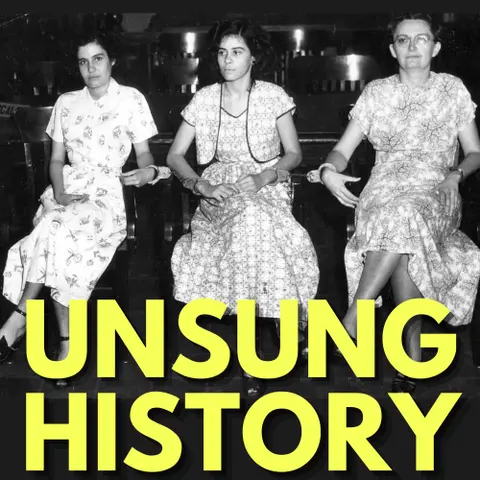
Ruth Reynolds, born in the Black Hills of South Dakota in 1916 to a strict Methodist family, may have seemed an unlikely ally to the cause of Puerto Rican independence, but she devoted her life to what she saw as her “sacred and patriotic duty” as an American to convincing her country to withdraw from Puerto Rico “so that our nation may stand before the world free from any suggestion of imperialist ambition.” Facing surveillance by the FBI and insular police and even incarceration for her views,...
Guest: Lisa Materson
198
March 17, 2025
Wages for Housework
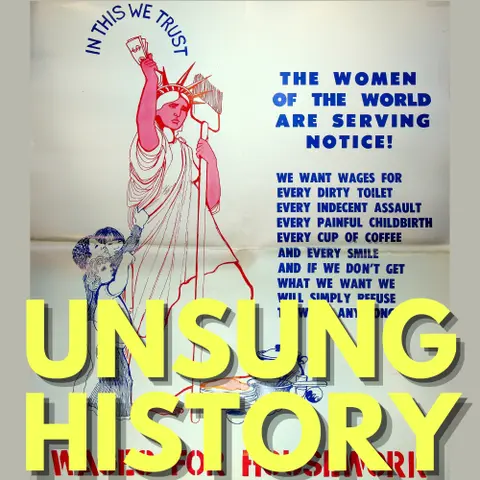
In March 1972, Selma James distributed a pamphlet that declared: “If we raise kids, we have a right to a living wage. . . WE DEMAND WAGES FOR HOUSEWORK. All housekeepers are entitled to wages. (Men too).” Soon it was a global movement, with Wages for Housework branches in the United Kingdom, Italy, the United States, and several other countries, and autonomous groups like Black Women for Wages for Housework and Wages Due Lesbians. Joining me in this episode is Dr. Emily Callaci, Professor of His...
Guest: Emily Callaci
197
March 10, 2025
Amelia Bloomer
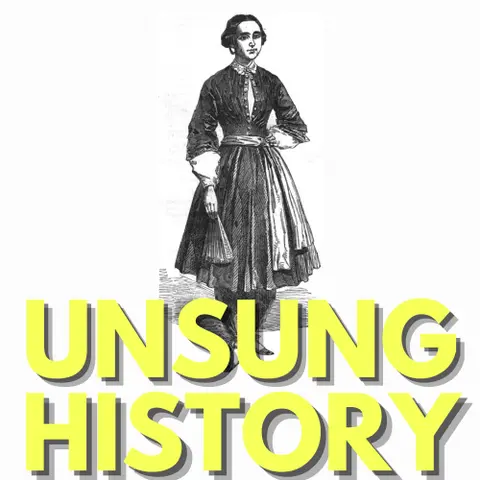
Amelia Jenks Bloomer was many things: writer and publisher, public speaker, temperance reformer, advocate for women’s rights and dress reform, and adoptive mother. She was not the inventor of the trousers for women that came to bear her name – bloomers – although she wore them and wrote about them for many years. Throughout her life, even as poor health often stood in her way, Amelia Bloomer took action, never waiting for someone else to do what was needed. I’m joined in this episode by writer S...
Guest: Sara Catterall
193
Feb. 10, 2025
Ericka Huggins & the Black Panther Party
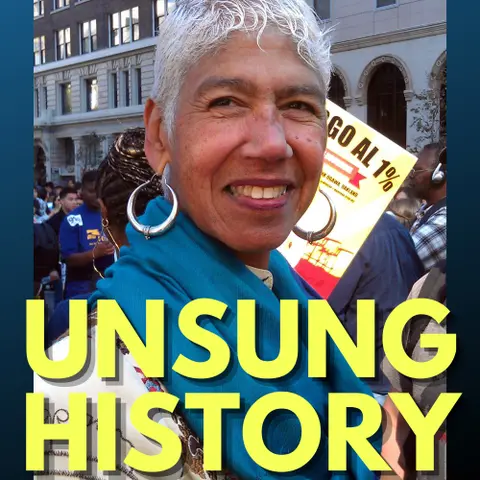
For Ericka Huggins, the March on Washington for Jobs and Freedom, which she attended at just 15 years old, was a turning point in her life, inspiring her toward activism. She later joined the Black Panther Party, and after being incarcerated as a political prisoner, served as Director of the acclaimed Oakland Community School and became both the first Black person and the first woman appointed to the Alameda County Board of Education. She continues her activism work today in the fields of restor...
Guest: Mary Frances Phillips
189
Jan. 13, 2025
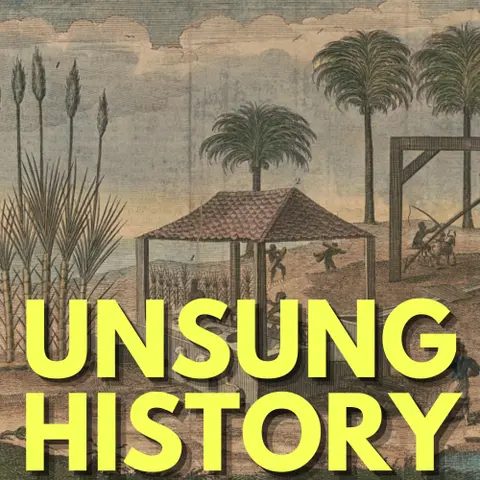
The Women of the Rendezvous Plantation on Barbados in the 17th Century
In 1686, Susannah Mingo, Elizabeth Atkins, Dorothy Spendlove, and their children, all of whom were half-siblings, along with some of their children's other half-siblings and their children's father, boarded a ship headed from Barbados to England, where they would live out their lives. It wasn’t unusual for a plantation owner like John Peers to impregnate both his enslaved Black laborers and his white servant, but it was unusual for him to acknowledge his illegitimate offspring, baptize them, bri...
Guest: Jenny Shaw
186
Dec. 23, 2024
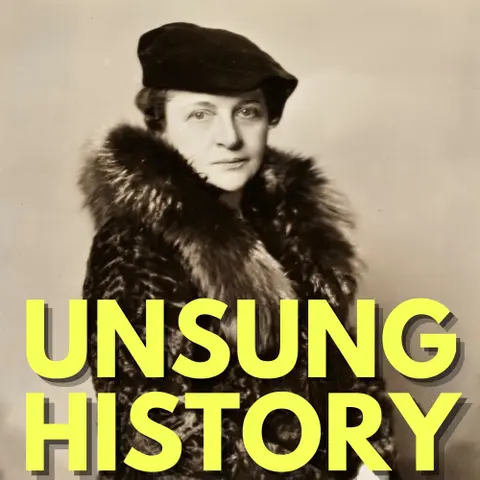
Frances Perkins
On March 4, 1933, Frances Perkins was sworn in as the 4th Secretary of Labor. It was the first time in United States history that a woman served in the Cabinet, only 13 years after the ratification of the 19th Amendment gave women the right to vote. Perkins came into office with a long list of to-do items, and she succeeded in accomplishing nearly all of them in her long tenure, as a central architect of many of the programs of the New Deal, especially the Social Security Act. More quietly, but ...
Guest: Rebecca Brenner Graham
184
Dec. 9, 2024
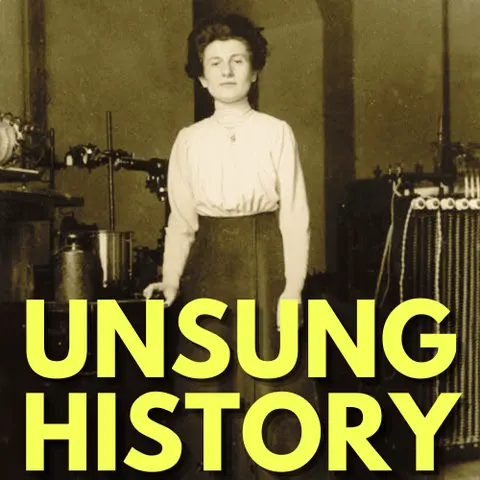
The Women Physicists who Fled Nazi Germany
As the Nazis rose to power in Germany, life became increasingly hostile for women scientists, especially women of Jewish descent, but also those who expressed anti-Nazi sentiments. The sexism in academic that had held them back in their careers also made escape from Germany difficult, as they didn’t look as strong on paper as their male counterparts. But four women physicists – Hertha Sponer, Hildegard Stücklen, Hedwig Kohn, and Lise Meitner – managed to flee, taking their scientific knowledge a...
Guest: Olivia Campbell
183
Dec. 2, 2024
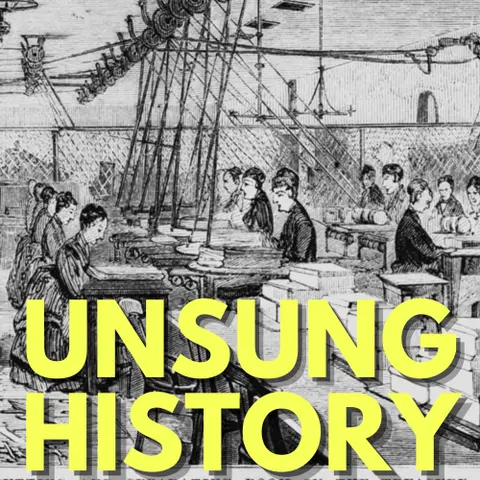
The Women who Entered the Federal Workforce during the Civil War Era
As the federal workforce grew during the Civil War, department heads began employing women, without any explicit authorization from Congress that they could do so. When Congress finally acknowledged the employment of women in federal departments in 1864, it set their salary at $600 a year, half of what the lowest-paid men clerks were making. Surprisingly, though, a few years later Congress debated – and nearly passed – a resolution requiring equal pay for women employed by the federal government...
Guest: Jessica Ziparo McHugh
181
Nov. 18, 2024
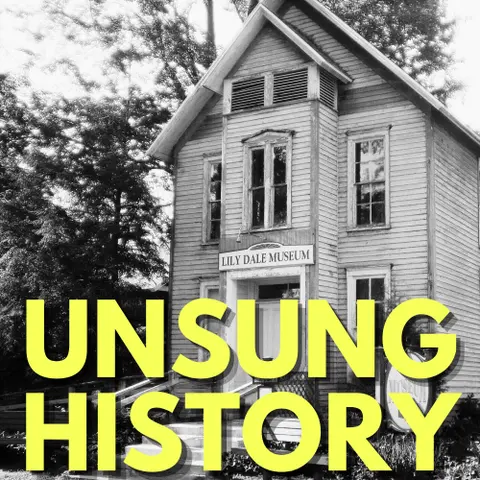
Lily Dale
In 1879, a group of Spiritualists purchased 20 acres of land, halfway between Buffalo, New York, and Erie, Pennsylvania. The gated community they created, now a hamlet of Pomfret, New York, became known as Lily Dale. Each summer, people came to Lily Dale (and still come) to speak with the dead through Lily Dale’s many licensed mediums. In its early years, modern Spiritualism, which began with the young Fox sisters (Maggie and Kate), often intersected with Women’s Suffrage, and suffragists like S...
Guest: Averill Earls
180
Nov. 11, 2024
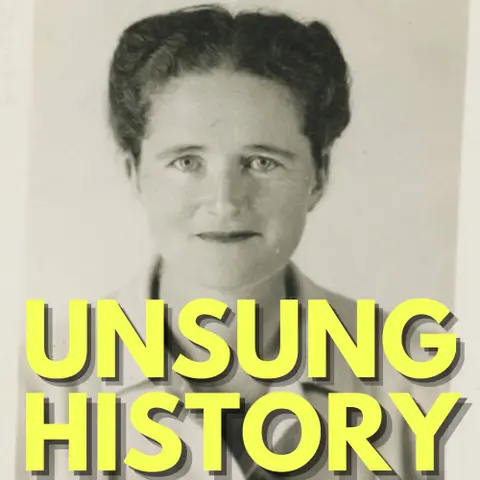
Isabel Kelly
Isabel Truesdell Kelly earned her PhD in Anthropology from the University of California, Berkeley, in 1932, with a dissertation on the “Fundamentals of Great Basin Culture,” having researched the Northern Paiute and Coast Miwok Indigenous cultures of Northern California. After graduating she led excavations in Mexico and then began a career as an anthropologist with the US State Department, which had a growing interest in assisting the scientific and technological development of countries like M...
Guest: Stephanie Baker Opperman
174
Sept. 30, 2024
A History of Postpartum Depression in the United States
In his bestselling childcare manual American pediatrician Dr. Benjamin Spock advised new moms:“If you begin to feel at all depressed, go to a movie, or to the beauty parlor, or to get yourself a new hat or dress.” Although puerperal insanity had been a recognized diagnosis at the end of the 19th Century, doctors in the early 20th century dismissed the postpartum onset of psychiatric symptoms as “pure coincidence.” It would take decades of activism by both parent groups and clinicians for the eff...
Guest: Rachel Louise Moran
170
Sept. 2, 2024
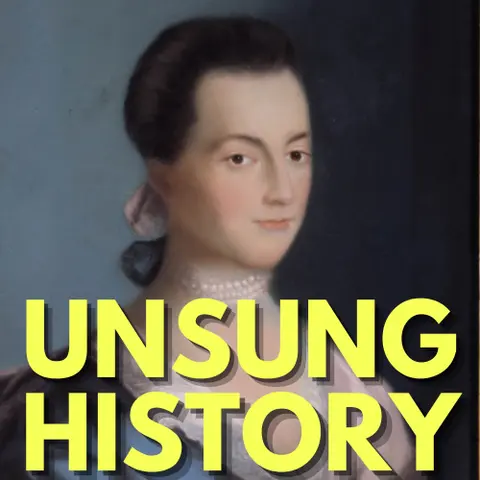
Abigail Adams
Abigail Smith Adams, wife to the second U.S. president and mother of the sixth U.S. president, may be best known for exhorting her husband to “remember the ladies” as he worked with his colleagues to form a new government, but that was just one of her many strongly-held political views. Adams, who lacked formed education and whose legal status was subsumed under that of her husband, never stopped arguing for greater educational opportunities and legal rights for women. Because of her prolific co...
Guest: Lindsay M. Chervinsky
168
Aug. 19, 2024
Margaret Chase Smith
At the Republican National Convention in July 1964, Maine Senator Margaret Chase Smith’s name was placed in nomination for the presidency, and she received votes from 27 delegates, the first time a woman was placed in nomination at a major party’s presidential convention in the United States. It was only one of many firsts Smith would achieve in her remarkable decades-long career that included speaking out against McCathyism on the floor of the Senate in 1950 and being the first woman of Congres...
Guest: Teri Finneman
166
Aug. 5, 2024
Sigrid Schultz
In 1926, American Sigrid Schultz became one of the first women to head a foreign bureau for a US newspaper when she was named the chief correspondent for the Berlin bureau of the Chicago Tribune. In her 26 years with the Tribune, Schultz, using her command of German and French, her knowledge of German politics and history, and her wide range of contacts, reported on the rise of Nazism and warned American readers to take Hitler seriously. Joining me in this episode to tell the story of Sigrid Sch...
Guest: Pamela Toler
165
July 29, 2024
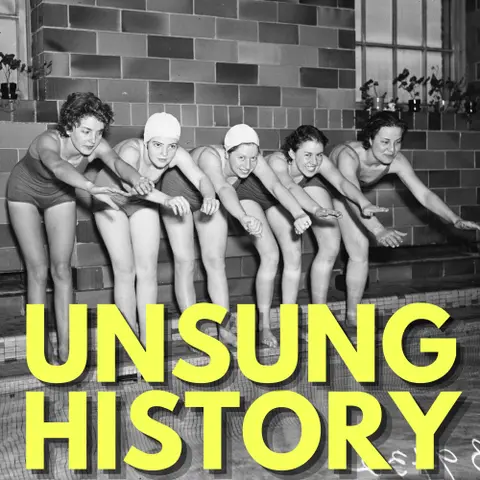
The History of Synchronized Swimming
When the 1934 World’s Fair in Chicago was looking for an aquatic act to complement their new underwater lights, organizers turned to physical educator Katherine Curtis, who put together a wildly popular show called the Modern Mermaids. No one could quite figure out what to call it, trying out water ballet and figure swimming until a radio announcer landed on “synchronized swimming.” Soon synchronized swimming teams were forming and competing, but while the Amateur Athletic Union (AAU) quickly em...
Guest: Vicki Valosik