
Women's History Episodes
162
July 8, 2024
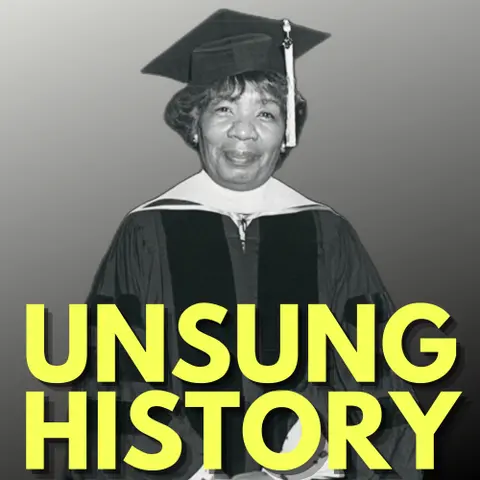
Dr. Claudia Hampton & the History of Affirmative Action in California
In 1974, Republican governor Ronald Reagan appointed educator Dr. Claudia Hampton, a Democrat active in her local NAACP, as the first Black woman trustee to the board of California State University. For the next twenty years Hampton would be known as the affirmative action trustee as she advocated for policies and budgets that would help support and diversify the CSU faculty, staff, and students. To discuss Dr. Hampton’s legacy, and the history of affirmative action in California, I’m joined in ...
Guest: Donna J. Nicol
161
July 1, 2024
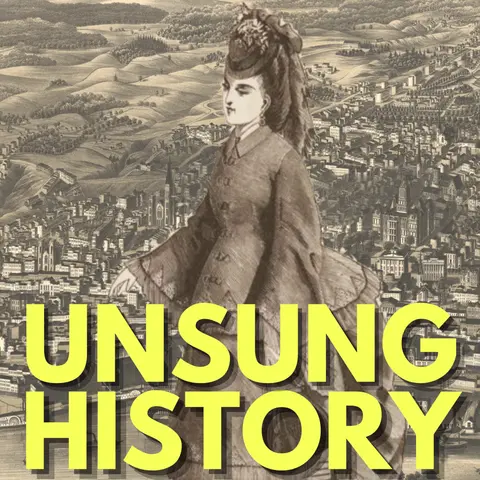
Josephine McCarty: Mother, Lobbyist, Spy & Abortionist
Josephine McCarty, née Fagan, aka Mrs. Virginia S. Seymour, dba Emma Burleigh. M.D., was many things: mother, teacher, saleswoman, spy, lobbyist, and abortionist. And in 1872 she was also an accused murderer, after eyewitnesses saw her fire a pistol on a public streetcar in Utica, New York, killing one man and wounding another. Historian R.E. Fulton, author of The Abortionist of Howard Street: Medicine and Crime in Nineteenth-Century New York, joins the podcast this week to discuss how Josephine...
Guest: R. E. Fulton
159
June 17, 2024
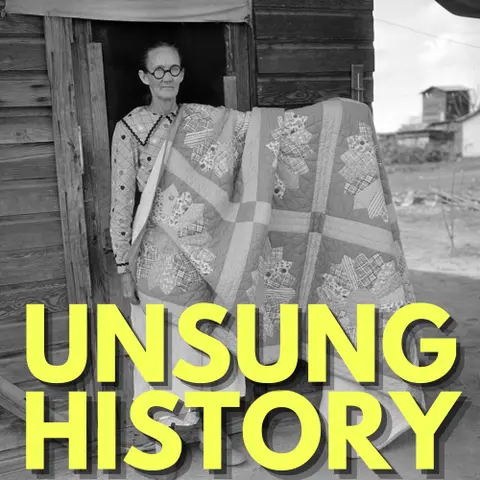
Quilting & the New Deal
As part of the Works Progress Administration (WPA), so-called “unskilled” women were put to work in over 10,000 sewing rooms across the country, producing both garments and home goods for people in need. Those home goods included quilts, sometimes quickly-made utilitarian bedcoverings, but also artistic quilts worthy of exhibition. Quilts were featured in other New Deal Projects, too, like the WPA Handicraft Projects, part of the Women’s and Professional Projects Division. Throughout the Great D...
Guest: Janneken Smucker
148
April 1, 2024
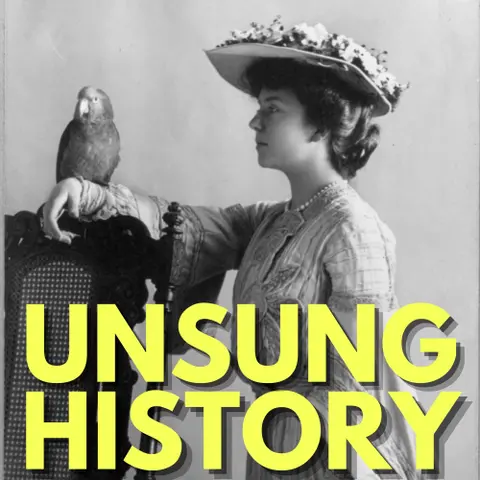
Alice Roosevelt Longworth
When Theodore Roosevelt became president in 1901, his eldest child, 17-year-old Alice, rose quickly to celebrity status. The public loved hearing about the exploits of the poker-playing, gum-chewing “Princess Alice,” who kept a small green snake in her purse. By the time she died at age 96, Alice, whose Dupont Circle home included an embroidered pillow with the phrase “If you can’t say something good about someone, sit right here by me,” was such an institution in DC politics that she was known ...
Guest: Michael Patrick Cullinane
147
March 25, 2024
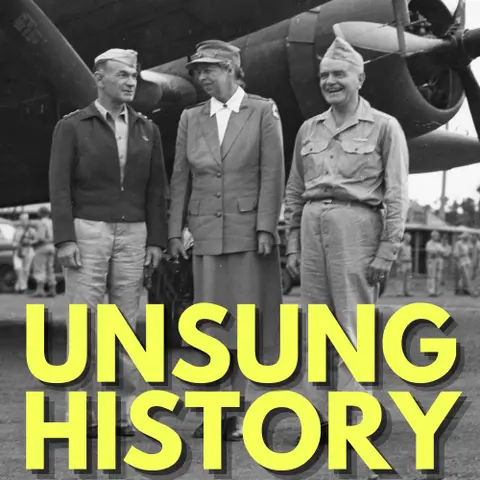
Eleanor Roosevelt's Visit to the Pacific Theatre during World War II
In August 1943, First Lady Eleanor Roosevelt set off in secrecy from San Francisco on a military transport plane, flying across the Pacific Ocean. It wasn’t until she showed up in New Zealand 10 days later that the public learned about her trip, a mission to the frontlines of the Pacific Theater in World War II to serve as "the President's eyes, ears and legs." Eleanor returned to New York five weeks and nearly 26,000 miles later, having seen an estimated 400,000 troops on her trip and producing...
Guest: Shannon McKenna Schmidt
146
March 18, 2024
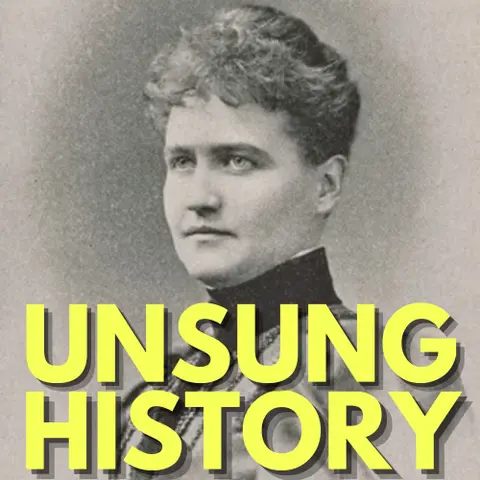
Eliza Scidmore
Journalist Eliza Ruhamah Scidmore traveled the world in the late 19th and early 20th Centuries, writing books and hundreds of articles about such places as Alaska, Japan, China, India, and helping shape the journal of the National Geographic Society into the photograph-heavy magazine it is today. Scidmore is perhaps best known today for her long-running and eventually successful campaign to bring Japanese cherry trees to Potomac Park in Washington, DC. Joining me in this episode is writer ...
Guest: Diana Parsell
133
Dec. 18, 2023
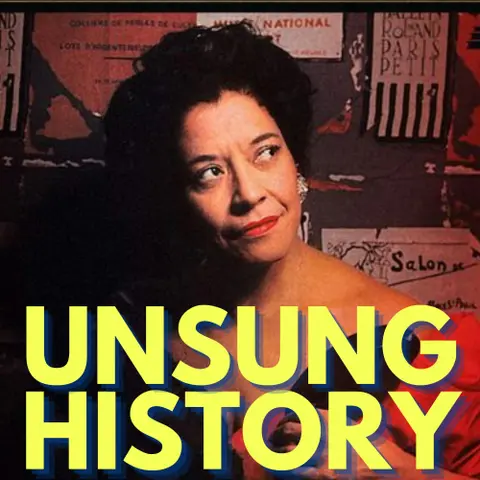
Mollie Moon
Stories of the Civil Rights Movement don’t often center the fundraisers, often Black women, whose tireless efforts made the movement possible; today we’re featuring one of those women. Mollie Moon, born in 1907, the founder and first chairperson of the National Council of Urban League Guilds, raised millions of dollars for the Civil Rights Movement, using her charm and connections to throw charity galas, like her famed Beaux Arts Ball, where everyone wanted to be seen. Her long service to the mo...
Guest: Tanisha C. Ford
131
Dec. 4, 2023
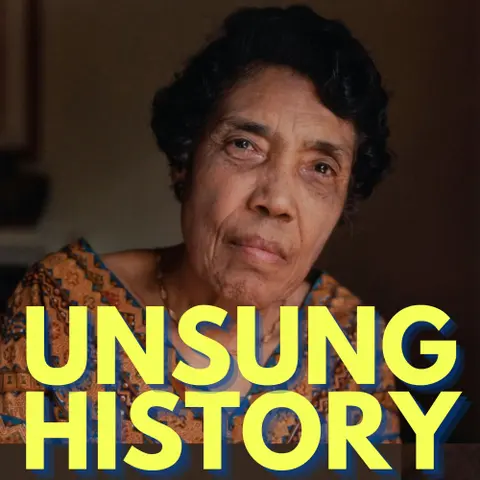
Merze Tate
Scholar Merze Tate, born in Michigan in 1905, overcame the odds in what she called a “sex and race discriminating world,” to earn graduate degrees from Oxford University and Harvard University on her way to becoming the first Black woman to teach in the History Department at Howard University. During her long career, Tate published 5 books, 34 journal articles and 45 review essays in the fields of diplomatic history and international relations. Her legacy extends beyond her publications, as the ...
Guest: Barbara Savage
122
Oct. 2, 2023
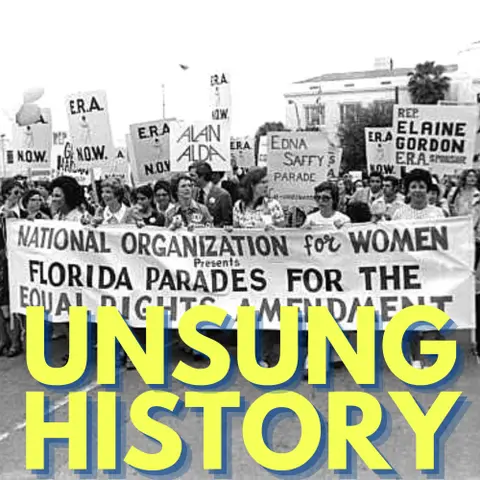
The History of the National Organization for Women (NOW)
At the Third National Conference of Commissions on the Status of Women, a group of women, led by writer Betty Friedan and organizer and attorney Pauli Murray, decided that to make progress they needed to form an independent national civil rights organization for women. Within months, the National Organization for Women had 300 founding members, a slate of officers, and a statement of purpose. By 1974, NOW boasted 40,000 members in over 700 chapters, and today NOW claims hundreds of thousands of ...
Guest: Katherine Turk
117
Aug. 28, 2023
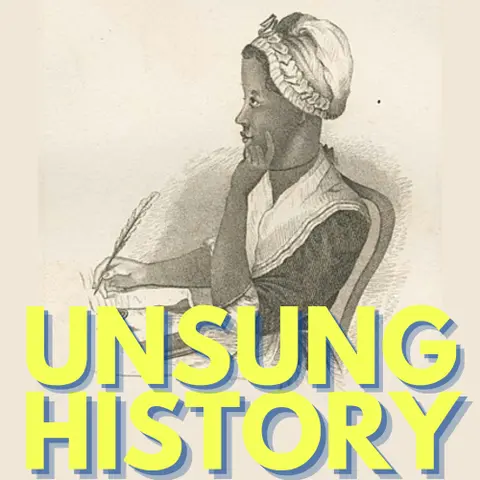
Phillis Wheatley
One of the best known poets of Revolutionary New England was an enslaved Black girl named Phillis Wheatley, who was only emancipated after she published a book of 39 of her poems in London. Wheatley, who met with Benjamin Franklin and corresponded with George Washington, was the first person of African descent to publish a book in English. Wheatley achieved literary success and helped drive the abolition movement, but she died young and penniless, and many of her poems were lost to history. J...
Guest: David Waldstreicher
116
Aug. 21, 2023
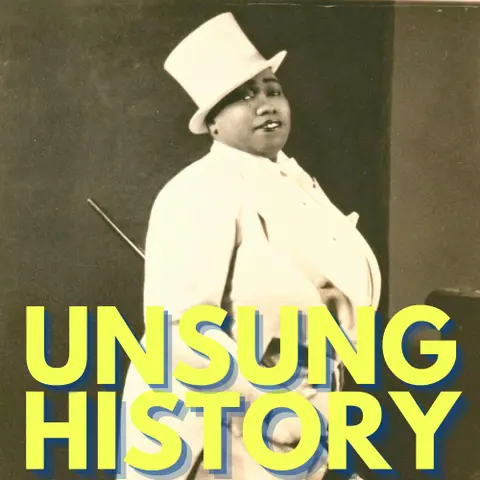
Gladys Bentley
One of the biggest stars in Prohibition Age New York was blues singer Gladys Bentley, who caused a stir in Harlem, wearing a top hat and tails, flirting with women in the audience, and singing raunchy lyrics. Despite Bentley’s phenomenal talent, the repeal of Prohibition and the end of the jazz age led to waning interest in the type of bawdy performance for which she was known. Despite attempts to change with the times, Bentley was never again able to reach the level of fame she had once enjoyed...
Guest: Cookie Woolner
115
Aug. 14, 2023
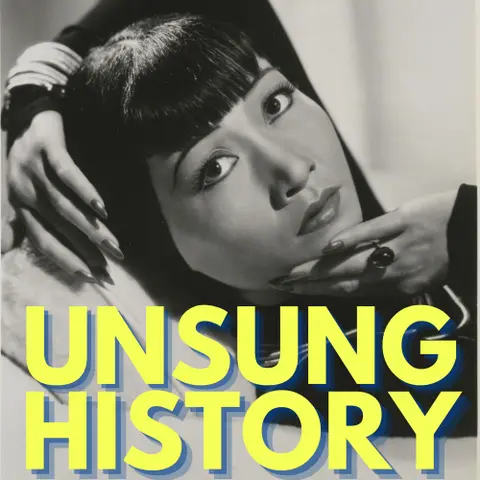
Anna May Wong
As a child in Los Angeles, Wong Liu Tsong knew she wanted to be an actress. Adopting the screen name Anna May Wong and dropping out of school to pursue her passion, Wong landed her first lead role at age 17. Despite Hollywood racism that would limit the types of roles she would receive, Wong’s impressive career spanned over 60 films, in addition to stage and television work, and she was the first Asian American woman to be awarded a star on the Hollywood Walk of Fame. Joining me in this episo...
Guest: Yunte Huang
114
Aug. 7, 2023
Anna Rosenberg
When Anna Rosenberg Hoffman died in 1983, the New York Times called her “one of the most influential women in the country's public affairs for a quarter of a century.” A skilled labor mediator and advisor to four U.S. presidents, Rosenberg, a Jewish immigrant from Hungary, stood up to Senator Joe McCarthy and was confirmed by the Senate as Assistant Secretary of Defense in 1950, making her the then-highest ranking woman in the history of the Department of Defense. It was only one of many firsts ...
Guest: Christopher C. Gorham
112
July 24, 2023
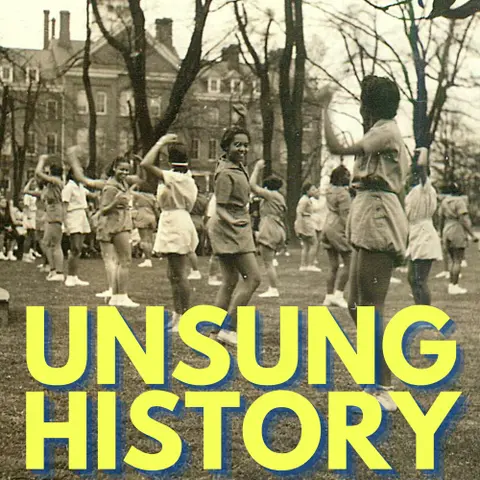
History of Black Women & Physical Fitness in the United States
In 1894, Mary P. Evans, wrote in the Woman’s Era, a Black women’s magazine, that exercise: “enables you to keep in the best condition for work with the hands or with the brain… It prepares you to meet disappointment, sorrow, ill treatment, and great suffering as the strong, courageous and splendid woman meets them. It is a great aid to clear, quick, and right thinking.” She wasn’t the only Black woman of the day encouraging Black women and girls to exercise as a way of improving not just themsel...
Guest: Ava Purkiss
111
July 17, 2023
Enslaved Women who Murdered their Enslavers
In the American colonies and then in the antebellum United States, the legal system reinforced the power and authority of slaveholders by allowing them to physically abuse the people they enslaved while severely punishing enslaved people for even minor offenses. Some enslaved women, who could find no justice in the courts, sought their own justice through lethal resistance, murdering their enslavers. Joining me now to help us understand the enslaved women who chose lethal resistance, what dro...
Guest: Nikki M. Taylor
101
May 8, 2023
Women & the Law in Revolutionary America
Despite a plea from Abigail Adams to her husband to “Remember the Ladies,” women, especially married women, didn’t have many legal rights in the Early Republic. Even so, women used existing legal structures to advocate for themselves and their children, leaning on their dependent status and the obligations of their husbands and the state to provide for them. I’m joined this week by Dr. Jacqueline Beatty, Assistant Professor of History at York College of Pennsylvania, and author of In Depend...
Guest: Jacqueline Beatty
95
March 27, 2023
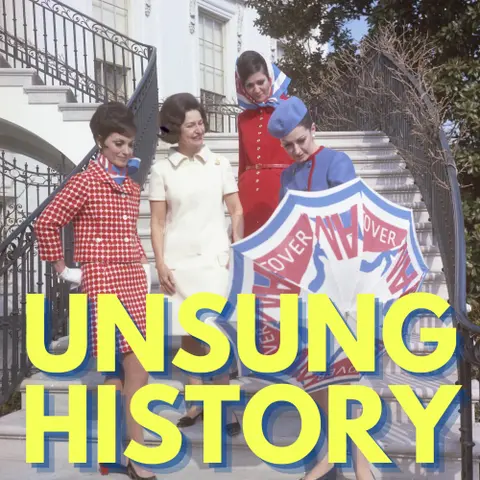
The 1968 White House Fashion Show
On February 29, 1968, Lady Bird Johnson hosted the first–and last–White House Fashion Show. The fashion show, intended both to highlight the fourth largest industry in the United States and to promote domestic tourism, inadvertently became one of the many PR missteps of the Johnson administration, as it occurred in the midst of the Tet Offensive. Just one month later LBJ announced on national television that he would not seek reelection, and today the fashion show is largely forgotten. Joinin...
Guest: Kimberly Chrisman-Campbell
94
March 20, 2023
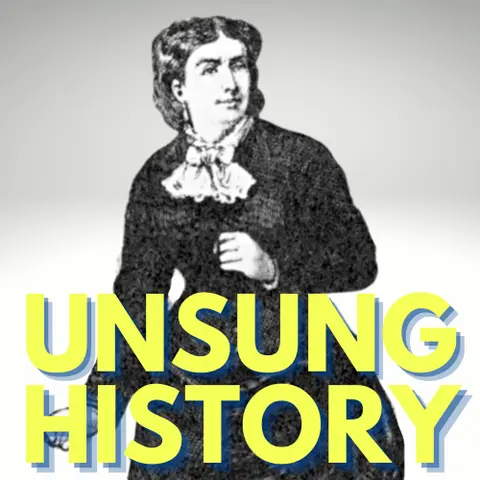
Madame Restell, "The Wickedest Woman in New York"
In 19th Century New York, everyone knew who to go to to end an unwanted pregnancy: the French-trained, sophisticated Madame Restell, who lived in a posh mansion on 5th Avenue. In reality, Madame Restell was English immigrant Ann Trow Lohman, and she had never even been to France, but she managed to combine medical skill with her carefully crafted public persona to become tremendously wealthy, while providing a much-needed service. As the legal landscape of the United States grew ever more conser...
Guest: Jennifer Wright
93
March 13, 2023
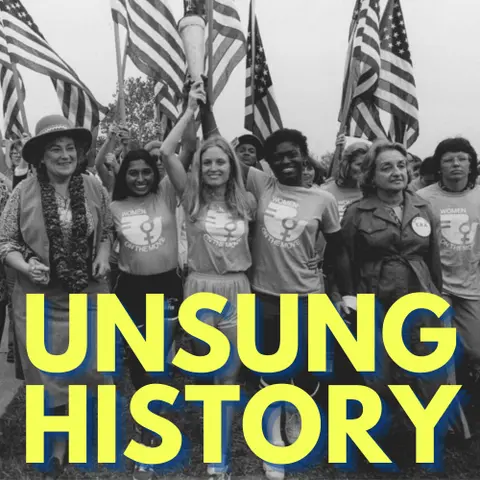
The National Women's Conference of 1977
In her 2015 book, Gloria Steinem described the National Women’s Conference of 1977 as “the most important event nobody knows about.” The four-day event in Houston, Texas, which brought together 2,000 delegates and another 15,000-20,000 observers was the culmination of a commission appointed first by President Ford and then by President Carter, and was and funded by Congress for $5 million to investigate how federal legislation could best help women. The excited delegates believed that the confer...
Guests: Nancy Beck Young , Elizabeth Rodwell
92
March 6, 2023
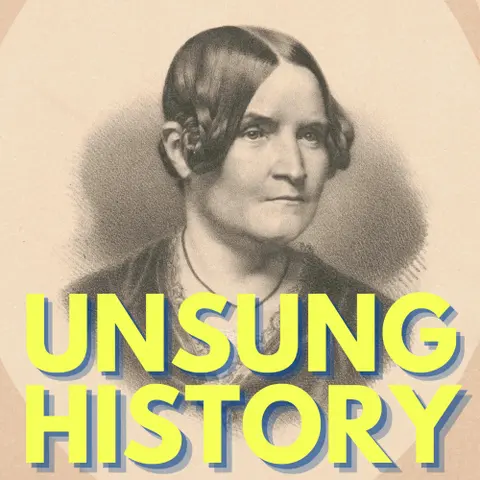
Lydia Maria Child
By 1833, Lydia Maria Child was a popular author, having published both fiction and nonfiction, including the wildly successful advice book The Frugal Housewife: Dedicated to those who are not ashamed of Economy. And she had been editing a beloved monthly periodical for children called Juvenile Miscellany for seven years. But her popularity crumbled precipitously when she published An Appeal in Favor of that Class of Americans Called Africans, arguing for the immediate emancipation of enslaved pe...
Guest: Lydia Moland
86
Jan. 23, 2023
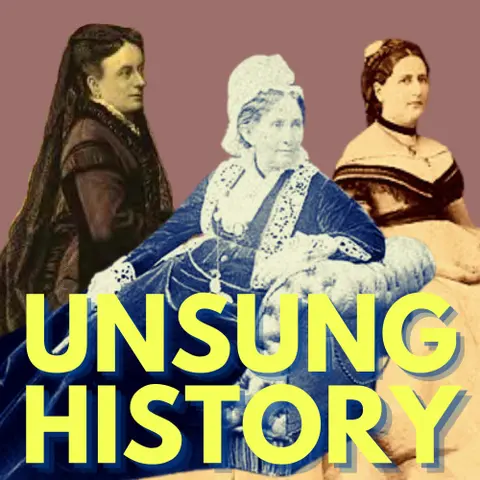
American Women Writers in Italy in the 19th Century
The second half of the nineteenth century was a momentous time in Italian history, marked by the unification of the peninsula and the formation of the Kingdom of Italy. Three American women writers had a front-seat view of this history while they lived in Italy: Caroline Crane Marsh, the wife of the United States Minister; journalist Anne Hampton Brewster; and Emily Bliss Gould, founder of a vocational school for Italian children. Joining me to help us learn more about these American women in...
Guest: Etta Madden

84
Jan. 9, 2023
Shirley Chisholm
Throughout her life, Shirley Chisholm fought for coalitional change. She was the first Black woman elected to the United States Congress in 1968, the first Black woman to run for President of the United States in 1972, co-founder of both the Congressional Black Caucus and the National Women’s Political Caucus, both in 1971, and co-founder of the National Congress of Black Women in 1984. Toward the end of her life, Chisholm told an interviewer: “I want history to remember me … as a Black woman wh...
Guest: Anastasia Curwood
83
Jan. 2, 2023
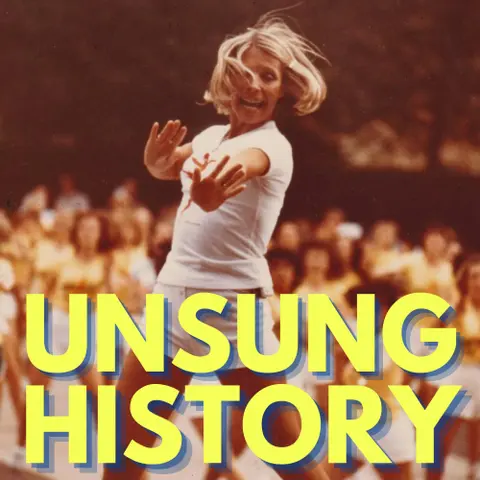
The Aerobics Craze of the 1980s
In the late 1960s, Air Force surgeon Dr. Kenneth Cooper was evaluating military fitness plans when he realized that aerobic activities, what we now call cardio, like running and cycling, was the key to overall physical health. His 1968 book Aerobics launched the aerobics revolution that followed, as he inspired women like Jacki Sorensen and Judi Sheppard Missett to combine dance with exercise, creating Dance Aerobics and Jazzercise in the process. I’m joined on this episode by Dr. Natalia Meh...
Guest: Natalia Mehlman Petrzela
78
Nov. 28, 2022
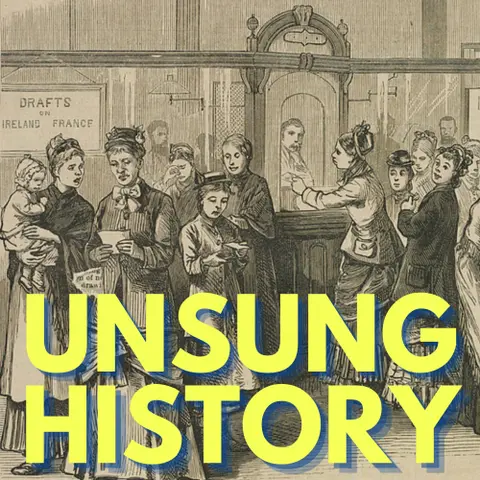
Single Irish Women & Domestic Service in late 19th Century New York City
As many as two million Irish people relocated to North America during the Great Hunger in the mid-19th Century. Even after the famine had ended, Irish families continued to send their teenaged and 20-something children to the United States to earn money to mail back to Ireland. In many immigrant groups, it was single men who immigrated to the US in search of work, but single Irish women, especially young women, came to the US in huge numbers. Between 1851 and 1910 the ratio of men to women arriv...
Guest: Vona Groarke