
Immigration Episodes
204
Aug. 25, 2025
Ideological Exclusion & Deportation
The First Amendment to the US Constitution says that Congress cannot make law abridging the freedom of speech, but by as early at 1798, Congress was restricting immigration to the country on the basis of the ideological beliefs of the people who wanted to immigrate. While the reasons for restrictions have changed over time, as has the mechanism by which they’re enforced, the basic principle continues to today. Joining me in this episode is Dr. Julia Rose Kraut, legal historian and author of Thre...
Guest: Julia Rose Kraut

186
Dec. 23, 2024
Frances Perkins
On March 4, 1933, Frances Perkins was sworn in as the 4th Secretary of Labor. It was the first time in United States history that a woman served in the Cabinet, only 13 years after the ratification of the 19th Amendment gave women the right to vote. Perkins came into office with a long list of to-do items, and she succeeded in accomplishing nearly all of them in her long tenure, as a central architect of many of the programs of the New Deal, especially the Social Security Act. More quietly, but ...
Guest: Rebecca Brenner Graham
178
Oct. 28, 2024
Baseball & the Chinese Educational Mission of the 1870s
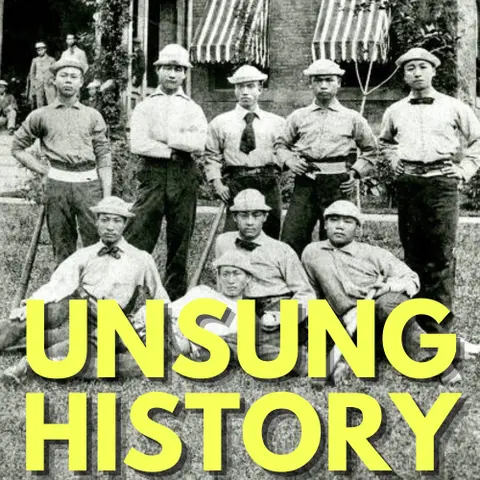
In the 1870s, 120 Chinese boys came to New England as part of the Chinese Educational Mission. The boys studied at prep schools and colleges, and while they continued their lessons in Chinese language and culture, they also learned about the culture of their adopted homeland, including the local sports, like baseball. By the mid-1870s, some of the Chinese students had formed a semi-pro baseball team called the Celestials that competed on the regional circuit. With growing anti-Chinese sentiment ...
Guest: Ben Railton
163
July 15, 2024
The Incorruptibles & Organized Jewish Crime in New York City in the Early 20th Century
In 1912, a group of wealthy and influential German Jews in uptown New York funded an effort to root out organized crime on the lower East Side, then the most densely populated neighborhood on Earth, home to half a million people, many of them recent Jewish Russian immigrants. As a result, a Jewish investigator and a Jewish lawyer joined the NYPD and pulled together a group of cops who refused to be paid off. The Incorruptibles, as the vice squad came to be known, quickly quashed the criminal ele...
Guest: Dan Slater
132
Dec. 11, 2023
Jewish War Brides of World War II
In the ravages of post-World War II Europe, some Jewish women survivors of the Holocaust found the beginnings of a new life when they met – and married – American (and Canadian and British) men serving with the Allied forces. These women were part of a much larger group of war brides, who came to the United States in such large numbers that they required a change in immigration law, but these Jewish war brides faced additional challenges, from language barriers to the memory of the trauma they’d...
Guest: Robin Judd
102
May 15, 2023
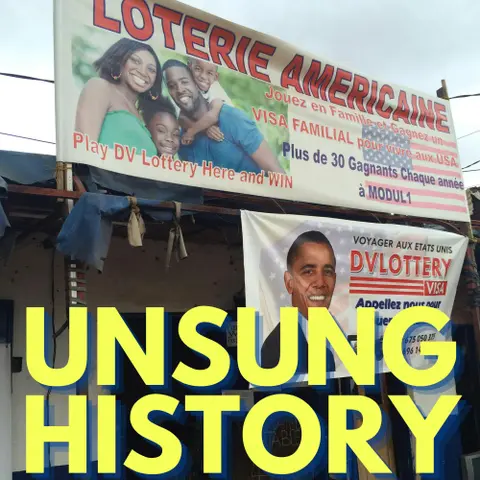
The Diversity Visa Lottery
In the 1980s undocumented Irish immigrants convinced United States lawmakers to create a program that would provide a path to citizenship for individuals without family connections in the United States. That program eventually became the Diversity Visa Lottery, established as part of the Immigration Act of 1990. Despite the program’s roots in demand from Irish immigrants, the majority of the recipients of diversity visas have been awarded to immigrants from Africa, with more than 480,000 individ...
Guest: Carly Goodman
91
Feb. 27, 2023
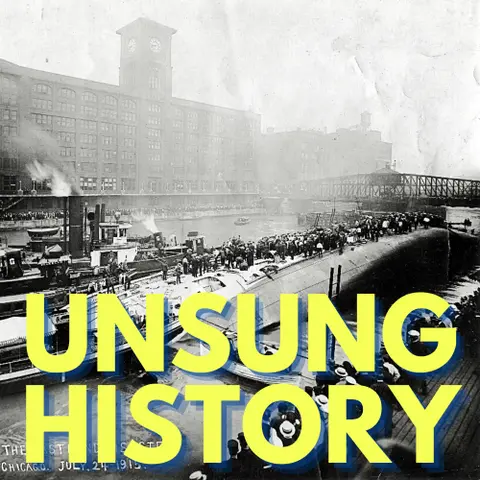
The Eastland Disaster
On the morning of July 24, 1915, employees of the Western Electric Company and their families excitedly boarded the SS Eastland near the Clark Street Bridge in Chicago, eager to set off for a day of fun in Michigan City, Indiana, during their annual company picnic. Tragically, the ship capsized just 19 feet from the wharf in the Chicago River, killing 844 people in one of the worst maritime disasters in United States history. Joining me on this episode to help us understand more about the tra...
Guest: Barb and Ted Wachholz
90
Feb. 20, 2023
The History of Polish Chicago
If you’ve ever lived in Chicago, you’ve probably heard at some point that Chicago has the largest Polish population outside of Warsaw. While that’s an exaggeration it’s certainly the case that the Chicagoland region has a large population of people of Polish descent and that Chicago is important historically to American Polonia. From the earliest Polish immigrants to Chicago in the 1830s through today, Poles have helped shape the culture, politics, religion, and food of Chicago. This week we div...
Guest: Dominic A. Pacyga
78
Nov. 28, 2022
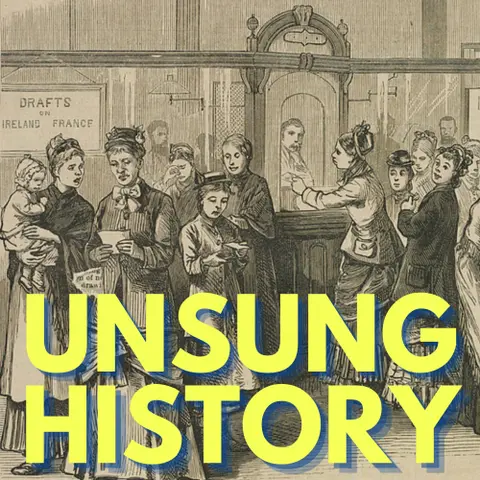
Single Irish Women & Domestic Service in late 19th Century New York City
As many as two million Irish people relocated to North America during the Great Hunger in the mid-19th Century. Even after the famine had ended, Irish families continued to send their teenaged and 20-something children to the United States to earn money to mail back to Ireland. In many immigrant groups, it was single men who immigrated to the US in search of work, but single Irish women, especially young women, came to the US in huge numbers. Between 1851 and 1910 the ratio of men to women arriv...
Guest: Vona Groarke
72
Oct. 17, 2022
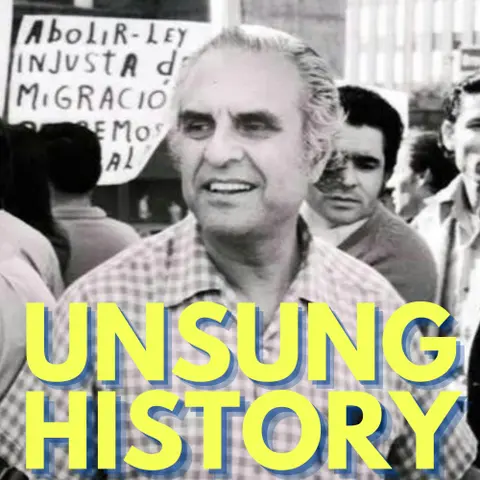
Bert Corona
Labor leader and immigrant rights activist Bert Corona viewed Mexican Americans and Mexican immigrants in the United States, both with and without documentation, as one people without borders, and he understood that their struggles were connected. While other Mexican American labor leaders were campaigning against undocumented workers, Corona fought to shift the opinions of Mexican Americans toward support for the undocumented and helped create a pro-immigrant consciousness among Latinos in the ...
Guest: Eladio B. Bobadilla
71
Oct. 10, 2022
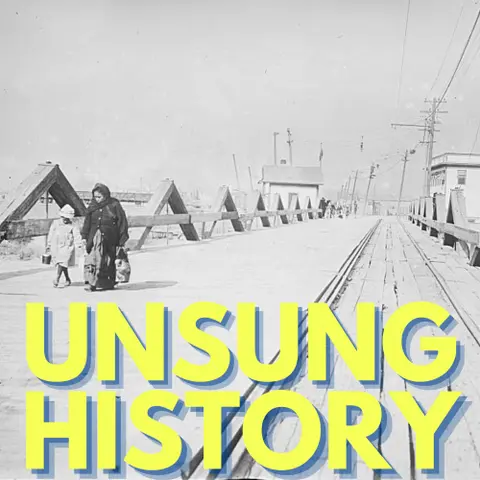
The Effect of the Mexican Revolution on Mexican Immigration to the U.S.
The Mexican Revolution in the early 20th Century was a pivotal moment in Mexican history, and it was also a pivotal moment in United States history, as huge numbers of Mexicans fled war-torn Mexico and headed to the US border. Many Mexican Americans in the US today are the descendants of refugees fleeing the Revolution. To understand more about the experience of immigrants who came to the United States during the Mexican Revolution, I’m speaking in this episode with writer Alda P. Dobbs, auth...
Guest: Alda Dobbs
70
Oct. 3, 2022
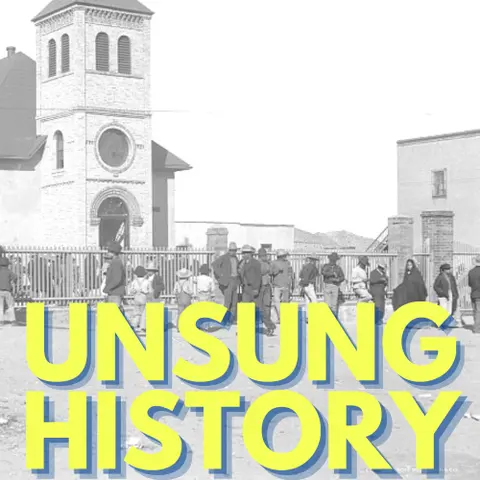
Southwest Borderlands in the 19th Century
Through the 19th Century, the US-Mexico border moved repeatedly, and the shifting borderlands were a space of cultural and economic transition that often gave rise to racialized gendered violence. In this episode I speak with Dr. Bernadine Hernández, Associate Professor of American Literary Studies at the University of New Mexico, an activist with fronteristxs, and author of Border Bodies: Racialized Sexuality, Sexual Capital, and Violence in the Nineteenth-Century Borderlands. Our theme s...
Guest: Bernadine Hernandez
52
May 30, 2022
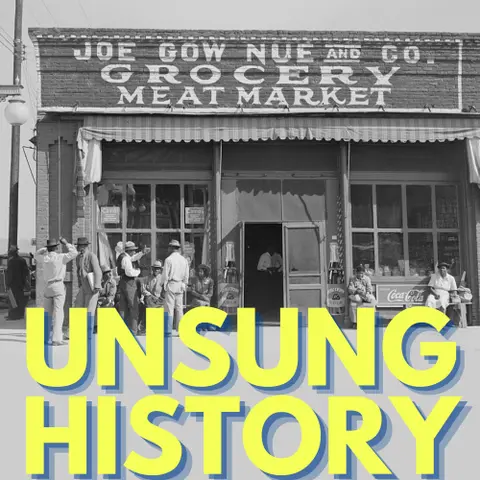
Chinese Grocery Stores in the Mississippi Delta
During Reconstruction, cotton planters in the Mississippi Delta recruited Chinese laborers to work on their plantations, to replace the emancipated slaves who had previously done the hard labor. However, the Chinese workers quickly learned that they couldn’t earn enough money picking cotton to send back to their families, and they turned instead to running small grocery stores, filling a niche in the market of the Deep South. At one point, the city of Greenville, Mississippi, had 40,000 resident...
Guest: Larissa Lam
50
May 16, 2022
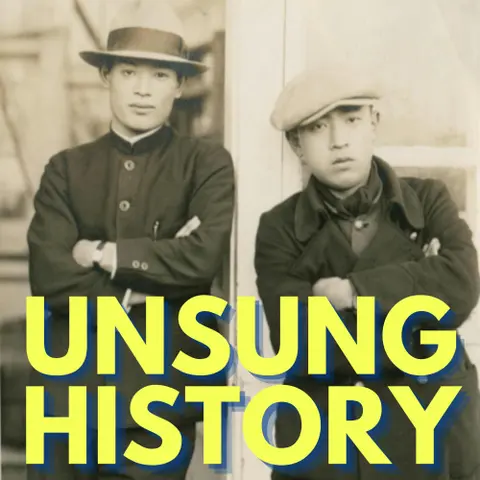
The US-Born Japanese Americans (Nisei) who Migrated to Japan
In the decades before World War II, 50,000 of the US-born children of Japanese immigrants (a quarter of their total population) migrated from the United States to the Japanese Empire. Although these second generation Japanese Americans (called Nisei) were US citizens, they faced prejudice and discrimination in the US and went to Japan in search of a better life. Joining me to help us learn about the Nisei who returned to Japan, what motivated them, and the challenges they faced both in Japan ...
Guest: Michael Jin
49
May 9, 2022
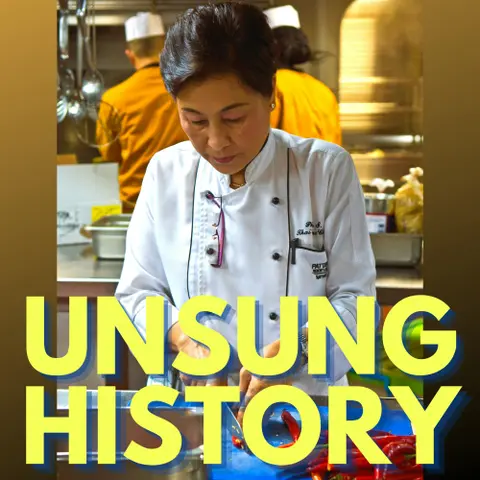
Thai Americans & the Rise of Thai Food in the United States
There are around 300,000 Thai Americans but almost 5,000 Thai restaurants in the United States. To understand how Thai restaurants became so ubiquitous in the US, we dive into the history of how Thai cuisine arrived in the US before Thai immigrants started to arrive in large numbers, and how Thai Americans capitalized on the popularity of their food to find their niche in the US economy. I’m joined in this episode by Associate Professor of Asian and Asian American Studies at the University of...
Guest: Mark Padoongpatt
48
May 2, 2022
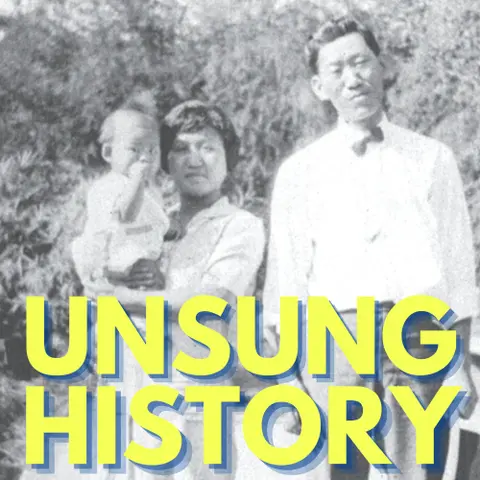
Mary Paik Lee
Mary Paik Lee (Paik Kuang Sun) was born in the Korean Empire on August 17, 1900, and was baptized by American Presbyterian minister Dr. Samuel Austin Moffett, one of the first American Presbyterian missionaries to come to Korea. In 1905, her family left Korea for Hawaii, fleeing the Japanese occupation of the Korean Peninsula. Late in her life, Mary wrote a memoir, recounting her family’s struggles in Hawaii and then California, where they faced discrimination and poverty, all while striving to ...
Guest: Jane Hong
28
Dec. 13, 2021
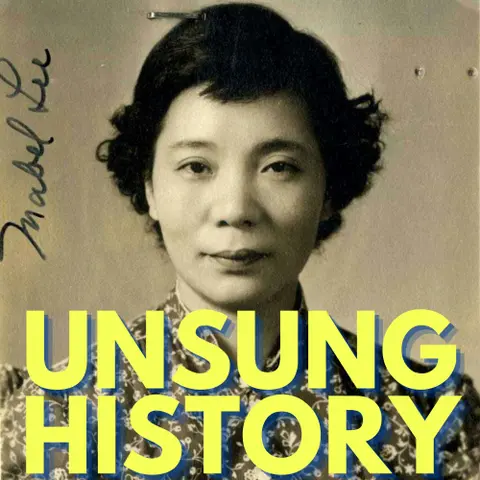
Mabel Ping-Hua Lee
Mabel Ping-Hua Lee was born in China in 1896 but lived most of her life in the United States, where, due to the Chinese Exclusion Act, she had no path to naturalization until the law changed in 1943. Even though it would not benefit her for decades, Mabel Lee worked for women’s suffrage, leading the New York City Suffrage Parade on horseback at the age of only 16. Lee was the first Chinese woman to earn a PhD in Economics in the United States, graduating from Columbia University in 1921 with a d...
Guest: Cathleen Cahill
7
July 19, 2021
The El Centro Hunger Strike of 1985
In 1945, United States immigration officials opened the El Centro Immigration Detention Camp in El Centro, California, to be an administrative holding center for unauthorized Mexican migrants, many of whom had been working on local farms and ranches. From the beginning, migrants were often detained for long periods of time while they served as the unpaid labor force of the center. Conditions were poor in the facility in the decades that followed, and in 1985 the incarcerated migrants (by this...
Guest: Jessica Ordaz