




Charles C. Diggs, Jr.







Charles C. Diggs, Jr., founder of the Congressional Black Caucus, spent 25 years in Congress, pushing for change, on issues from segregation in commercial aviation to home-rule for the residents of Washington, DC, to the anti-apartheid movement. His legislative accomplishments were overshadowed by his downfall, and today his story doesn’t receive the attention of other Civil Rights heroes. Joining me in this episode is Dr. Marion Orr, Frederick Lippitt Professor of Public Policy and Professor of Political Science at Brown University and author of House of Diggs: The Rise and Fall of America's Most Consequential Black Congressman, Charles C. Diggs Jr.
Our theme song is Frogs Legs Rag, composed by James Scott and performed by Kevin MacLeod, licensed under Creative Commons. The mid-audio is “Bad Luck Blues,” performed by Gertrude “Ma” Rainey in 1923; the performance is in the public domain. The episode image is an official Congressional photo of Charles Diggs, Jr., in the public domain and available via Wikimedia Commons.
Additional sources:
- “DIGGS, Charles Coles, Jr.,” Office of the Historian, United States House of Representatives.
- “Charles Diggs, 75, Congressman Censured Over Kickbacks,” by Irvin Molotsky, The New York Times, August 26, 1998.
- “Eyes on the Prize; Interview with Charles Coles Diggs Jr., 1985-11-06 [video],” Film and Media Archive, Washington University in St. Louis, American Archive of Public Broadcasting (GBH and the Library of Congress), Boston, MA and Washington, DC.
- “Regional Council of Negro Leadership,” by Ten Ownby, Mississippi Encyclopedia.
- “Mound Bayou (1887- ),” by Herbert G. Ruffin II, BlackPast, January 18, 2007.
- “Emmett Till's Death Inspired a Movement,” Smithsonian’s National Museum of African American History & Culture.
- “About the CBC,” Congressional Black Caucus.
- “D.C. Home Rule,” Council of the District of Columbia.
Advertising Inquiries: https://redcircle.com/brands
Kelly Therese Pollock 0:00
This is Unsung History, the podcast where we discuss people and events in American history that haven't always received a lot of attention. I'm your host, Kelly Therese Pollock. I'll start each episode with a brief introduction to the topic, and then talk to someone who knows a lot more than I do. Be sure to subscribe to Unsung History on your favorite podcasting app so you never miss an episode, and please tell your friends, family, neighbors, colleagues, maybe even strangers to listen too. Charles Coles Diggs, Jr. was born on December 2, 1922, in Detroit, the only child of Charles and Mayme Diggs, both of whom had moved north as part of the great migration. The couple had opened a funeral home the year before, after Diggs, Sr. completed his training at the Eckels College of Mortuary Science in Philadelphia. Diggs, Sr, who was a respected figure in Black Detroit, became involved in politics in the 1930s, and in 1936, he was elected to the Michigan State Senate, the first Black Democrat to serve in the Michigan Legislature. Diggs, Jr. enrolled at the University of Michigan in 1940, but transferred to Fisk University in Nashville in 1942, where he first experienced Jim Crow. After he was drafted into the US Army in February, 1942, he experienced much more racial discrimination, as he was stationed at military bases in the South. After his military service ended in the summer of 1945, Diggs, Jr. returned to Detroit and the funeral home business. Rather than completing his program at Fisk, he enrolled in the mortuary program at Wayne State University. In August, 1947, Diggs married Juanita Rosaria, an employee at the funeral home. And in October, 1948, Charles C. Diggs, III was born. Later that year, Diggs, Sr. began a prison sentence on bribery convictions, although he always maintained his innocence. In 1950 Diggs, Sr, once again won election to the Michigan State Senate, after a six year hiatus. However, the Republican dominated State Senate refused to seat him, and a special election was called in 1951. The victor in that special election was Diggs, Jr, just 29 years old. In 1954, Diggs, Jr. won election to the United States House of Representatives from the Michigan 13th District. To do so, he had to beat both the incumbent Democrat, George D. O'Brien and then his Republican opponent, Landon Knight, the son of John S. Knight, the editor and publisher of the Detroit Free Press. Both O'Brien and Knight were white, and Diggs defeated them handily in a Detroit district with a majority white population. When Diggs took his place in Congress, he was one of only three Black congressmen, all Democrats. Just months after Diggs was sworn in for his first term, he was invited to give the keynote address for the annual meeting of the Regional Council of Negro Leadership in Mound Bayou, Mississippi. Mound Bayou had been founded in 1887 by former slaves, and was one of the few cities in the country owned and governed by African Americans. Although only around 1300 people lived in Mount Bayou at the time, 10 times that number came out to hear Congressman Diggs speak, as he declared to the crowd, "The time for segregation is running out in Mississippi.Victory will ultimately be ours. If we keep up the fight to make democracy live, we will get the justice espoused by Almighty God and the Constitution of the United States." Diggs would return to Mississippi soon after to attend the trial for the two white men accused of brutally murdering Emmett Till, a 14 year old Black Chicago boy visiting family in the state. Although the men were acquitted by an all white jury, Diggs' presence both supported Till's mother and the Black witnesses and also brought additional media attention to the case and to Black civil rights. Much of Diggs' work in Congress was less public than the events in Mississippi. His quiet but persistent campaigns in Congress and with sitting presidents, helped to desegregate commercial air travel and forced the Department of Defense to take action against the discrimination that Black service members and their families faced, especially near military bases in the US South and abroad. In the late 1960s, Diggs brought together the growing number of Black members of Congress into the Democracy Select Committee, DSC, an informal group that lacked a budget or a staff. At the beginning of the 92nd Congress in January, 1971, the 13 Black House members formalized their association, creating the Congressional Black Caucus with Diggs unanimously elected their chair. In 1969, Diggs became chair of the House Foreign Affairs Subcommittee on Africa. While a member of the subcommittee, Diggs had carefully studied the continent's issues, and he went right to work as chair, holding hearings and traveling to the region. He was especially concerned with ending US ties to South African governments that enforce segregation, and he pressured both the US government and US companies operating in South Africa for change. Diggs' work led to the formation of the advocacy organization Trans Africa in 1977, which initially operated out of his congressional office. Starting in January, 1973, Diggs became chair of the Committee on the District of Columbia, which he had served on for nearly a decade. In the role, he advocated for the city's autonomy, successfully bringing to the House floor a bill authorizing partial self government that allowed the city's residents to elect a mayor and a city council for the first time since 1874. In the role, Diggs also helped establish the University of the District of Columbia. In 1978, Diggs was indicted on charges that included taking kickbacks from congressional employees. He was convicted on 29 counts in October, 1978, but re-elected to Congress the next month. In July, 1979, the House voted unanimously to censure Diggs, who was free on appeal. Shortly before he entered prison in 1980, he resigned his House seat. Although he was sentenced to three years in prison, he was released after seven months. Charles C. Diggs, Jr. died August 24, 1998, at age 75 in Washington, DC. He is buried next to his parents in Detroit Memorial Park, a cemetery founded by his father when other local cemeteries either refused to bury Black people or segregated their burial plots. He was married four times and had six children, two sons and four daughters.
Kelly Therese Pollock 9:47
Joining me in this episode is Dr. Marion Orr, Frederick Lippitt Professor of Public Policy and Professor of Political Science at Brown University, and author of, "House of Diggs: The Rise and Fall of America's Most Consequential Black Congressman, Charles C. Diggs, Jr."
Kelly Therese Pollock 10:40
Hi, Marion, thanks so much for joining me today.
Dr. Marion Orr 10:44
Well, thank you for having me on your show. Looking forward to our discussion.
Kelly Therese Pollock 10:49
This was a terrific book. I'm looking forward to speaking about it. I want to hear a little bit about what first got you interested in writing this biography of Charles Diggs, Jr.
Dr. Marion Orr 11:02
Well, I'm a political scientist by training, and I study American politics. I learned about Charles Diggs many years ago when I was an undergraduate student at Savannah State College. That's a historically Black college in my hometown where I was raised and grew up there, and I had a professor at Savannah State, a political scientist. His name was Hanes Walton. Hanes, like the t-shirt maker, Hanes. His last name was Walton, and Professor Walton taught many of the political science courses at Savannah State. He was a brilliant, brilliant political scientist, by the way, and Charles Diggs came up in many of the courses that Dr. Walton taught. He came up in his course on American government when, when Professor Walton taught us about Congress. Diggs came up because Charles Diggs was the founder of the Congressional Black Caucus. I remember Kelly that Dr. Walton taught a course on African politics. And again, Diggs came up in that course because Charles Diggs was a a leader in the American anti-apartheid movement. So I learned about Charles Diggs when I was about 18 years old, as an undergraduate political science student. And then I went on to get my PhD in Political Science Kelly, and I learned even more about the congressman. And then I discovered that there was no book or no biography on Diggs. And so I decided to take the plunge. It took me 10 years to do the research in writing "The House of Diggs."
Kelly Therese Pollock 12:47
What did that research look like? What kind of sources were you able to find? And could you talk some about your use of oral history as well?
Dr. Marion Orr 12:55
Well, certainly. The research is based, I should say, largely on the papers of Congressman Diggs. Diggs donated his congressional, personal, and business papers to Howard University, and there's about 750 boxes of material that Diggs left. It's a rich source of information and data about the congressman, his work on Capitol Hill, his business. His family owned a funeral home, by the way, and the funeral home was called the House of Diggs, and hence the title of the book. So I had archival data from the Congressman's papers. I have archival data from all the Presidential Libraries under the presidents that Congressman Diggs served under. And then Kelly, you mentioned It, I had a wonderful opportunity to interview about 30 individuals who actually knew the congressman, his family members, his colleagues on Capitol Hill, staff members, indeed, neighbors, who remember the congressman. So it's a really rich data source that drives the book, lots of governmental data. Also the Congressman had lots of speeches on Capitol Hill. And then finally, I was able to obtain Congressman Diggs' FBI file, and that was another rich source of information about his his life.
Kelly Therese Pollock 14:45
I of course, read and know a lot of American history, and I'm especially interested in politics, and I'd heard his name, but I didn't know a whole lot about him before reading your book. Can you talk a little bit about why he isn't better known, despite his effectiveness, all the things he was able to do while he was in Congress?
Dr. Marion Orr 15:03
Well, Congressman Diggs served on Capitol Hill from 1955 to 1980, some, nearly 25 years. And many people may remember the name and heard the name because he really played a vital and important role, but they don't know how much about him, as you indicated. I think there's a couple of reasons for this. One, when Diggs was in Congress, he served alongside for many of the years he was in Congress of a man named Adam Clayton Powell. Adam Clayton Powell was a Congress member from Harlem, a Black Congress member who arrived on Capitol Hill 10 years before Diggs. And Powell was a very flamboyant Congress member. And he got the attention, that is Powell, of many of the reporters who were covering Capitol Hill during the post World War II period. That's number one, he was overshadowed, I believe, by this very domineering congressman, Adam Clayton Powell. And then the other reason I believe many people have forgotten about Diggs is I believe his downfall had something to do about his, what some people call and told me his his erasure from history. He had a tremendous downfall. In fact, I should tell your listeners that he eventually spent seven months in prison for payroll irregularities that he was convicted on. Let me just add, Diggs, unlike Powell, was sort of unassuming, soft spoken, kind of individuals who can often get overlooked on Capitol Hill. So I think those two features, his his downfall and his being overshadowed by Adam Clayton Powell.
Kelly Therese Pollock 15:04
Can you talk some about the legislative style that Diggs had? You know, he was, as I mentioned, he was pretty effective. There were a lot of things he was able to do. So what? What was his approach to governing?
Dr. Marion Orr 17:31
Yeah, when Diggs arrived in Congress in 1955, there were only two other Black members of Congress. So that's three Black members out of 435 House members. And Diggs arrived in Congress, he had to decide how he was going to approach the legislature, and what he decided to do was to carve out what I call a politics of strategic moderation. Let me just say this. The other two members of Congress, Black members of Congress, was a man named William Dawson. Dawson was a Black Congress member from Chicago, and he was very conservative, especially around racial issues. Dawson came out of the Chicago machine, and he was somewhat controlled by the machine in terms of what he could say and what he could do. Very conservative. On the other hand, Adam Clayton Powell, whom I mentioned earlier, was outspoken and spoke out forcefully on racial issues. He was considered a Black militant, indeed a Black radical. What Diggs decided was in an effort to be effective in Congress, in order to build coalitions that you really had to, you know, be strategic. And his strategy was to chart out this sort of moderate approach. And let me be very clear what I mean by a politics of strategic moderation. Diggs was a race man from his heart, he was very forceful on racial issues. He spoke out against discrimination, and he was a strong supporter of Black civil rights. So he wasn't a moderate in the sense of this. He was a moderate in the sense of his strategy in trying to build a broad based coalition in the Congress. He understood that given the fact that Blacks were were a numerical minority, only about 12% of the population, and a racial minority, it required a strategic approach to build coalitions, and he wanted to build and believed that Black Americans had to have support from across the political spectrum. And that's what he tried to do as a congressperson, to try to build these broad based coalitions across ideological spectrums. And that was his approach. And given the way our founding fathers established the Congress, this approach, I think, proved much more effective than the power approach of militant radicalism, and much more effective than Dawson's quiet ignorance or avoidance of Black racial issues. And so the Founding Fathers established the Congress to be an institution of bargaining and compromise, and that's what Diggs was effective at in working in that institution to to both build coalitions and understanding when one had to compromise.
Kelly Therese Pollock 21:03
So it seems, in reading your book that you know, in some ways, Diggs, and partly because he was one of only a few Black congressmen, as you mentioned, that he he almost had to be a Congress member, not just of his district in Michigan, but of Mississippi, of Washington, DC, of the larger Black population. I want to start with Mississippi. Can you talk some about his connections to Mississippi? And then, you know, he has some really important moments, especially sort of early in the civil rights movement, where he's in Mississippi, where he's fighting for the people of Mississippi.
Dr. Marion Orr 21:40
Diggs spent a lot of time early on in his career, especially in the in the South, in the Deep South. He was drawn especially to Mississippi because it's his ancestral home. His his father, his father, Charles Diggs, Sr, was a part of the great migration. His mother, Mayme Diggs, came from Tennessee, and so Diggs' ancestral home was indeed Mississippi. When Diggs arrived in Congress in 1955, one of the first things that he did was to go down to Mississippi in the summer of 1955 to observe the trial of the two white men who had murdered Emmett Till. Your listeners may recognize Emmett Till's name. Emmett Till was the 14 year old black Chicago boy who was lynched in Mississippi in the summer of 1955. And so Diggs' first national exposure, if you will, was his attending the trial of these two white men. And I say this in the book, and I repeat it here is that Diggs was had a major impact on the trial while he was there, I think, an impact that's been overlooked by many. Number One, Diggs' presence, and he was actually in the courtroom during the five days of the trial. His presence in the courtroom gave assurance and encouragement to the Black witnesses who came forward to testify against the two white men. It was, Kelly and your listeners, a dangerous thing in 1955 for Black men and women to accuse a white person of a crime, and so these Black witnesses who came forward in Mississippi, they were they told reporters after the trial that seeing Congressman Diggs in the courtroom, seeing a powerful Black man from the federal government in the courtroom during the trial gave them the courage to testify at the trial. So he had a big impact on the Black witnesses that came forth. The other impact he had at the trial is that Diggs' presence as the only federal government official at the trial, his presence drew additional media attention to the trial and moreover, to the broader issue of civil rights in in in the South. So the media was just curious about this new Black member of Congress. And again, he just, he just arrived in January of '55. The trial is taking place in late August, early September of 1955, and so the reporters are curious about this new Black congressman. What is it that would draw this person you know from Detroit to Mississippi to observe the trial? And then finally, the third impact that that this trial had on Diggs is what you said earlier in your question to me, Diggs' presence at the trial of the two white men who murdered Emmett Till was really sending a signal to America about what kind of Congress member he planned to be, and what he was saying by being down in Mississippi, he was saying to America that although I was elected from the 13th Congressional District of Michigan, and although I planned to represent that district, he was saying he also planned to be a Congress member for all of Black America. And if you look at his career, you see he did just that. He was a Congress member for all of Black America during this period in Congress.
Kelly Therese Pollock 26:07
And of course, another segment of Black America that was and still is unrepresented in Congress is the population of Washington, DC. And you know, I I've been really interested in the more current movement for statehood, but I don't think I realized how far back the push to statehood in DC went. Can you talk some about what he was able to do in the House committee, that, of course, we didn't get all the way to statehood in DC, but he was able to really have a big impact on the ability of DC residents to have some control, at least in the way their city was governed?
Dr. Marion Orr 26:48
Yes, yes, Washington DC is a unique kind of city in that it is the seat of the federal government. And so Washington, DC was carved out of portions of Maryland and portions of Virginia. And our Constitution, the United States Constitution, Kelly, gives Congress exclusive control over the Federal District Washington, DC. And many people don't know this, but for the beginning of DC's history, Congress, given that it had control over the district, Congress allowed local officials to run Washington, DC for for decades, indeed, until after the Civil War, when more and more Black people moved to Washington, DC. Black people now have the right to vote after, at least Black men do after the Civil War. And so Blacks began to have political power shortly after and during and after Reconstruction in Washington, DC. Well, Congress decides that it would remove home rule and no longer allow local officials to run Washington, DC. So for 100 years following reconstruction, until around 1973, the President of the United States appointed the mayor and other top officials in Washington, DC. To make this a long story short, though, the members of Congress simply did not want Black people to have governing authority over over Washington, DC. And what happened is that in 1973, Diggs became chair of the committee that had jurisdiction over Washington, DC, and he was able to push through the Congress a bill that is now called the Home Rule bill, and today, Congress now allows DC residents to vote for its mayor, city council members and other public officials. So for 100 years, there was this real push for Home Rule, as it's now called, and Diggs was able to put through a compromise bill, let me just say that that allowed for the kind of Home Rule we have today, that, as you indicated, Kelly, at least implied, is currently being scrutinized heavily by the Trump administration. So Charles Diggs, Jr. is indeed the father of Home Rule in Washington, DC, and we can connect the current mayor of Washington, DC, Muriel Bowser, former mayors like Marion Barry to the work and effort of Charles Diggs in pushing through the Home Rule bill through Congress.
Kelly Therese Pollock 30:07
And if I am remembering your book correctly, Diggs was actually interested in there being DC statehood as well. But of course, we have not gotten there.
Dr. Marion Orr 30:18
Charles Diggs was a strategic and skilled legislator, and he understood that in 1973, that you were not going to get through the Congress a bill that would grant Washington, DC statehood. He supported statehood and supported a statehood movement, but he understood that Richard Nixon, who was president at the time, a Republican president, was not going to sign a bill that would grant Washington, DC statehood and potentially allow two Democratic senators to come into the Congress. And hence the compromise, hence Diggs had to, you know, he understood that he that you had, you had to grab something. And the best thing DC has ever had right now is the current Home Rule, Home Rule bill, which today probably would not get through the Congress. If a Home Rule bill came through today, I suspect it would be a challenge for Diggs or anyone else to get it through the Congress.
Kelly Therese Pollock 31:35
Yeah, so you mentioned earlier Diggs' interest in Africa and his his work, there. Can you expand some on that? And you know how he got the the name Mr. Africa, the the work he was able to do?
Dr. Marion Orr 31:50
Yes, yes. There are three chapters in the book about Africa, because Charles Diggs became the first American legislator to take a genuine and have a genuine interest in Africa. No other no other Congress member had ever taken African policy so seriously as Congressman Diggs. In 1959, Diggs became the first Black American to sit on the House Foreign Affairs Committee, and from his position on that committee, and 10 years later, in 1969 when he became chair of the Africa subcommittee of the House Foreign Affairs Committee, he began to talk about apartheid. Diggs was talking about apartheid, that system in South Africa that allowed the white minority to rule over the Black majority. Diggs was talking about apartheid in the 1950s before many Americans knew what apartheid was all about. And so Kelly and your listeners, the American anti-apartheid movement literally started in Diggs' congressional office. He became the member of Congress who everybody looked for, for ideas and strategies and policy around Africa, and he would work really hard as chair of the Africa subcommittee to awaken America to the racist system of apartheid that was happening in South Africa. And he Diggs, was really going against the grain of American government policy. He was going against the grain of his party, because our nation, our government, was closely allied with the South African regime, and Diggs had to work hard to break the bond between our nation and the South African regime. South Africa, its government was highly anti communist, and hence our nation viewed South Africa as a strategic ally in the Cold War. And so while Diggs was trying to break the bond between our nation and South Africa, you have Democratic and Republican Presidents trying to keep the bond in in place. And so I argue in the book that Diggs' work in South Africa was perhaps his greatest challenge, and indeed his greatest accomplishment. As you and your listeners probably know, in 1994, Nelson, Mandela was elected the first Black African to lead South South Africa. And when Mandela visited the US in summer of 1990, he noted that it was the work of the Black members of Congress, led by Charlie Diggs, that freed him from prison, that freed Mandela from prison, and brought down the racist regime in South Africa.
Kelly Therese Pollock 35:39
You mentioned that Diggs started the Congressional Black Caucus. I think this is probably a caucus that a lot of people have heard of. It's, of course, much bigger now, much more influential. Could you talk a little bit about how it started, why some of the Black members of Congress didn't actually want to form a caucus originally?
Dr. Marion Orr 35:59
When Diggs arrived in Congress in January of 1955, as I said earlier, there were only two other Black members of Congress, Adam Clayton Powell, the Black radical, and Bill Dawson, the Black conservative. Diggs discovered that the two men did not talk to one another. They didn't get along with one another. And I believe walking into this situation, Diggs had a sense it just wasn't really good for for Black America. I believe he understood right away that these that the three of them ought to be working together somehow. Well, in 1968, Diggs would take up the idea of forming a caucus that is to bring together, at the time, the 13 Black members of Congress, many of whom represented similar districts, all of whom were Democrats, and all of whom had challenges back home in their districts that overlap. And so Diggs believed that the Black members of Congress should sort of coalesce and come together. And so what he did was to, first of all, they met informally before they really formed the Congressional Black Caucus. They met informally in Diggs' office to discuss policy and these kinds of things. And then in 1968 when the number of Blacks reached 13, Diggs would formalize a group into an organization that he called the Democrat Select Committee. So the Democratic Select Committee was formed in 1969 and Diggs was its leader. And then in 1971, the Democratic Select Committee would change its name to the Congressional Black Caucus, and the 13 members of the caucus at the time would appoint Diggs as the caucus principal spokesperson and leader. And so Diggs would become the first chairperson of the Congressional Black Caucus, and one of the first things that they did was to boycott Richard Nixon's 1971 State of the Union speech, and that would eventually lead to this historic meeting in March of 1972 between Richard Nixon, the President of the United States, and the 13 members of this new caucus, the Congressional Black Caucus. And today, the caucus now have, I believe, 62 members, and is one of the most powerful political organizations, I believe you could argue in the country.
Kelly Therese Pollock 38:51
We've been talking about wonderful, effective things that Diggs did. I think we need to mention his downfall, as you mentioned. So can you talk a little bit about the scandal that Diggs found himself in, how a little bit about how it came about and the end result for him?
Dr. Marion Orr 39:12
Charles Diggs, for many, many years, had difficulty managing his personal finances, difficulty, unwillingness. I don't know how to describe it, but he was a guy who always would over spend, and this was something that started early on, when he was in his early 20s, working for his father at the family owned funeral home, the House of Diggs Funeral Home. He had a salary as a young man working for his father. And I'm told through interviews that Diggs would spend his salary and come to his father for extra money, and his dad would say, come on now, spend your money wisely. I'm not giving you any more any more money. So he had a penchant for for over overspending, and he had a tendency of relying on the House of Diggs Funeral Home to finance his overspending. So he would come to the funeral home because he's like the owner of it, and he would sort of, you know, get the cash he needed to to pay his personal finances. The funeral home would eventually collapse. In the early 70s, the House of Diggs, which was a very prominent business enterprise for about 30 years, would eventually collapse. And I discussed this in the book, I won't go into it now. And hence, Diggs did not have this source of additional income coming in. Now, let me say this. This is not an excuse for what Diggs eventually was convicted of. I'm just trying to explain to you and your listeners what happened to Congressman Diggs. So without the funeral home, he did not have this sort of cash he could get his hands on. And so given his prominence in Congress, chair of a subcommittee, a chair of a full committee, he became chair of the of the DC committee, as I indicated, he had access to resources. And here's what he did. He gave his secretary a salary raise, an increase in her salary, and the increased salary was given back to Congressman Diggs. It's called a payroll kickback scheme. I give you an increase in your salary, but you give that salary increase back to me as the boss. And Diggs did this for about two and a half years with his secretary, and he used those funds to pay his personal bills. The woman with whom he was doing this scheme with eventually resigned. So the payroll scheme sort of stopped in a way. Diggs would hire a successor, a person to replace this woman, and this person would discover in Diggs' personnel files, the payroll kickback scheme. I won't reveal this person to your your listeners here, they have to get the book to get it, but here's what happened. The person went through Diggs' files, discovered that he had been involved in this payroll kickback scheme, and picked up the phone and called the Justice Department and gave them a tip about what Diggs had been involved in. And this person asked the Justice Department for this person to remain anonymous, not to reveal the name. Okay, my book is the first to reveal the identity of the confidential informer who told the Justice Department about Diggs' payroll kickback scheme. Diggs would eventually Kelly, go on become indicted, he would go on trial and be convicted by unanimous jury of 11 Black Americans and one white person convicted him on all counts in the payroll kickback scheme. Diggs would eventually be censured by the Congress, which is the most severe punishment, short of expulsion, and he would eventually spend seven months in federal prison for the payroll kickback schemes. He had to resign after being censured, and then he went to prison for seven months. He would come out of prison in 1981 and he would live, died of a stroke, August of 1998. So he lived about 18 years after serving in Congress. He lived after Congress, in and around Washington, DC and Prince George's County. Got involved in local politics in Prince George's County, and as I said, died of a stroke in August of 1998 and was buried next to his mom and dad in Detroit.
Kelly Therese Pollock 44:40
There is, of course, much more in this book, as you note, things like the identity of the informant. Can you tell listeners how they can get a copy of the book?
Dr. Marion Orr 44:50
Yes, your listeners can purchase this book through amazon.com. You can go online to University of North Carolina, press.org. That's the publisher of the book, and the book is available in some local, local bookstores. Go to my website, MarionOrr.com. You can learn more about me and learn how to purchase the book also.
Kelly Therese Pollock 45:14
Is there anything else you wanted to make sure we talk about?
Dr. Marion Orr 45:19
Yes, I want to underscore this one point is this to say that you mentioned that Diggs is sort of not well known, and what have you. My attempt is to it with this book is to present a restorative and corrective sort of history of of this gentleman. And I want to just say that to your listeners that Congressman Diggs should not be known solely by his downfall and the payroll kickback scheme that sent him to prison and really undermined his his career. Diggs should, on the other hand, be known for and recognized for his tremendous contributions, that despite what happened to him, he was a true patriot. He loved this country, and he really wanted this country to stand up and be true to the Constitution and the Declaration of Independence. And so my book, "The House of Diggs," is really an attempt to present to the readers biography of a wonderful American that many of us should know more about because of his his work. Diggs was a freedom fighter on two continents, in North America, here in the US, and a freedom fighter in Africa.
Kelly Therese Pollock 46:52
Marion, thank you so much. This was an incredible read. I'm so glad to have learned more about Diggs, and it was a pleasure to speak with you.
Dr. Marion Orr 47:00
Well. thank you. Thanks again for your interest and thank you for your listeners out there.
Teddy 47:51
Thanks for listening to Unsung History. Please subscribe to Unsung History on your favorite podcasting app. You can find the sources used for this episode and a full episode transcript @UnsungHistoryPodcast.com. To the best of our knowledge, all audio and images used by Unsung History are in the public domain or are used with permission. You can find us on Instagram @Unsung__History, or on Facebook @UnsungHistoryPodcast. To contact us with questions, corrections, praise, or episode suggestions, please email Kelly@UnsungHistoryPodcast.com. If you enjoyed this podcast, please rate, review, and tell everyone you know. Bye!
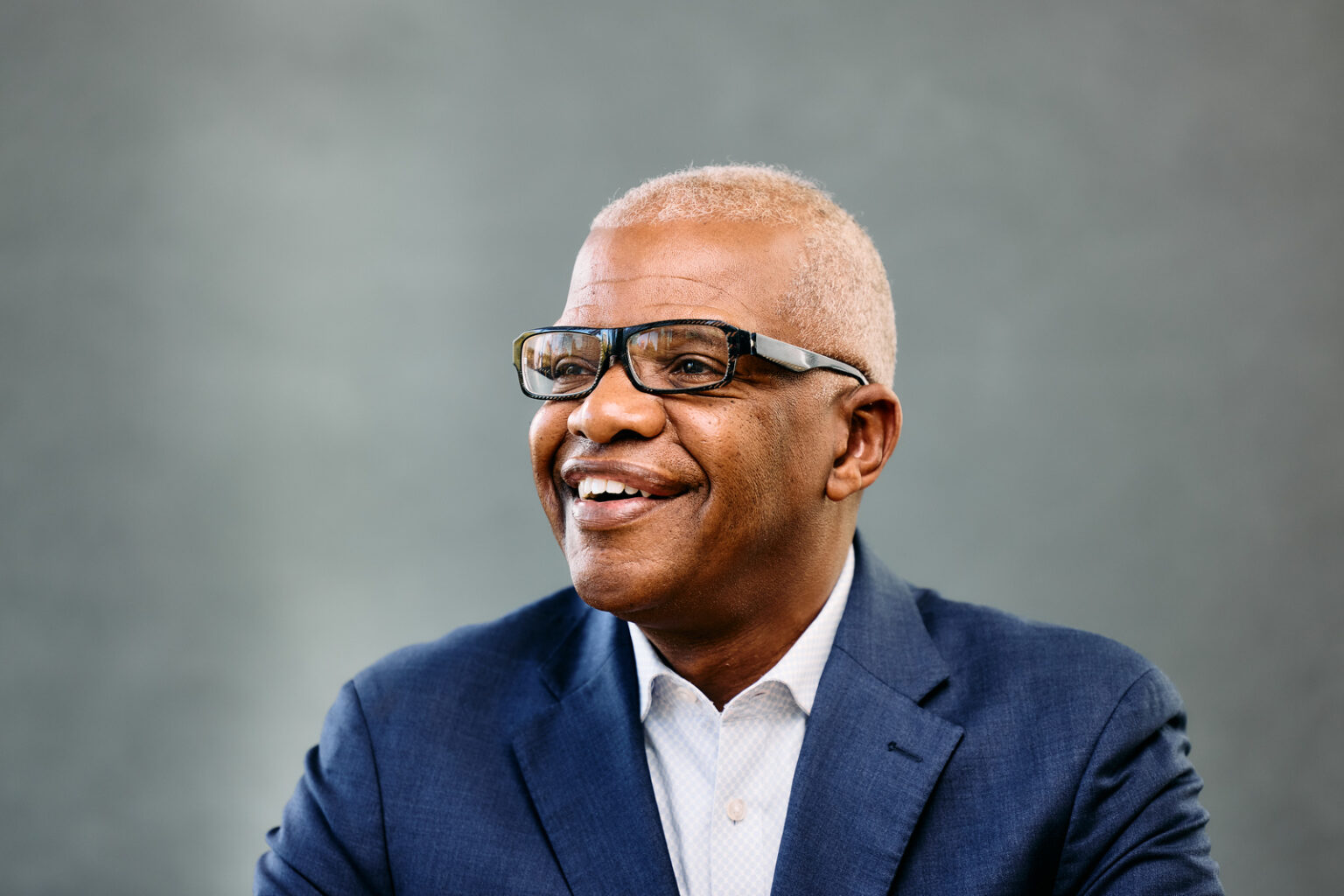
Marion Orr is the inaugural Frederick Lippitt Professor of Public Policy and Professor of Political Science and Urban Studies at Brown University. He previously was a member of the political science faculty at Duke University.
Professor Orr earned his B.A. degree in political science from Savannah State College, M.A. in political science from Atlanta University (now Clark-Atlanta University), and a Ph.D. in Government and Politics from the University of Maryland, College Park.
From 2008-2014, Professor Orr served as Director of the A. Alfred Taubman Center for Public Policy and American Institutions at Brown University. He is a former chair of Brown’s Department of Political Science and a former director of Brown’s Urban Studies Program.
Professor Orr’s expertise is in the area of American politics. He specializes in urban politics, race and ethnic politics, and African-American politics. He is the author and editor of eight books. His book, House of Diggs: The Rise and Fall of America’s Most Consequential Black Congressman, Charles C. Diggs, Jr. (University of North Carolina Press, 2025), is the first biography of Michigan’s first Black member of the U.S. House of Representatives.
Among Professor Orr’s other books, Black Social Capital: The Politics of School Reform in Baltimore (University Press of Kansas), won the Policy Studies Organization’s Aaron Wildavsky Award and his co-authored, The Color of School Reform: Race, Politics and the Challenge of Urban Education (Princeton University Press), was named the best book by the American…Read More

