


Reed Peggram


Reed Peggram, born in Boston in 1914, a gay Black man in a world that put up barriers to his success, excelled at Harvard before heading to a Europe on the brink of war. In Europe he fell in love with a Danist artist, and despite pleas from everyone in his life and from the US government to leave the war-torn continent, Reed refused to depart without Arne, leading to his imprisonment in an Italian concentration camp. Even then, Reed overcame the barriers in his way, escaping with Arne and surviving until they were rescued by the US Army. Joining me in this episode is Dr. Ethelene Whitmire, Professor of African American Studies at the University of Wisconsin–Madison, and author of The Remarkable Life of Reed Peggram: The Man Who Stared Down World War II in the Name of Love.
Our theme song is Frogs Legs Rag, composed by James Scott and performed by Kevin MacLeod, licensed under Creative Commons. The mid-episode audio is “Do it Again!” composed by George Gershwin and performed by the Paul Whiteman Orchestra; the piece, which is in the public domain, was recorded on March 28, 1922 in New York, and is available via the Library of Congress National Jukebox. The episode image is a 1935 photograph of Reed Peggram retrieved from Reed Peggram's Harvard student records in the Harvard University archives; it is in the public domain and available via Wikimedia Commons.
Additional source:
- “Unpacking Reed Peggram’s Library,” by Ethelene Whitmire, Journal of Cultural Analytics, vol. 9, no. 2, May 2024.
Kelly Therese Pollock 0:00
This is Unsung History, the podcast where we discuss people and events in American history that haven't always received a lot of attention. I'm your host, Kelly Therese Pollock, I'll start each episode with a brief introduction to the topic, and then talk to someone who knows a lot more than I do. Be sure to subscribe to Unsung History on your favorite podcasting app so you never miss an episode, and please tell your friends, family, neighbors, colleagues, maybe even strangers to listen too. Reed Edwin Peggram was born on July 26, 1914, in Boston, Massachusetts. He and his parents, Mary and Harvey, lived with Mary's mother, Laura, who had become an important figure in Reed's life. Harvey, a graduate of the Hampton Institute, traveled the East Coast, reciting poetry and performing in plays, even staging his own short play at an African Methodist Episcopal Church in Pennsylvania in May,1917. In November of 1917, Harvey was inducted into the US Army, serving in France during World War I, in the veterinary corps. He was discharged in 1919, as 100% disabled, likely referring to his mental health. By January, 1920, Harvey was admitted to an asylum in Virginia, and Mary was granted a divorce and full custody of Reed in 1921. Mary remarried and had two more sons with her new husband. Unfortunately, Reed did not get along with his stepfather, and after two years, he chose to live instead with his grandmother. In 1929, Laura became Reed's legal guardian. In 1927, Reed was admitted to the Boston Latin School, one of the few African Americans to be admitted. Boston Latin School is the oldest public school in the United States, and its alumni include Benjamin Franklin and Ralph Waldo Emerson. Reed thrived at the school, and upon graduation, he attended Harvard University, beginning his study in 1931, where he was again in an extreme minority as an African American man. In 1935, Reed, who was inducted into Phi Beta Kappa, graduated magna cum laude from Harvard, with a degree in Romance Languages and Literature. He completed an honors thesis in French Literature. Reed was the first in his family to earn a bachelor's degree, but that wasn't enough for him. He had applied for a Rhodes scholarship, but when that didn't come through, he stayed at Harvard to begin graduate school, earning his master's degree in Comparative Literature in 1936. Despite his achievements, Reed was not admitted into the doctoral program at Harvard, so he left Boston and his grandmother and headed to New York to study English and Comparative Literature at Columbia University. Although he wanted to be back at Harvard, Reed did enjoy living in New York City, and he made the most of it, attending plays, seeing Marian Anderson sing, and making friends. After a year at Columbia, Reed returned to Harvard in 1937. There he fell in love with Leonard Bernstein, then an undergraduate at Harvard. Reed wrote a letter and poem to Bernstein, including the lines, "Just to see you has been enough and to touch your hand is consummation, whether in a room without the music, or in the open surrounded by satyrs, whether in a room without all this or with all this, and it is still enough." Bernstein, though rejected his advances, calling the poem repulsive. Reed, again, set his sights on Europe, and he received funding from the John Harvard Fellowship and the Julius Rosenwald Fund, which had developed a fellowship program to support African American scholars and artists. Reed planned to study at the Sorbonne and to conduct research at the Bibliotheque Nationale. In August, 1938, Reed set sail for a Paris that was quickly headed toward war. Although other Americans were preparing to leave, and the American Embassy told him to, Reed wrote to his grandmother, "I shall stick it out until the bombs fall on my hotel." While in Paris, Reed published two articles in Modern Language Review, but he was unsuccessful in his many attempts to publish his fiction and poetry. In the spring of 1939, a mutual friend introduced Reed to Arne Hauptmann, a Danish artist who was also living in Paris and who would become the love of Reed's life. Although Reed had a job waiting for him at West Virginia State College in autumn, 1939, and the Rosenwald Fund declined to extend his funding, Reed chose to stay in Europe. He left his belongings in Paris and headed to Copenhagen in August of 1939 to be with Arne. As war was spreading throughout Europe, Reed and Arne made plans to flee Denmark before it was invaded. They headed to Italy, hoping they would be able to find a way to get a visa for Arne to travel to the US with Reed. There were many opportunities for Reed to travel back to the US, but he refused to leave without Arne. In Italy, things went from bad to worse as the country entered the war on the side of Germany. As foreigners, Reed and Arne were unable to work, and they lived in utter poverty, the relationship viewed with suspicion. Eventually, the Italian police separated them, forcing them to live in different towns. In December, 1943, after Germans had taken charge of the section of Italy where Reed and Arne lived, Reed was interned in an Italian concentration camp. Arne was sent to a different camp, but eventually, they were reunited, though still incarcerated. In the summer of 1944, Reed and Arne escaped with nothing more than the clothes on their backs, hiking to avoid detection and surviving on whatever food they could find. Finally, in December, 1944, they were found and rescued by an advance patrol of the all African American 370th regiment of the 92nd division. In August, 1945, seven years after he left, Reed returned to the United States. Like his father, he was hospitalized for what was described as a mental disorder. After four years of treatment and possibly a lobotomy, Reed returned to Boston to live with his mother. He sang in the church choir and worked intermittently as a translator. Sadly, Reed never saw Arne again. Reed Peggram died at age 67, on April 20, 1982, in Boston. He is buried with his mother in Forest Hills Cemetery with a gravestone bearing the name of his stepfather, with whom he never got along. Joining me in this episode is Dr. Ethelene Whitmire, professor of African American Studies at the University of Wisconsin-Madison, and author of, "The Remarkable Life of Reed Peggram: The Man Who Stared Down World War II in the Name of Love."
Kelly Therese Pollock 10:20
Hi Ethelene, thanks so much for joining me today.
Dr. Ethelene Whitmire 10:23
Thanks for having me.
Kelly Therese Pollock 10:25
I am excited to talk more about this book that you've written. I'd love to hear a little bit about what got you started on this topic, on researching this incredible man.
Dr. Ethelene Whitmire 10:37
Yes, this whole project started on a whim. I was working on my first biography, when I decided to go to Denmark for two months, just on a writing retreat, and I started hearing stories about African Americans in Denmark, both in general, but also while in the country. And I decided to write about African Americans in Denmark, but then I had to figure out who was there. And so I used a variety of ways to figure out who actually was in Denmark in the 20th century. And one of them was to look at the thankfully digitized African American newspapers. And I was able to search, you know, Denmark, Copenhagen. I knew some people went to Elsinore, and I found incredible stories. But the most incredible story to me was about this scholar from Harvard, Reed Peggram. I had never heard about him. I was surprised to know that he was working on a PhD at Harvard during World War II, when World II began, and that he had been captured by the Nazis and escaped and and they ran into African American troops who actually recorded this story with their embedded reporters in the Black newspapers. And the headlines were just so fascinating. And I wanted to know more about this person. So even though I'm writing about a lot of people, he was the most fascinating to me. And I wanted to know who was he? How did he get into Harvard in the 1930s for his bachelor's, his Master's and PhD? What was he doing in Paris? And I took it off from there.
Kelly Therese Pollock 12:10
And the story that you're able to tell would not have been possible, at least in the form it is, without some assistance from his family, and especially the letters that you were able to use. Could you talk some about that, how you were able to really dig into some things that you know otherwise wouldn't be known about him?
Dr. Ethelene Whitmire 12:33
Well, just finding out about the letters was incredible and was just a big coincidence. I was doing research in Berlin, and I ran into an African American woman who was kind of a gatherer of people. She has parties, and especially of people of color. And and then she moved to Austria, and then I went back to United States. And in Austria, she met another African American woman, Teju, who was studying and then she knew that both of us would be in Copenhagen in the fall of 2016, and said we should get together. So I met Teju. She was interested in African American history. I invited her to this seminar about African Americans in Denmark. I was one of the keynotes, and I talked about all of the people in my study, including Reed Peggram. And then at the end of the talk, when we had the Q and A she raised her hand, and then she said, "That's my great uncle." She was too young to know him, but she recognized him from photos in the house. She said, they had come from a very small family. There's only about 15 of them in the whole world. And so it was just incredible that we were both in Copenhagen at the same time. She came to my office at the University of Copenhagen, where I had a Fulbright during the fall semester. And she told me that the family kept letters, mainly her great grandmother, and her grandmother kept letters from Reed. And I assumed that they would just be a few letters. I had no idea there would be 200 letters covering his time in Paris, in Copenhagen, in Florence, also for one brief year, he went to Columbia University, so in New York, and I just found it to be a treasure trove. I was a little alarmed to find out that they were all in a binder. They were by the front door in case of a fire, but they were well preserved. And his niece, who lives in the home where he actually died, in Dorchester section of Boston, she would take photos of them on her phone and send them to me when she had a chance. And took a few months to accumulate all of them, but it was just fascinating to read these letters of him talking about his adventures and all of these European cities, what he did, who he saw. I was always looking up people to try to figure out who they were. It was just a treasure trove. And just for a historian, it was, you know, I couldn't have asked for more.
Kelly Therese Pollock 14:51
There is so much about Reed's story that is improbable, that is amazing. But just to start with the idea that he comes from this working class background and is able to right away go to like the Latin School in Boston and Harvard, as you mentioned. Can you explain a little bit about how that journey was possible for him?
Dr. Ethelene Whitmire 15:18
I dedicate the book to his grandmother, Laura Reed. She also came from a very humble beginning. She married and was widowed young, and she had a child at that time, and she moved on her own up north to Boston from Virginia, which was incredible. This even preceded the great migration, which some people placed at 1915. She went in the late 1800s, and even though she had a third grade education, she worked as a cleaning lady and a janitor, she had ambitions, and she poured all of that into not just her daughter, but also especially into Reed. And I think because she cleaned houses for some very prestigious people, she had access or knowledge about the Boston Public Latin School and also about Harvard. And what I like about this story is, again, even though he's from humble beginnings, African American man before the Civil Rights Movement, he seemed to live his life as if he had the right to go to all of these spaces and places. He never seemed to have any doubt about his self esteem, which I liked, and I'm sure he got that from his grandmother, like, why not? Why can't we go to these, these prestigious institutions? And so he just went and and applied and and he prospered in in these spaces, which I thought was amazing and with which I loved about his story,
Kelly Therese Pollock 16:46
As you mentioned, he ends up going to Europe. And this is maybe not surprising for for someone who is both African American and gay, maybe doesn't feel completely accepted, almost certainly doesn't feel completely accepted in Boston or then in New York when he was at Columbia. But you know what, what's the mechanism he uses to get to Europe? And you know he says right off the bat, like, although I'm supposed to come back in a year, I'm probably not coming back in a year, which, of course, proves to be true.
Dr. Ethelene Whitmire 17:18
Yes. So he applied for fellowships to go abroad. He applied at the end of his undergraduate degree at Harvard, but unfortunately, he was stymied by a dean who wrote a very lovely letter of recommendation, and then Reed actually thanked him for that letter in his Harvard files. But then the Dean wrote a second letter where he said, "You should know that this man is a Negro or African American. You can't tell by his name, and even though the organization in England said it wouldn't be a problem, he didn't get that fellowship. So he decided to continue his master's degree at Harvard, and then went to Columbia for a year in a doctoral program before returning to Harvard. But he decided to try again, fight for a fellowship through Harvard to travel, and also through the Rosenwald Foundation, which funded African Americans to go abroad. And so he applied to go to France. He always wanted to go to Paris. They said he spoke French like a native. He loved French music and literature, so he was able to get that even though it was 1938 and by the time he arrived in Paris, the US State Department was already telling Americans you should return. There could be an impending war. But he, I don't think he was naive, but he was just so excited to be in Paris. He said, "I'm just gonna stay here until the first bombs start falling. I'll figure things out from there." And so he was just thrilled to get to Europe, and not only just to Paris, but when he got there, he traveled to many other countries too before school started.
Kelly Therese Pollock 18:51
So one of those sources that you tap in writing this, and I saw that you've written more about this as well, is his library file from Shakespeare and Company, I would love to hear more about not just what he was reading, but about for you, what the process of looking at those books is like, what it means. I know you had concerns about the ethics of that even.
Dr. Ethelene Whitmire 19:15
I'm a professional librarian. I have a master's degree, and I worked at Yale as a reference librarian and American Library Code of Ethics says not to reveal, you know, the records. And because of sometimes the US government asking for the records, they destroy a lot of records, which is sad for library history. But I discovered when I was trying to find archives to read, he doesn't actually have an archive. So I was accumulating things from different sources that I didn't even know. I knew about the Shakespeare and Company bookstore. I've been there before, but I didn't know they also were a library, and that the records were digitized there at Princeton University, and I could see every book he took out from the library, which I thought was incredible for that whole year, and I actually thought about reading every single one of them, until I realized that's ridiculous. I started with a few Christopher Isherwood books, but I decided to use my library degree to analyze the books that he checked out. The subject matter were a lot of them are about young men on adventures. A lot of the authors we now know are are gay, but somehow I feel that Reed knew this too. He didn't read he only read one woman. They were all men. None of them were African American, even though the collection did have African American books. But I'm assuming, because of the education that he had, he probably wasn't exposed to African American literature at Columbia or at Harvard. And so he really liked, as I mentioned before, Christopher Isherwood, Stephen Spinder, read poetry, plays. It was very eclectic reading material. I actually laughed, where he took out one book that was almost 800 pages, and then after that, he took out short stories when school started. I'm sure he said, I don't have time to read all of these, but it was fascinating to just follow this for a whole year, to see the kinds of things that he was interested in reading.
Kelly Therese Pollock 21:10
In addition to reading a lot and studying, he also had this amazing ability to make friends, to get people who just wanted to like help him, yes, who are some of these friends that he's he's collecting, and some who are very wealthy and high class, kind of people?
Dr. Ethelene Whitmire 21:29
Yes, he seemed to be very charismatic. People seem drawn to him, some of the people. I mean, he knew Leonard Bernstein, fell in love with him, unfortunately, it was unrequited, when he was at Harvard. That was one of the most famous people he met in the very beginning. And then while he was in New York, he met people, some people who who are now kind of famous, even though they've been dead for decades, like Jan Gay inspired a National Book Award winning book by Justin Torres that came out a few years ago. She gave him letters of introduction to people like Stephen Spinder early in his career. Spinder apparently liked him enough when he met him in London that when Spinder went to Paris, he looked up Reed Peggram. Reed met this artist, Thomas Handforth. When I looked him up, he won a Guggenheim Award for his work, and he drew this beautiful portrait that's also included in the book, of Reed. Who else did he meet? Oh, when, as soon as he got to Paris, he went to Warsaw, Poland, to hang out with his friend he called the count, who really was a count, Tony Sabanski, and lived a very luxurious life there in Warsaw. He said he was sorry to leave, which I said I understood that, and he just encountered lots of interesting people throughout his life. And again, people seem to remember him or drawn to him. Wanted to help him, wanted to introduce him to other people. I just wish that I could find more sources from how people perceived him. A lot of this is from his, his perspective. And then when I was trying to figure out, how come I can't find people to interview or or resources from other people? I realized a lot of his friends were gay and didn't marry at a time when you couldn't marry, they didn't have relationships, didn't have children, and so a lot of this is kind of lost to history. And he had one friend that he traveled with, a Newton Arnold who was straight, but he did not have children, and so, so some of that was lost. A lot is, again, is from Reed's perspective. But, I mean, he would sometimes acknowledge he's a little cocky and arrogant. So I think he's being very truthful when he talks about how people viewed him.
Kelly Therese Pollock 23:37
You mentioned that as he's going toward Europe, Europe is going toward war. War, of course, breaks out, and instead of going home, like most Americans did at the time, Reed decides to stay. Could you take us through some of what appears to have been going on, why he didn't want to return, why he was willing to risk being in the midst of war?
Dr. Ethelene Whitmire 24:04
Yes, at the end of his time in Paris, or near the end of his time in Paris, he actually met a Danish artist, Arne Hauptmann, and they fell in love. They didn't seem to have spent a lot of time together in Paris, but the time they spent was very intense. They spent a lot of time together, and then Hauptmann went back to Denmark, and then Reed followed him, and he, Reed arrived at the end of August, of '39 and then the war broke out about two weeks later in Europe, not necessarily in Denmark, but Denmark was on edge. But Reed refused to leave. He was in love. He didn't want to leave without Hauptmann. I think he was very unrealistic in terms of thinking about Hauptmann's ability, or a lot of people's ability, to go to the United States. You couldn't just get out on a ship and leave if you weren't a citizen. And so he stayed because of love. At first, you know, when you do these projects, you don't have a lot of information all at the same time, or in a chronological order, but eventually I found out how much people really went out of their way to try to bring him back to the United States, and how he utterly refused, particularly the Rosenwald Foundation. I found a treasure trove of letters from them, and I could almost feel their frustration 80, over 80 years later, you know, see being through the letters, where other people will contact them too and say, "Have you heard of this young scholar? He needs help." And they said, the number of letters we received are unimaginable. Well, one time they had an off the record conversation, which did not help me as a historian, but his family was frustrated. Harvard was confused. They offered also to help him, but he would not leave until he thought Arne Hauptmann could return. And it turned into a years long odyssey. They actually eventually left Denmark and went to Italy, and they ended up being there for five years. Reed was literally in Europe for almost the entire World War II.
Kelly Therese Pollock 26:02
You mentioned how frustrated the Rosenwald Foundation was, but in addition to that, of course, his grandmother and his mother were frantic. And you know, as a mother myself, I can't imagine what that must have been like. What what do you learn from their letters to him about how they're feeling knowing that he is there and is really stuck there.
Dr. Ethelene Whitmire 26:27
Well, the letters tell that they were very frustrated. Most of the letters are primarily to his grandmother, who raised him after his mother married and remarried, and we felt like she was more of a mother to him than his own mother, and at some point, Reed started communicating with his mother because his grandmother was so angry or upset with him for not returning to the United States when he had the opportunity. They even reached out to the State Department and asked if they could intervene and help bring Reed home. Reed's grandmother talked to the Rosenwald Foundation, but Reed's letters were frustratingly repetitive in terms of talking about his love. Well, he wouldn't say he was in love with Arne Hauptmann, but that Arne Hauptmann was his good friend, and he could not betray a friend, though it's clear that his parents, his mother and grandmother knew that he was gay and that there was more to that relationship than just friendship, that that we talked about.
Kelly Therese Pollock 27:28
Yeah, it's a perhaps a counterfactual, but thinking through, would people have responded differently if he had been with a woman partner? You know, if he had been married to a woman, maybe it wouldn't have changed the ability for her to get a visa or something, but that people would have at least been more sympathetic to his desire to stay with his partner.
Dr. Ethelene Whitmire 27:51
Yeah, because that wasn't the case, I didn't explore in depth, but I believe that if you are married, that that would help in terms of being able to get someone to go to United States, because you could say you were supporting. Arne Hauptmann had to rely on the one uncle that he had in the United States. But I also write about all of the paperwork, how difficult it was, almost impossible, for anyone to complete the steps that were required for people to go to the United States. But yes, if they were married, I believe it would have been much more easier for his partner to come with Reed. But again, Reed just refused to leave without him.
Kelly Therese Pollock 28:33
So of course, once they once they are imprisoned in a concentration or in separate concentration camps in Italy, there's somewhat less in the way of documentation, and especially then, once they escape and are wandering around Italy, it seems like there's perhaps multiple stories about what happened. And, you know, I think I at least could see earlier in his story, the you know, maybe he's not always telling exactly the truth. Maybe he's elaborating a little bit on some details that especially seems to be the case, or at least potentially could be the case with their escape and rescue. How do you, as a historian, sort of tease through what are stories people are telling about themselves versus stories that are being told about them, and what's what's truth?
Dr. Ethelene Whitmire 29:26
Yeah, that's very hard, and you want to have all the facts there and things that are clear. You look for consistency or inconsistencies, and other stories that you know that are don't have as high a stakes as as escaping from a concentration camp. You know how consistent is he? And also looked at another account of an African American who was captured by the Nazis. And I don't know if it's trauma that makes people not talk about everything that happened at first in initial conversations and then later more detail. I also got records from the Italian government, and then I just went with logic. It seemed like Reed's story was more logical than what the Italian government was saying happened. And of course, everything is not even in chronological order. It's a mess, and I have to use Google Translate to translate Italian. I actually feel like I know a lot of Italian now, just looking at the records, and a lot of Danish too. But I again, I just look for inconsistencies. I look at other stories of other people who talked about their experiences escaping from the Italian concentration camps or being in the camps, and how consistent were they with what Reed talked about and and drew conclusions from that that kind of information using multiple sources.
Kelly Therese Pollock 30:43
Reed, of course, wanted to be a writer, did publish some academic works. And, you know, at one point he, I think he wrote to his mom something like, "Well, if I get through all of this, I'll just be able to write novels about my life." And, you know, but, but then he never does. You know, he put so much sort of time and attention into being a writer, into becoming a writer. Of course, some of the writings that he and Arne did together were lost in Italy. Why do you think he didn't pick that up once he did return to the US, was living a somewhat more comfortable life, and you know, had had the time to sit down and write these stories?
Dr. Ethelene Whitmire 31:28
Well, when we returned to the United States in 1945, he was hospitalized in a mental institution for four years. He underwent electro what they called electroshock therapy in the past, and possibly a lobotomy. And I think that those things really affected his mental ability to go further. You know, I document some of his fellow students as the Harvard Alumni Reports come out, and you can see them living a very conventional life. These are heterosexual men, married, have children, they go on to great things. And Reed's story is very sad. I actually saw a alumni report from 25th anniversary in the very beginning of my research, and I wanted to know, "Well, what happened to this man whose life started so brightly?" And, you know, I think he just didn't have the the mental ability. It could have been depression, it could have been the effects of the electroshock therapy, but mentally, he just was, he never wrote again, even though he did write. Even during the war, he continued writing. He took his typewriter everywhere, like we, like we take our computer everywhere. Even when he went to Denmark, he was only supposed to be there for a short time, but he took his typewriter, fortunately, and he was, he continued typing throughout even in Italy during World War II. Sometimes some things are handwritten when he had to get his typewriter fixed. But yeah, he was, he was a prolific letter writer, a prolific writer, but sadly, all we have left are some of his academic writing. But I think he would be thrilled that there's a book about him. He thought his story was important and he wanted to write his own story. So I think he would be excited. Of course, he would prefer his name to be on the book, but I think he would be thrilled to actually know that that people are getting to know his story.
Kelly Therese Pollock 33:23
Could you reflect a little bit about what other stories like his we just don't know? Either don't know yet, or because things like letter, troves of letters weren't kept that that we might not be able to recover?
Dr. Ethelene Whitmire 33:39
Yeah, I love doing recovery work. My first book was about an obscure Harlem Renaissance librarian. I want to hear about people that I haven't heard about before, people doing interesting, exciting things. I think that the newspapers, the African American newspapers, are so essential to covering a lot of these stories. For my other work on African Americans in Denmark, I rely on those papers a lot. I think that stories like Reed's are important because he's like me, a first generation college student who whose parents didn't go to school at all, but yet he was able to get into this elite institutions and continue. I think it's a motivating these are stories that can motivate other people, hopefully younger people, to to go into these spaces and not to get discouraged. And as a professor, my students seem to crave these stories that they haven't heard before, or even stories about people that they know about but don't see different sides to. For example, I plan to start my African Americans in Denmark book with Booker T. Washington. He wrote a hilarious travel narrative about going to Denmark. You don't think of him as being funny, but he met the King of England, and he wrote about that in a very humorous way. And so I so I like to, you know, just offer stories about people that you haven't heard about, or something about them that you didn't know about, people that you've heard about for a long time. I think there's so much hidden history that's out there, like your podcast.
Kelly Therese Pollock 35:13
Yeah, I often think that, really, Hollywood producers should just listen to Unsung History, and they'll get lots of ideas for stories that haven't been told on film.
Dr. Ethelene Whitmire 35:23
Well, so many people keep saying, "This sounds like a movie." I was talking to some documentary filmmakers and like, Is this a real story or a fake story? I'm like, "This is a true story." A lot of people say it sounds like a movie. You know, people running from Paris to Copenhagen to Italy. So I do have a film agent, and so fingers crossed that maybe something will come of this in the future.
Kelly Therese Pollock 35:44
Yeah, so tragically, of course, after Reed and Arne went to so much trouble to stay together, and Reed turned down a million opportunities to leave and to escape some of the horror that he went through, of course, they didn't end up together in the end, and Reed went back to the US, and Arne went back to Denmark. And then, curiously, Arne marries a woman, and you trace a little bit about what happens there. Do we know much more about his story?
Dr. Ethelene Whitmire 36:17
Very little. So he did marry briefly. It did not work out. He actually divorced while his wife was pregnant with their second son, and I got to meet the second son last year in Copenhagen, Denmark. And the story is just sad. His mother remarried twice and and she did not want her sons to maintain too much contact with Arne. And so the son that I met, he only met him a few times, and the last time was decades ago, and he knew very little about his father's life, though he did know he was in a camp during the war. What was sad to me was that he was not aware of Reed at all, or that part of the story. Reed's family, they know about Arne. Arne actually wrote some letters to Reed's mother and grandmother, but that whole side of the story was lost in Denmark, and Arne seemed to lead a sad life. I don't think he ever remarried or had any kind of family, and he is buried in a grave of the unknowns. Yeah, and so again, they never, ever got together after that, and never saw each other, which is sad and yeah, surprising.
Kelly Therese Pollock 37:34
There is so much more in the story. There's incredible details. Could you please tell listeners how they can get a copy of this book?
Dr. Ethelene Whitmire 37:44
Yes, this book, "The Remarkable Life of Reed Peggram: The Man Who Stared Down World War II in the Name of Love," is coming out on February 3, and you can get it wherever books are sold. I won't name specific places, but but it is by Viking Pengiun Random House, and so they distribute it throughout the nation, and there's a wonderful ebook, and also an audio book for people who are very interested in that.
Kelly Therese Pollock 38:12
Is there anything else you wanted to make sure we talk about?
Dr. Ethelene Whitmire 38:15
I just think his story is important because two of the institutions that he went to, like the Boston Public Latin School and Harvard, they were both part of lawsuits about affirmative action. Even in the 21st Century, Boston Latin School had very few African American students, and there was a lawsuit about that. And Harvard, there was a lawsuit about affirmative action. Not that there were many Black Americans were there, but apparently too much for some people, and so there's still a lot of pushback. And I think you know, Reed was at both of these institutions before affirmative action, he was given an opportunity to attend, and he thrived at these institutions. And I just hope that more people can can take something from his story, take something from his story that he knew he was unusual in a way. He liked to pursue things that weren't stereotypically African American. And yet, he decided to just go ahead and explore his love for the arts in the way that he wanted to, and go to these spaces and feel like he felt like he belonged. And so I don't know, I think the message is just people to just go for it and pursue whatever things that you're interested in. You have the right to do those things.
Kelly Therese Pollock 39:30
Ethelene, thank you so much for speaking with me today. I loved reading this book, and I'm really glad to have had the chance to speak with you.
Dr. Ethelene Whitmire 39:37
Thank you for having me.
Teddy 40:01
Thanks for listening to Unsung History. Please subscribe to Unsung History on your favorite podcasting app. You can find the sources used for this episode and a full episode transcript @UnsungHistoryPodcast.com. To the best of our knowledge, all audio and images used by Unsung History are in the public domain or are used with permission. You can find us on Instagram @UnsungHistory or on Facebook @UnsungHistoryPodcast. To contact us with questions, corrections, praise, or episode suggestions, please email kelly@UnsungHistoryPodcast.com. If you enjoyed this podcast, please rate, review, and tell everyone you know. Bye!
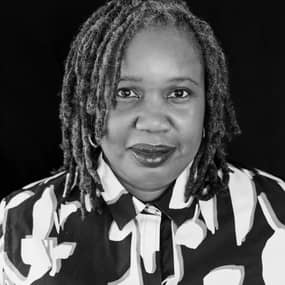
Ethelene Whitmire is a writer and professor, and the former chair of the Department of African American Studies at the University of Wisconsin–Madison. Ethelene is the author of The Remarkable Life of Reed Peggram (forthcoming February 2026) and Regina Anderson Andrews, Harlem Renaissance Librarian. Her research has won awards and funding from the Ford Foundation, the Fulbright Program, the Lois Roth Foundation, the American Scandinavian Foundation, and the American Library Association. She received her Bachelor’s and Master’s from Rutgers University – New Brunswick and Ph.D. from the University of Michigan – Ann Arbor. She was a former Librarian-in Residence at Yale University before becoming a professor at the University of California – Los Angeles, and her current institution, the University of Wisconsin - Madison. She’s published essays in the New York Times, Smithsonian Magazine, Narratively, and Longreads. She has been a fellow at artists’ residencies at Yaddo, Ucross, Hedgebrook, and Virginia Center for the Creative Arts. Born in New Jersey, she now divides her time between Madison, Wisconsin and Copenhagen, Denmark.

