
History Of Science & Medicine Episodes

220
April 6, 2026
Magnus Hirschfeld, Dora Richter, and the Institute for Sexual Science in Weimar Germany
In the Weimar Republic, Dr. Magnus Hirschfeld opened the Institute for Sexual Science and advocated for the repeal of legislation that criminalized sexual relations between men. At the Institute, pioneering gender-affirming surgeries were performed, and it was there that Dora Richter became the first known trans woman to undergo comprehensive male-to-female gender-affirming surgeries. But when the Nazis came to power, they labeled Hirschfeld an enemy of the state and destroyed the Institute’s im...
Guest: Brandy Schillace
184
Dec. 9, 2024
The Women Physicists who Fled Nazi Germany
As the Nazis rose to power in Germany, life became increasingly hostile for women scientists, especially women of Jewish descent, but also those who expressed anti-Nazi sentiments. The sexism in academic that had held them back in their careers also made escape from Germany difficult, as they didn’t look as strong on paper as their male counterparts. But four women physicists – Hertha Sponer, Hildegard Stücklen, Hedwig Kohn, and Lise Meitner – managed to flee, taking their scientific knowledge a...
Guest: Olivia Campbell
177
Oct. 21, 2024
Ryan White & the CARE Act of 1990
Shortly after he was born in 1971, Ryan White was diagnosed with severe hemophilia. Ryan was able to reduce his hospitalizations from the disease through the use of in-home injections of Factor VIII concentrate, something he and other people with hemophilia saw as a lifeline. The downside of this lifeline was that it pooled blood and plasma from thousands of donors, increasing the user’s risk of exposure to diseases like HIV. In 1984, Ryan was diagnosed with AIDS. His fight to be allowed to atte...
Guest: Paul Renfro
174
Sept. 30, 2024
A History of Postpartum Depression in the United States
In his bestselling childcare manual American pediatrician Dr. Benjamin Spock advised new moms:“If you begin to feel at all depressed, go to a movie, or to the beauty parlor, or to get yourself a new hat or dress.” Although puerperal insanity had been a recognized diagnosis at the end of the 19th Century, doctors in the early 20th century dismissed the postpartum onset of psychiatric symptoms as “pure coincidence.” It would take decades of activism by both parent groups and clinicians for the eff...
Guest: Rachel Louise Moran
150
April 15, 2024
American Posture Panic
For several decades in the 20th Century, American universities, including elite institutions, took nude photos of their students, sometimes as often as twice a year, in order to evaluate their posture. In some cases students had to achieve a minimum posture grade in order to graduate. How did that practice develop, and how did it end? This week we’re discussing Americans’ obsession with posture with Dr. Beth Linker, the Samuel H. Preston Endowed Term Professor in the Department of the History an...
Guest: Beth Linker

138
Jan. 22, 2024
LSD, the CIA & the History of Psychedelic Science
In 1938, Swiss chemist Albert Hofmann accidentally developed the potent psychedelic LSD, although it would be several years before Hofmann realized what he’d created. During the Cold War, the CIA launched a top-secret mind control project, code-named MKUltra, experimenting with LSD and other psychedelic substances, drugging military personnel, CIA employees, and civilians, often without their consent or even their knowledge. At the same time, the CIA was funding university research on psychedeli...
Guest: Benjamin Breen

126
Oct. 30, 2023
The History of the Nutrition Facts Label
If you go to a grocery store in the United States and pick up a box of cereal, you expect to find a white box on the back of the package with information in Helvetica Black about the food’s macronutrients (things like fat and protein) and micronutrients (vitamins and minerals). The Nutrition Facts label is so ubiquitous that you may not even notice it. But how did it get there and why does it look the way it does? The history of that label is our story this week. Joining me to discuss the his...
Guest: Xaq Frolich
81
Dec. 19, 2022
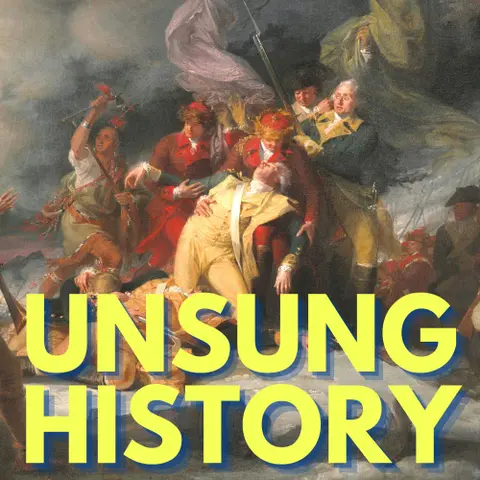
Smallpox Inoculation & the American Revolution
In 1775, a smallpox outbreak struck the Continental Northern Army. With many of the soldiers too sick to fight, their attempted capture of Quebec on December 31, 1775, was a devastating failure, the first major defeat of the Revolutionary War for the Americans, and cost General Richard Montgomery his life. Eventually, George Washington, the Commander in Chief of the Continental Army, realized that the only way to avoid repeated outbreaks was to order mass inoculation of the amy, a controversial ...
Guest: Andrew Wehrman
67
Sept. 12, 2022
Abortion in 18th Century New England
In 1742, in Pomfret, Connecticut, 19-year-old Sarah Grosvenor discovered she was pregnant, the result of a liaison with 27-year-old Amasa Sessions. Instead of marrying Sarah, Amasa provided her with a physician-prescribed abortifacient, what the youth of Pomfret called “taking the trade." When that didn’t work to end the pregnancy, the physician attempted a manual abortion, which led to Sarah’s death. Three years later, the physician was tried for “highhanded Misdemeanour." The surviving trial d...
Guest: Cornelia H. Dayton

15
Sept. 13, 2021
African American AIDS Activism
According to the Centers for Disease Control and Prevention (the CDC), in 2018, 13% of the US population was Black and African American, but 42% of new HIV diagnoses in the US were from Black and African American people. This discrepancy is not new. On June 5, 1981, the CDC first published an article in its Morbidity and Mortality Weekly Report (MMWR) titled “Pneumocystis Pneumonia” that suggested that there might be “a cellular-immune dysfunction related to a common exposure that predisposes...
Guest: Dan Royles
13
Aug. 30, 2021
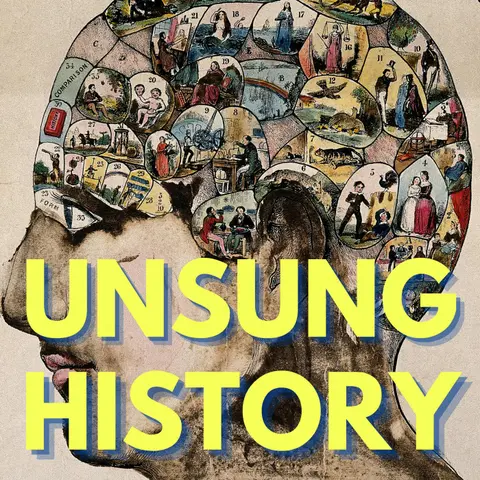
Phrenology & Crime in 19th Century America
In Nineteenth Century America there was a strong reformist push to know and improve the self. One key tactic Americans used to learn more about themselves was phrenological readings. They would pay practical phrenologists, like Orson Squire Fowler and his younger brother, Lorenzo Niles Fowler for readings of their skulls or their children’s skulls. In Lorenzo Fowler’s reading of Emily Sawyer, he concluded a thirteen-page analysis by saying: “Cultivate as much as you can the organs marked smal...
Guest: Courtney Thompson
8
July 26, 2021
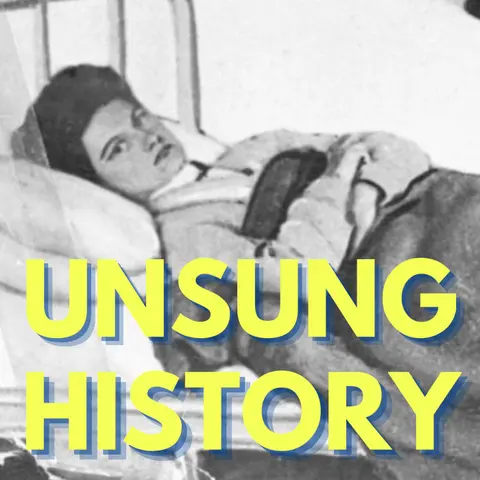
Mary Mallon (The Sad & Complicated Story of "Typhoid Mary")
Mary Mallon, known to history as Typhoid Mary, immigrated from Northern Ireland to New York City at age 15, around 1883. She found work as a cook, a well paying job for an immigrant woman and worked for number of different families in the early 20th Century. In March 1907, civil engineer George Soper burst into the kitchen of the home where she was cooking and told her that she was spreading typhoid via her cooking. He demanded samples of her feces, urine, and blood to test. Mallon, who belie...
Guest: Kari Nixon