

Black History Month


One hundred years ago, Dr. Carter G. Woodson created and launched the inaugural Negro History Week after his professors told him that Black people didn’t have a history worth studying. Negro History Week built on the success of Douglass Day and quickly spread through Black communities in the United States. Fifty years later, at the urging of the Association for the Study of Afro-American Life and History, President Gerald Ford called for Americans to celebrate Black History Month, which was finally ordered by Presidential Proclamation in 1986. Joining me in this episode is Dr. Jarvis Givens, Professor of Education and African and African American Studies at Harvard University and author of I'll Make Me a World: The 100-Year Journey of Black History Month.
Our theme song is “Frogs Legs Rag,” composed by James Scott and performed by Kevin MacLeod, licensed under Creative Commons. The mid-episode audio is “Lift Every Voice and Sing,” with lyrics by James Weldon Johnson and music by Jon Rosamond Johnson; this public domain performance is by the United States Army Field Band and the 82nd Airborne Chorus and features Staff Sgt. Kyra Dorn. The episode image is a portrait of Carter G. Woodson taken on 19 December 1915 by Addison Norton Scurlock; the image is in the public domain and is available via Wikimedia Commons.
Additional Sources:
- “The Origins of Douglass Day,” by Jennifer Morris, Smithsonian Digital Volunteers, February 14, 2023.“The story behind the Frederick Douglass birthday celebration,” by Scott Bomboy, National Constitution Center, February 14, 2024.
- “Black History Month: A Commemorative Observances Legal Research Guide,” Library of Congress.
- “The Origins of Black History Month,” by Daryl Michael Scott, The Association for the Study of African American Life and History.
- “Here's the story behind Black History Month — and why it's celebrated in February,” by Jonathan Franklin, NPR, February 2, 2022.
- “W. E. B. Du Bois and Black History Month,” by Phillip Luke Sinitiere, Black Perspectives, February 18, 2016.
- “Message on the Observance of Black History Month, February 1976,” by Gerald Ford, February 10, 1976.
- “Proclamation 5443—National Black (Afro-American) History Month, 1986,” by Ronald Reagan, February 24, 1986.
- “Proclamation: National Black History Month, 2026,” by Donald Trump, February 3, 2026.
Advertising Inquiries: https://redcircle.com/brands
Kelly Therese Pollock 0:00
This is Unsung History, the podcast where we discuss people and events in American history that haven't always received a lot of attention. I'm your host, Kelly Therese Pollock, I'll start each episode with a brief introduction to the topic, and then talk to someone who knows a lot more than I do. Be sure to subscribe to Unsung History on your favorite podcasting app so you never miss an episode, and please tell your friends, family, neighbors, colleagues, maybe even strangers, to listen too. Abolitionist and statesman, Frederick Douglass, never knew when his birthday was. There was no written record of his birth, and his previous enslavers had told him it might have been February of two different years. He wrote in a letter in 1891, "It has been a source of great annoyance to me, never to have a birthday." He chose to celebrate his birthday on Valentine's Day, February 14. After Douglass' death in 1895, prominent Black individuals sought to commemorate his remarkable life. Educator and activist, Mary Church Terrell suggested to the District of Columbia Board of Education on which she served, that Black children in DC should celebrate February 14 as Douglass Day to learn about his life and to hear his speeches. In her remarks at the first Douglass Day celebrations, Terrell described Douglass as a leader, "who set a high standard of life and dared to live up to it in spite of opposition, criticism and persecution." By the time Carter G. Woodson earned his PhD at Harvard University in 1912, Douglass Day was already observed nationally. Woodson was born in 1875 to formerly enslaved parents, and he worked as a coal miner in West Virginia, before attending Berea College in Kentucky, and then the University of Chicago, where he earned his MA in European History in 1908. At Chicago and at Harvard, Woodson's professors made it clear that they did not believe that Black people had a history worth studying. Woodson disagreed, and in 1915, he founded the Association for the Study of Negro Life and History, now known as the Association for the Study of African American Life and History. His co-founders were George Cleveland Hall, W.D. Hartgrove, Alexander L. Jackson, and James E. Stamps. In 1916, Woodson and the association launched the "Journal of Negro History." An address by Woodson helped to kick off an initiative by the Omega Psi Phi Fraternity chapters to celebrate Negro History and Literature Week from 1921 to 1924, but Woodson recognized that an initiative run through the Association for the Study of Negro Life and History would have broader reach than one organized by a fraternity. In February of 1926, Woodson created and launched the inaugural Negro History Week to counter anti Black narratives, and to study and preserve Black achievements, and not just those by luminaries like Douglass. Situating Negro History Week in February, though, was a direct nod to the tradition of Douglass Day that had already been established. The celebration of Negro History Week grew quickly as it spread through existing communities, including Black newspapers, Black teacher networks, Historically Black Colleges, and churches. By the early 1930s, Negro History Week was widely celebrated in Black segregated schools, and generations of Black students grew up with these commemorations. In February, 1949, scholar and activist, WEB Du Bois, in a speech to the Workers Fellowship of the Society for Ethical Culture in New York City, praised Woodson's efforts, saying, "This man, standing almost alone, has virtually compelled the people of the United States, at least once a year, to recognize the fact that a 10th of their population has developed a history worth knowing." He further noted that Negro History Week brought, "to the attention of Negroes themselves to let them know that despite the silences and omissions and the distortions of history, Negroes in America have done a remarkable job in the personalities in which they have given to the nation, in the contributions they have made to the nation's culture, into the expressions which they have contributed to American Art." At the annual meeting of the Association for the Study of Afro American Life and History in October, 1875, noting that both the 50 year anniversary of Negro History Week and the 200th anniversary of American independence would fall the following year, the Association decided that in 1976 they would expand the celebrations to the entire month of February, declaring the theme in 1976 to be "America for All Americans." In fact, in some places, black history was already a month long celebration. For instance, the Black students at Kent State University in Ohio had established their own Black History Month in 1969. J. Rupert Piccot, a professor of history at Virginia State University and executive director of the Association for the Study of Afro American Life and History, drafted a proclamation that they sent to President Gerald Ford's administration in hopes that he would issue a presidential proclamation declaring February Black History Month. Such a proclamation requires congressional support, and instead, Ford offered a presidential message on February 4, 1976. Although the message confused Woodson's birth year with the year the Association was founded, and it failed to acknowledge the harms done to Black people in the United States, Ford did write, "I urge my fellow citizens to join me in tribute to Black History Month and the message of courage and perseverance it brings to all of us." In February, 1986, President Ronald Reagan issued Proclamation 5443, which declared National Black Afro American History Month, as requested by Congress in Senate Joint Resolution 74. The 1986 proclamation opened by describing Black history as, "a book rich with the American experience, but with many pages yet unexplored." Unlike Ford's earlier message, it acknowledged the suffering of Black people in American history. Explaining the purpose of Black History Month was, "to make all Americans aware of this struggle for freedom and equal opportunity." and also, "to celebrate the many achievements of Blacks in every field, from science and the arts to politics and religion." In his 1986 proclamation, Reagan wrote, "The American Experience and character can never be fully grasped until the knowledge of Black History assumes its rightful place in our schools and our scholarship." "On February 3, 2026, President Donald Trump continued the tradition of presidential proclamations for Black History Month, although the language returns to that of 50 years ago, ignoring the suffering and sacrifice of Black Americans and focusing instead on, "the contributions of Black Americans to our national greatness and their enduring commitment to the American principles of liberty, justice and equality." Joining me in this episode is Dr. Jarvis Givens, Professor of Education and African and African American Studies at Harvard University, and author of, "I'll Make Me a World: The 100-Year Journey of Black History Month."
Kelly Therese Pollock 11:18
Hi Jarvis. Thanks so much for joining me today.
Dr. Jarvis Givens 11:18
Absolutely. Thanks for having me, Kelly.
Kelly Therese Pollock 11:18
I know you've written a lot of books, including one that came out fairly recently, so I want to hear a little bit about this book. What got you started on it? What your inspiration was?
Dr. Jarvis Givens 11:18
Yeah, so "I'll Make Me a World" is about the 100 year journey of Black History Month. But it's the book is not just about kind of it's not chronicling, you know, the development of what happened one year after another when it comes to the story of Negro History Week, which began in 1926 growing into Black History Month. But it really, I was really using this anniversary, this really important anniversary, with the 100th you know, year of Black History commemorations in February, to take some time to reflect on the Black historical tradition and African American intellectual traditions that informed the creation of Negro History Week that, you know, became Black History Month, because I thought it was important to engage, you know, readers, in a conversation about what's at stake in the preservation of marginalized histories, particularly Black history. And I thought that kind of going back to the origins of how something like Black History as a field came to be, and how this popular Black, early Black History movement that was taking place by the 1920s that gave birth to Negro History Week, you know how something like that came about. What it was responding to, what the work that it was trying to do in the world at that time, in the world of the future, right? And that's what this book was about, especially in a moment where we're seeing all kinds of attacks on critical interpretations of history. I thought it was important for me to try and seize this moment to talk about a tradition of scholarship that I've been that I've benefited so much from when I think about my own educational journey, from a young student even to now as a scholar and professor, and I wanted to honor the best of that tradition into and to write about it in a way that could invite new audiences to come in and to appreciate it and to understand why it's important to continue fighting for and protecting and expanding on this tradition in the current moment.
Kelly Therese Pollock 11:18
You just mentioned your own educational journey. Could you talk some about the teachers that you had along the way? You say in the way. You say in the acknowledgements, at one point it was going to be like a collection of letters to your teachers, but they're obviously prominent in the book and and they're clearly not just the people who taught you Black history, but they themselves lived Black History.
Dr. Jarvis Givens 11:18
Absolutely. Yeah.Thank you for that, Kelly. Yeah, when I, when I began working on this book, and actually I have to say it's begin, when I began working on this book, but also my first book right, which I think is important to name, you know, "Fugitive Pedagogy: Carter G. Woodson and the Art of Black Teaching." That book was about me working to recast the narrative that we have about the history of Black teachers, because, from my understanding and my reading of the historical record, Black teachers played an essential role in the Black freedom struggle, but until very recently, they hadn't really been thought about as important shapers of that movement, right? And when I was studying this history, you know the story of Negro History Week and Black History Month became really important because it only expanded across the country when Carter G.Woodson created it in 1926 because of the net, this networked world of African American teachers living in the context of Jim Crow America. So I'm saying all that to say is that for my educational journey, you know, I grew up in Compton, California. I began going to school in the early, early 1990s and I attended a small Black independent school, small Black parochial school in Compton, California, right by behind Compton High School, and I didn't appreciate when I was going through the experience, but all of the students at the school were Black, and all of the teachers and administrators were Black, both from the US and also from various parts of the diaspora. And my preschool year, my very first schooling experience, you know, I write about this in the book, Black History Month, was one of the kind of, was one of the, really, one of my big introductions into school, and the kind of academic culture of this institution that I attended. And my teacher, I write about her, a woman named Miss Myron Ruth Butterfield, who's still alive to this day, she came to early childhood education very later in life. But I'll never forget how she prepared us, as you know, preschool students, to recite excerpts from Martin Luther King Jr's "I Have a Dream" speech, and how hard we rehearsed for this performance before our schoolmates, our community members, our parents, right? It was just this huge event. But that wasn't the only time of the year that we learned about Black History. Every single morning before we went to school, part of morning devotion, we had to recite poems by Black writers, like "Dreams," by Langston Hughes. Every single day from preschool through eighth grade, we had to, you know, you know, do the Pledge of Allegiance. We also had to sing, Lift Every Voice and Sing. So from the time I was a very small child, I thought that part of going to school meant, you know, you have to say the Pledge of Allegiance, but you also sing, Lift Every Voice and Sing. And you also recite these poems that you you're supposed to recite with all this emphasis and all this energy, and that's how you begin the school day, right? But when I interviewed her more recently, I had the wonderful opportunity for her to talk to me about her own early education growing up in Grenada, Mississippi, and the way Negro History Week was so central to her educational experiences in the 1940s and early 1950s right? And then I started to think that, you know, so many of the teachers that were at this school were Black southern migrants from the South who had also experienced a similar kind of academic culture where Black History and Black literature were integral parts of the curriculum, even when it wasn't formally offered or, you know, prescribed by local school boards, but because these were Black teachers who understood it to be important for the socialization and the academic development of the young, and they carried lot of that over when it came to my educational experience. And so I write, I bring these everyday, ordinary teachers into the book, because I see them as a part of this larger story about how Negro History Week and Black History Month has been sustained for so long, right? I talked about some of my college professors as well, right? You know, who also grew up in the Jim Crow South, you know, became early Black Studies professors, right? Where Black Studies in the university was not the first time they were introduced to these things, right? Because many of them were demanding something that they knew existed because they had been introduced to it by teachers and other community members the various places that they came from in these segregated Black communities, right? And I thought it was important to bring all those people into this story, in addition to people like Carter G. Woodson and Mary McLeod Bethune through more recognizable figures, because, you know, Black History Month is something that exists because of this kind of collective effort in Black communities early on, well before it's recognized by, you know, you know, government officials and President Ford in 1976.
Kelly Therese Pollock 18:54
It's common this time of year, in February, to see a whole bunch of social media posts that are like, "Black History is American History." And you know, you you talk in the book about how you know that that's not quite it. There's something more important here. So could you expand upon that? What, what you mean by that, and why it's not just like we're adding some Black, important Black figures to the narrative.
Dr. Jarvis Givens 19:18
Yeah. Thank you. Thank you so much for that, you know, I absolutely agree. Every year we hear that. We also hear, you know, "We got the shortest month of the year," and all this sort of stuff and and when, every time I hear that, you know, I, I cringe a little bit because, you know, when people, and sometimes these are, you know, advocate, these are obviously advocates of, you know, studying Black History, but it exposes the fact that they, you know, for whatever reason, haven't been invited to sit and think about the origins of how Black History Month came to be, because no one gave us the shortest month of the year, right? Because Black History Month is something that was created in Black communities, and it began as Negro History Week and before that, we have to think about Douglass Day in February, that Mary Church Terrell established in 1897, two years after Douglass passed, passed away. That's the celebration of Douglass Day, and the celebration of Lincoln's birthday in February is part of the reason that Carter G. Woodson chose the week in February that he did. And so when people say, we got the shortest month of the year, they're participating in the erasure of the agency of people like Woodson, Black scholars and Black community members who worked at a grassroots level to mobilize people to celebrate this, to create this early Black History movement that scholars write about. To this other point, I absolutely understand what people mean when they say, "Black History is American History," and it shouldn't be kind of, you know, taken out and only treated alone. And I understand that absolutely. Black History, Indigenous History, need to be thought about as integral to thinking about the formation of the of the United States, right? Because there is no way to think about the development of the nation without the way it developed through the dispossession of Black and Indigenous people. Absolutely. Hard stop. Carter G. Woodson and these early Black scholars who created Negro History Week and Black History Month absolutely understood that. However, Black History is an integral part of American history, but it's not reducible to it, and that's one of the things that I'm trying to lift up when I say that, is that we can't contain Black History only be about the United States, because the early Black scholars of African American History understood that the kind of experiences of dispossession and second class citizenship that Black people experienced in the United States was also connected to a much more broader African diasporic experience, which is why any when we go back to these early textbooks written by people like Carter G. Woodson, or we look at the writing of people like Du Bois, or, you know, Leila Amos Pendleton. She was a Black woman school teacher who published a textbook in 1912 before Woodson. They all integrate important elements of Black history from the Caribbean and Latin America as well, and also from the continent of Africa, because they understood the way in which the dispossession of Black people in other parts around the world were also connected to the experiences of anti-Blackness and dispossession that Black people experience in the US. And so a critical part of Black History has always been about making these kind of international links about the Black experience. So when we say, "Black History is American History," when we leave it there, we're restricting the work that Black History is actually supposed to be doing when it comes to the kind of corrective work and and the descriptive work about Black life as well. It requires much more, broader understanding about Black life in the Atlantic world.
Kelly Therese Pollock 19:45
One of the things I found really interesting about the development of Negro History Week in what Carter Woodson was trying to do, is that it's not just what we often see in especially elementary schools right now, which is like, now we're going to talk about Mae Jamison, but is actually trying to talk about the everyday experiences of Black people. And, you know, I wonder if you could talk a little bit more about that. That's kind of the whole point of this podcast is, you know, who what are the people we don't know a lot about? What are the experiences that that we haven't heard more about? So, what did that look like in what Carter Woodson was trying to do, and what does that continue to look like through the present day?
Dr. Jarvis Givens 19:30
Yeah, when I think about that question, I think about who Carter G. Woodson was as a scholar, and part of his motivations for building and fighting to kind of create a field of, you know, Negro History, now, Black and African American History is that we have today is that, you know, Carter G. Woodson's trajectory into, kind of, you know, academic scholarship is not the typical trajectory, right, that we think of when we think of early 20th century important scholars in the academy. Carter G. Woodson was the child and student of formerly enslaved people, and I intentionally say student also right. His first teachers in a one room schoolhouse were his formerly enslaved uncles, right? And he learned early on, even when it was not written in formal curriculum, he learned through oral traditions about the experiences of his mother and, you know, his family's enslavement. He learned from his uncles. He, at the age of 20 years old, right, would go to a school in Huntington, West Virginia called the Frederick Douglass School. Right? That's the high school he attended. The naming of the school itself, you know, suggests the kind of learning objectives and commitments that the teachers at this school would have, and we know this for a fact also because the principal of that school, who was also his cousin, was eventually fired because of views that he expressed in a local Black newspaper in Huntington, West Virginia. Carter G. Woodson also worked in the coal mines alongside illiterate civil war veterans. And he talks about how these men who were illiterate would pay him in the evenings to read to them from newspapers, from books that they themselves could not interpret, you know, could not decipher and read, but they can't but they wanted to interact with the literate world, and he was their opportunity for them to do that. And they were speaking back to these written texts about things that were being left out. And so he became formed through these kind of stories about Black History, such that when he went to a place like the University of Chicago, and then ultimately to Harvard, where he gained his PhD in 1912, where his professors told him that there was no such thing as Black History or culture, or at least none worthy of respect and study. Right? He had all of this evidence from these communities that he had worked and operated in, that he had been shaped and cultivated in, that gave him the confidence to insist that Black History was a legitimate field of study, and that it needed to be studied in order to understand the United States better and to understand the modern world better, right? I say all that to say that those were ordinary people, right, who were here, who carried on this legacy of Black memories and Black, Black historical knowledge, even when it was not respected in the context of the academy. So Carter G. Woodson always knew that we had to be much more expansive in terms of where we look for meaningful history, for meaningful sources of history to inform our historical scholarship. And he modeled this throughout the work that he did. And this also carried over to how he invited people to celebrate Negro History Week. He didn't just say, hold up the stories of prominent, you know, men and women of Black History, that was important. But he also invited people to say, look in your local communities for things that have not been studied, and write to us about them. Find ways to organize in your local community, to bring people in, to be able to talk about things, about local history, right? Find ways to organize, to preserve sources, so that they can continue to be studied, because we need these things in order to continue to expand and build the field, right? So Black History and Black History commemorations was an action oriented project. It wasn't just about watching good films and eating good good food, right? Which is, and especially in this moment, I think there is a lot of opportunity for people to rethink how they participate in Black History commemorations, because there is so much work still to be done when it comes to preservation, uncovering important historical narratives in local history and even and beyond, right, that we don't really hear about. There's a lot of work that needs to be done to help us understand familiar figures and unfamiliar ways, right? Because we've often gotten into the habit of teaching about particular individuals in Black History in very sanitized ways, right? And so I think we that's one of the things I wanted to introduce in the book is to demonstrate all these ways that people were using early Negro History Week and Black History Month programs in ways to contribute to the like, to the tradition, not just observe it, right? It's not just an observance, right, but it's an invitation to participate in the work and the labor that's required to maintain something like this for a century and beyond.
Kelly Therese Pollock 21:25
So let's talk about some of that labor then. You yourself are part of the Black Teachers Archive, and you know there's a lot of work, as you mentioned, that's still to be done in terms of making sure that both physical archives don't get or physical pieces of history that can get into an archive aren't lost. Oral histories aren't lost. So talk some about not just what was done in the past, but what's being done today to ensure the future of Black History.
Dr. Jarvis Givens 22:57
Yeah, you know, there's, there's a lot of work that's being done in in some of that work is being challenged when we think about the kind of current funding landscape, which is also part of the reason why I think it's important for people to understand the role that they can play to continue help supporting this work. But, you know, I think about wonderful projects like the Colored Conventions Project that that Gabrielle Foreman has done and is continuing to do, preserving this important, rich political history and organizing work that Black folks did, Black men and women did in the 19th century with these Colored Conventions, where they were organizing around important issues within Black communities and institution building in order to create networks to kind of advocate for the rights of Black people, and to try to push for this kind of social transformation that was necessary for the more you know, the fuller inclusion of Black folks. But the Black Teacher Archive is a project that's also that's inspired by that, that kind of rich kind of digital humanities work that had recently been done. So just to give a little bit of a backstory, that I was working on my first book and working to document Carter G. Woodson's partnership with Black teachers nationally, I started to realize that these formalized networks called Colored Teacher Associations that existed across, you know, all of the kind of former Confederate states and some of the border states as well, and a couple of states in the north also, these were Black teacher professional organizations that existed because Black teachers had historically been excluded from the professional organizations that white teachers were in. And it was through these formalized institutions that things like Negro History Week, textbooks written by Carter G. Woodson, information written by people like Du Bois were able to circulate because people like Mary McLeod Bethune was the president of this national coalition of all of these organizations, and they were in partnership, and they were able to disseminate this information around the country in a very efficient way because of this kind of, this linked, kind of Black and networked, Black segregated world. But when I was trying to find the records of these Colored Teacher Associations, I found that to be more challenging than I expected. And I started to realize that the journals, the serial publications of Colored Teacher Association, so like, you know, the Louisiana Colored Teachers Association, the you know, the Tennessee Association of Teachers in Negro Schools, right? They have various different names across states, but they had regular quarterly meetings, right, and statewide meetings and district meetings. And they kept lots of records, and they also published journals to disseminate information. And I was able to find lots of early coverage of Black History Month and Negro History Week celebrations in local school communities being encouraged through the leadership of these Black teachers. But finding the records were difficult. Some of them existed in bits and pieces. Some of them were, you know, scattered and in various individuals, kind of their personal papers. Sometimes I was told that, you know, certain places didn't have the records, but lo and behold, they were in in the archive, filed away, but like, unprocessed and inaccessible and unsearchable when we kind of searched through kind of library databases and things like that. And this was, for me, a realization that this is how this has contributed to the erasure of Black teachers and the role that they played in the Black freedom struggle, and we haven't really been able to appreciate the role that this networked world of Black educators played in shaping so many generations of Black leaders. So myself and my colleague Imani Perry, who also used these records for her book on the Black national anthem, decided to come together and work to seek out, you know, all of the journals that still exist in bits and pieces in different places, catalog them and make them available digitally so that we can continue to kind of revise the narrative about this aspect of Black educational history and African American history In the 19th and 20th century, and that's a part of how I've been able to kind of recover and write about this very early, rich story of Negro History Week, and the work that everyday Black teachers played in spreading it, because I'm able to trace it across this more than 50,000 pages of written material by Black teachers representing their kind of professional associations in ways that we haven't had access to before.
Kelly Therese Pollock 33:23
You've also been working with high school students and helping them see the study of Black history is not just passive but an active process. Could you reflect some upon that? And you know what? Maybe we should be doing more in schools, largely to help people understand this active process of memory keeping in Black history.
Dr. Jarvis Givens 33:48
Yeah, thank you for that. I've been working with a group of high school students in the Long Beach Unified School District for about three years now, and these are students who decided to form a district wide Black Literary Society, similar to how Black student unions work, but they created this one to be kind of not just a space for kind of social emotional development and support, but also based in reading and study of Black literature. And that would, that's relevant to their experiences as Black students, but that's also connected to skills needed for success in core subject areas, right? And so this began with them reading my previous book, "School Clothes," which is about Black student experiences in the American school using sources that prioritize Black student voices. And when talking with them about the book, on various occasions, just hearing them respond in terms of what they gained from the book, what they gained from their studies in this Black Literary Society, versus what they did not get in Black History education, in their traditional curriculum, they exposed a lot of things like, you know, they never talked about slavery outside of the South. So the narrative, the parts of the narrative in the book, where they're learning about these early histories of kind of, you know, of slavery in the North, or the capture of fugitive slaves in the North and sending them back South, were things that that troubled the way that they had been taught to think about this part of history, right? So, so, so they're both exposing some of the limitations and some of in terms of way Black History is taught in schools, but then they also talked about the fact that rarely did they learn anything about historical figures from the 19th century, other than maybe occasional references to Frederick Douglass and Harriet Tubman, of course, right? But so learning about people like, you know, Charlotte Ford, or learning stories about, you know, Alexander Crummell and Henry Highland Garnet, they were like, this is it was like stretching their imagination in ways that, you know, they started to call out and notice the absences and the history, the Black History that they were being taught. But then, when they started to learn about the Black Teacher Archive, you know, they also talked about the fact that they didn't know what an archive was, that in all of their education and social studies in history, they had never been invited to think about the production of history, right? But more so had just been taught names, dates and events, right? Which are it's important to study those things, but, you know, it's also important to invite students to think about how we know what we know about particular people and particular events in history. Right to give them the resources to think to be kind of critical and vigilant kind of consumers of history, and not just passive consumers of history. And you know, it also led to them naming the fact that they don't know anything about the local history, Black History in the city that they live in. So they decided that, so we've been working to do this kind of local Black History Project. That's an inquiry based project that they're leading. A lot of it is focused on local Black educational history in the city that they live in, but doing things like going back and look and analyzing early school yearbooks of the schools that they're at, looking at local newspapers for coverage of various different events, thinking about how, you know, desegregation efforts were similar or different to other cities in the state and other parts of the country, those kinds of questions that they just had never been invited to think about. And yeah, that's I think those are some of the things that I think we need to get back to doing, or start doing when it comes to the way we commemorate Black History Month, and the way that we integrate Black History into our curriculums year round. And working with these young people have helped me think in a lot more practical ways about some very clear things that can be done to reshape people's exposure and education when it comes to Black History. Another thing just really quickly. You know the fact that everyone knows Black History Month, but close to no one knows anything about Carter G. Woodson is also evidence of the fact that every year, people are encouraged to do something about Black History Month, some sort of observance, but they're not taught about why something like Black History Month came to be in the first place. There's no way of teaching that without having to think about the struggles that someone like Carter G. Woodson was up against in developing it in the first place. Right? So there was a national poll that just happened within the past couple of months ahead of this anniversary. It was a national sampling of 1000s of people, and there were asked to identify various figures in Black History if they learned anything significant about this person and their educational journey, learned a little bit so on and so forth. Less than 8% of the of the people that were that were polled said that they recognized Carter G. Woodson's name or learned anything significant about him in school. Right? That exposes the very thin engagement with the Black historical tradition that students are being exposed to in school, that they can recognize so many people can. Everyone can recognize Black History Month in the US and around the world, but know so little about Carter G. Woodson, and that exposes the fact that they're not learning about the what's politically at stake in something like Negro History Week and Black History Month, because you can't appreciate that without understanding its origin story.
Kelly Therese Pollock 39:15
We're talking, of course, at a time of a lot of legal challenges to the teaching of Black History and lots of other critical history. And I've seen various people on social media say, well, we gotta go read "Fugitive Pedagogy" for to learn, you know how we can push back. I wonder, are there lessons that we can learn from the past, from the people who were challenging up against what was going on at society, to try to teach important history, things that we might be able to sort of take into the future?
Dr. Jarvis Givens 39:51
Yeah, absolutely. I think one of the important lessons is that we have to realize that we have to fight this battle on multiple fronts, that it has to happen, that we have to continue to push to make sure that it's formally included in and truthful and honest ways and in the kind of curriculum in schools, right, because that's necessary for thinking about the democratic project of public schooling, right? But we also have to make sure that we're organizing in meaningful ways to make sure that even in the absence of kind of critical engagement in schools as we're kind of still working and struggling there, that this information is being made available in community spaces and community education spaces and organizing spaces, and that we think about education in a much more broader in a much broader way, right? In a much more expansive way, because that's the only way we can kind of organize effectively around this project, is when we invite people to understand that, even if you yourself are not a historian at a university or a history teacher, history is something that has implications for all of our all of our lives, right, all of us are working with and thinking with historical scripts, and when we're making decisions about who we are, how we identify, how we make sense of the world that we're living in, right, consciously and unconsciously, right? And so we have to, we have to all cultivate a mature historical consciousness. And that's something that the early Black History movement, that led to the creation of Negro History Week did is that it invited everyday teachers, everyday community members, right, people who were leading community institutions, to understand that there was a connection between how we understand and remember the past and the way in which we understand our present lives and the world that we share today and history is one of the most important resources for thinking about what's the most effective ways of pursuing justice in the future, to not kind of repeat certain harms that we have perpetuated in the past. And Carter G. Woodson has a very important line when he says there would be no lynching if it did not start in the school room, right in "The Miseducation of the Negro." And I always read that line from Woodson to mean that he's making this very clear connection to the kind of social problems in the world that we live in today as always connected with the scripts of history and literature and the kind of curricular foundation of schooling that shapes all of our identities, because we're all initiated into the world that we live In through schooling in some way, right? And history is always at the foundation of that curriculum, even if you are not a formal historian or a formal history teacher. And so we all have to understand what's at what's politically at stake, and honest accounts of the past, because it has implications for all of our lives.
Kelly Therese Pollock 42:37
I would love to encourage listeners to read your book. Can you tell them how they can get a copy?
Dr. Jarvis Givens 42:44
Absolutely.So you can find a copy of "I'll Make Me a World: The 100-Year Journey of Black History Month" at any and all of your local independent bookstores. We like to support independent bookstores and any major seller you know, bookseller online as well. You can also get a copy of the book there, but I highly encourage you to support local bookstores.
Kelly Therese Pollock 43:04
Definitely. And if you're listening to this, after Black History Month has passed, you can still read about Black History Month.
Dr. Jarvis Givens 43:10
Absolutely. Yeah, one of the organizations I'm working with, Campaign Zero, we've been doing a lot of work engaging teachers around the book this month. But then you know, given that this is the 100th anniversary, after February, there's going to be this "Keep It 100 Campaign" to continue this conversation, especially as we think about the 250th celebrations for American independence. Because I think there's a really important conversation to be had about those commemorations that are coming up, and the way in which this history of Black History Month isn't needs to be in dialog with that particular with that particular history and those celebrations as well.
Kelly Therese Pollock 43:47
Great. Jarvis, thank you so much for speaking with me. I loved reading this book and really enjoyed this conversation.
Dr. Jarvis Givens 44:42
Yes, thank you so much.
Teddy 45:37
Thanks for listening to Unsung History. Please subscribe to Unsung History on your favorite podcasting app. You can find the sources used for this episode and a full episode transcript @UnsungHistoryPodcast.com. To the best of our knowledge, all audio and images used by Unsung History are in the public domain or are used with permission. You can find us on Instagram @Unsung__History, or on Facebook @UnsungHistoryPodcast. To contact us with questions, corrections, praise, or episode suggestions, please email kelly@UnsungHistoryPodcast.com. If you enjoyed this podcast, please rate, review, and tell everyone you know. Bye!
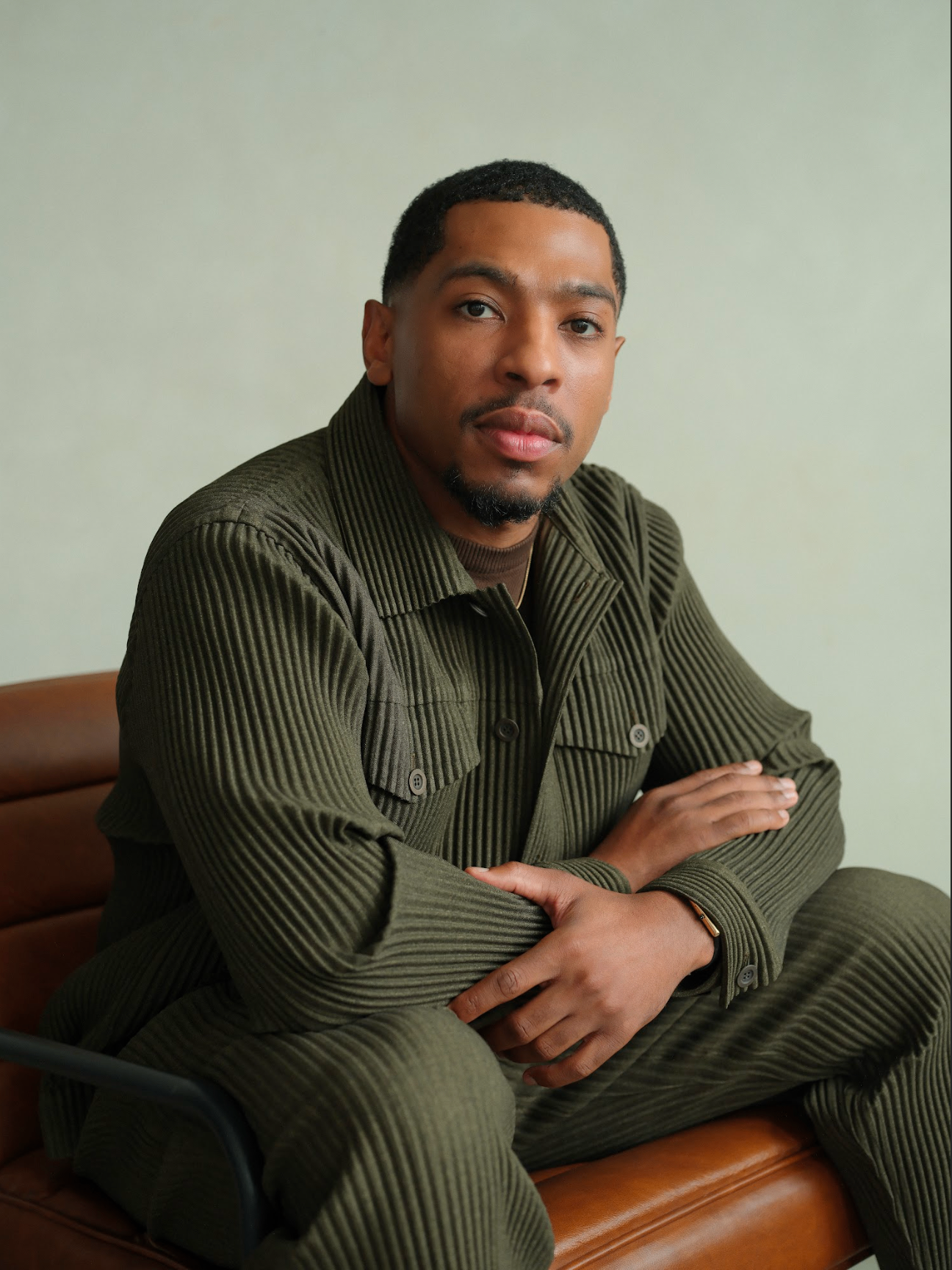
Dr. Jarvis R. Givens is a Professor of Education and African and African American Studies at Harvard University. He is also the co-founding faculty director of the Black Teacher Archive.
A historian who focuses on 19th and 20th century African American history, Dr. Givens studies the educational and intellectual traditions of Black communities, documenting how these traditions developed within, yet against, the constraints of white supremacy.
His historical research is especially interested in the interplay between race, power, and schooling in the United States, as well as the broader African Diaspora; and it exposes the role education and teachers played in Black freedom struggles of the past in order to provide resources for contemporary models of liberatory education.

,_Carter_G._Woodson_Home_National_Historic_Site,_1915._(18f7565bf62142c0ad7fff83701ca5f6).jpg)